
Can You Sell Your Palm Trees? (Where to Sell Them, How Much They're Worth, and the Rules)
Key Takeaways
- You can sell palm trees you legally own.
- Check ownership, local tree regulations and any restrictions before arranging a sale.
- Some mature palms have significant value, depending on species, height, health and local demand.
- Removal and transport can be expensive, so a buyer who collects the tree may offer a more practical deal.
- Nurseries, landscapers and palm relocation specialists are the main potential buyers.
Yes, you can sell your palm trees, and depending on their species, size, condition, and location, they may be worth money to homeowners, landscapers, nurseries, garden designers, and commercial property developers.
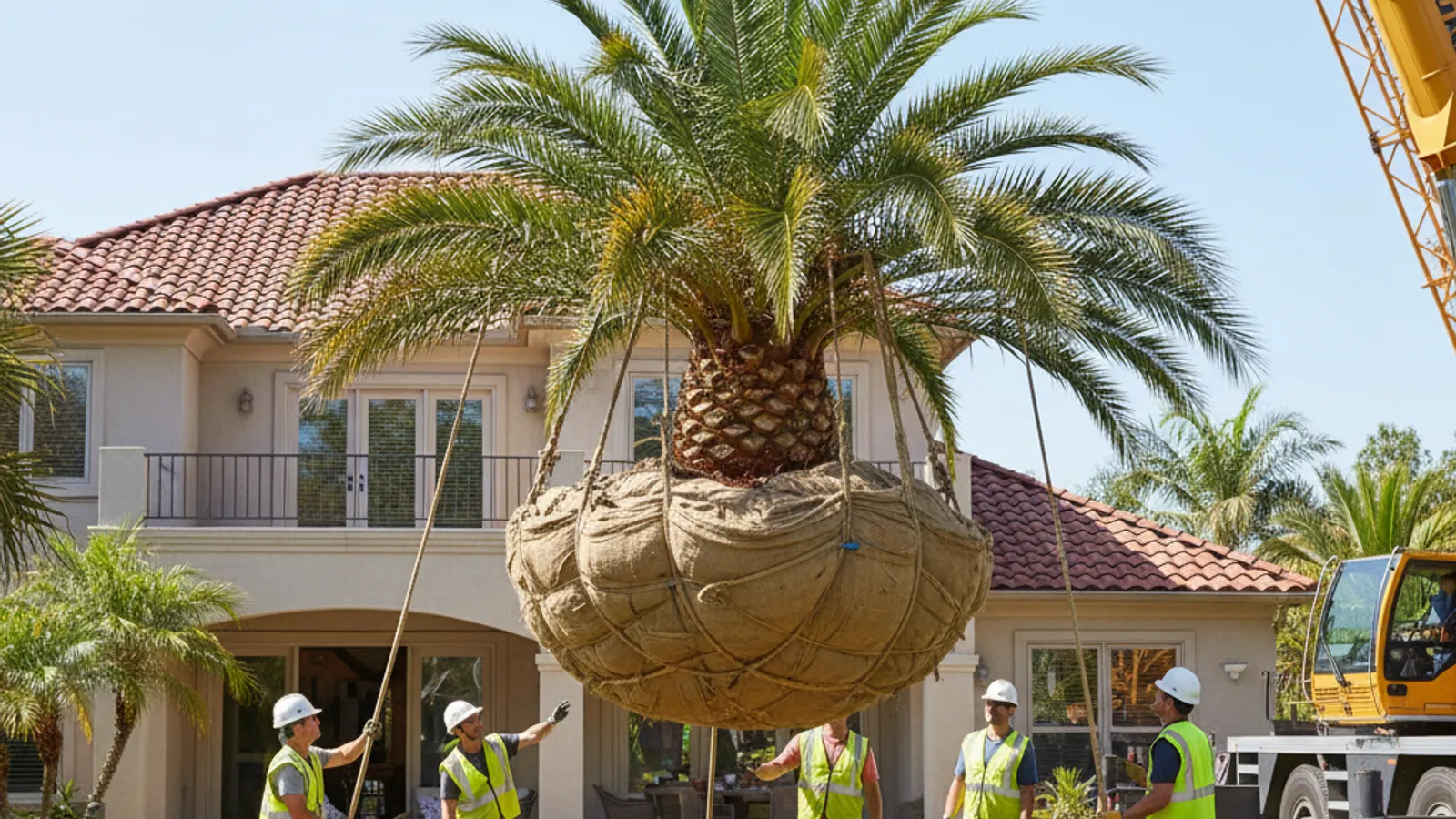
In some cases, a mature, attractive palm tree can be worth hundreds or even thousands of dollars. However, the amount you actually receive depends on whether a buyer wants the tree, whether it can be safely removed, and who pays for transportation and installation.
If you have palm trees in your backyard that you want to remove, selling them could help offset the cost of tree removal. Some buyers may even arrange excavation, transportation, and replanting themselves.
However, not every palm tree has resale value. Common species, unhealthy palms, trees that are difficult to access, and trees that cost too much to transport may be difficult to sell.
This guide explains how to sell palm trees, where to find buyers, what affects their value, how removal works, and the legal considerations to check before making a deal.
Can You Legally Sell Your Palm Trees?
In general, you can sell a palm tree that you own, provided the sale and removal comply with applicable laws and restrictions.
However, selling a palm tree and removing it are two separate matters. You might own a palm and find a willing buyer, but the tree may still be subject to local tree preservation rules or permit requirements.
Before agreeing to a sale, consider the following:
- Property ownership: Make sure you own the tree or have the owner’s authorization to sell it.
- Tree removal permits: Check whether the local government requires permission to remove the palm.
- Protected trees: Some jurisdictions regulate particular species, tree sizes, or designated trees.
- Neighbourhood restrictions: A homeowners association or property agreement may restrict removal or landscaping changes.
- Plant health requirements: Moving palms between regions or across state or national borders may trigger plant health, pest, or quarantine requirements.
For example, in California, local ordinances can regulate tree removal even when the tree is on private property. In Florida, local rules and plant health considerations may also affect removal and relocation.
If you live in California, check your city’s tree preservation ordinance before advertising a palm tree as available for removal. A buyer’s willingness to purchase the tree does not eliminate the need for any required permit. Our guide on whether you can cut down palm trees in California explains how those city rules differ. In Victoria, the equivalent check is whether council approval is needed to remove a palm.
How Much Can You Sell a Palm Tree For?
The value of a palm tree depends on its species, height, trunk diameter, overall health, appearance, and whether the buyer can successfully transplant it.
There is no universal market price for a mature palm tree. A nursery-grown palm in a container is a different product from a 20-foot palm growing in someone’s backyard, because the latter may require specialist excavation, heavy machinery, transport, and replanting.
The following figures are illustrative asking-price ranges in US dollars, not verified average sale prices. Actual offers can be much lower, particularly when the seller expects the buyer to remove a mature tree.
| Palm tree type or size | Illustrative potential asking price |
|---|---|
| Small, young palm | $20 to $100 |
| Established ornamental palm | $100 to $300 |
| Larger landscape palm | $300 to $800 |
| Mature, desirable specimen palm | $800 to $2,000+ |
| Exceptional specimen or collectible palm | Potentially several thousand dollars |
These figures should be treated as rough starting points for evaluating a potential sale, not as a promise that a buyer will pay those amounts.
Why Are Some Palm Trees Worth More Than Others?
Several factors influence palm tree resale value.
Species: Rare, slow-growing, cold-hardy, or particularly attractive palms may appeal to specialist collectors and landscape designers.
Height and trunk development: A mature palm can create an immediate landscape effect that a newly planted tree cannot. However, greater height also increases removal and transport costs.
Condition: Healthy foliage, an undamaged growing point, a sound trunk, and a viable root system improve the chances of successful relocation.
Local demand: A palm suited to the local climate may attract more buyers than a species that struggles in the area.
Accessibility: A palm that can be excavated and loaded easily may be more commercially attractive than one trapped behind a house or beside a swimming pool.
Transplant survival: A tree that is difficult to establish after relocation may be worth less than a similar palm with a better chance of surviving.
The most important point is that the tree’s value to a buyer is not necessarily the same as its retail nursery price.
Where Can You Sell Palm Trees?
If you want to sell a palm tree from your property, start by contacting buyers who already work with landscape plants or mature tree relocation.
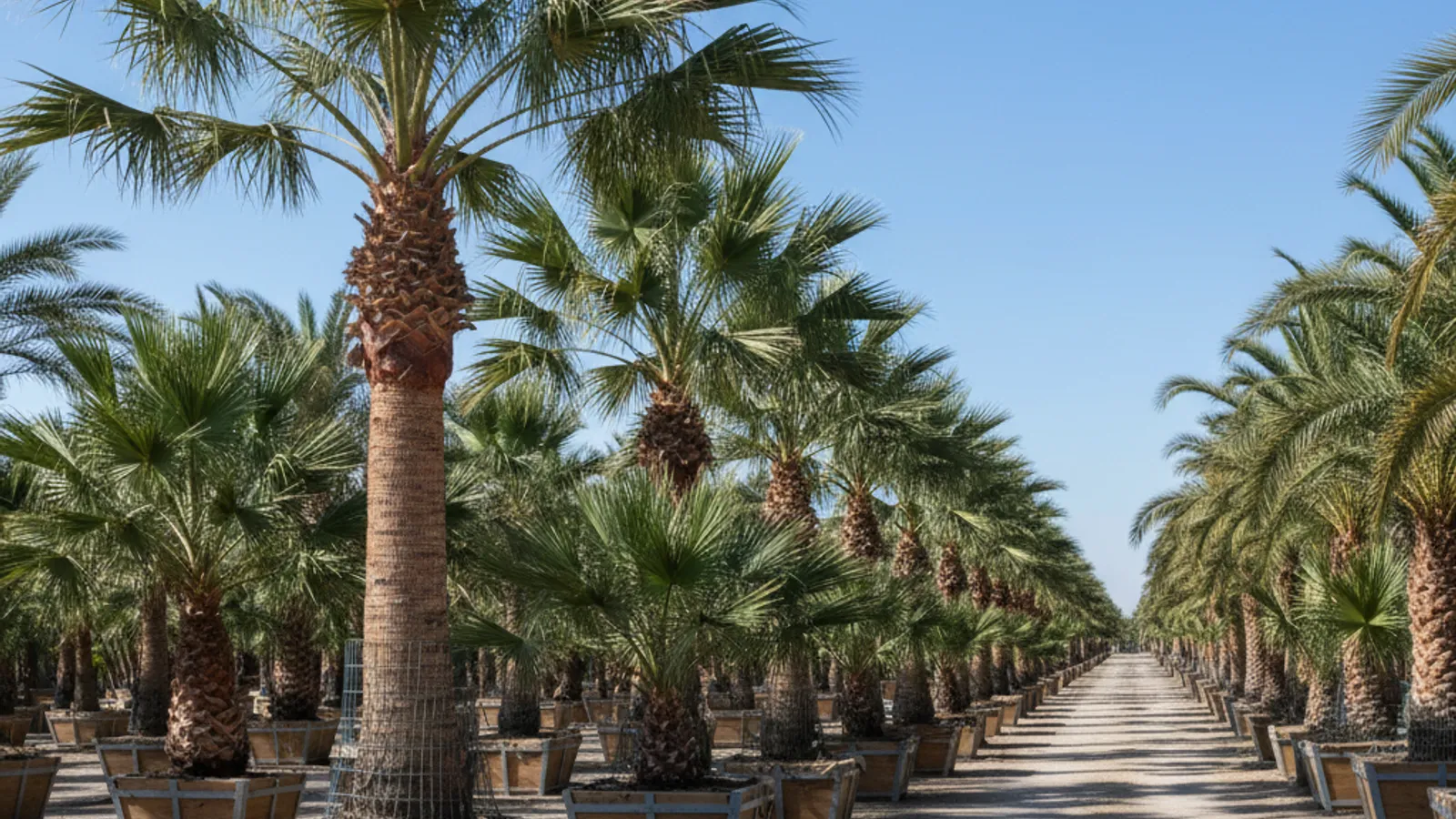
1. Palm tree nurseries. Specialist palm nurseries may buy desirable specimens, particularly if the species is in demand and the tree can be relocated successfully. Ask whether they purchase field-grown palms from private property owners.
2. Landscaping companies. Landscapers may need established palms for luxury homes, commercial properties, resorts, restaurants, or large garden projects. They are worth contacting when the palm is healthy and visually attractive.
3. Palm tree relocation companies. These businesses specialize in excavating, transporting, and replanting mature trees. Some may purchase suitable palms or connect sellers with buyers, although many provide removal services rather than buying trees themselves.
4. Commercial property developers and garden designers. Projects involving hotels, shopping centres, apartment complexes, and landscaped commercial sites sometimes require mature palms. Contact local landscape architects or contractors working on such projects.
Can You Sell Palm Trees on Facebook Marketplace or Craigslist?
Yes, you can advertise palm trees on local classified platforms, subject to the platform’s rules and local laws.
Your advertisement should explain whether the buyer is purchasing the standing tree, the excavated palm, or a palm that has already been removed and prepared for transport.
Include:
- Clear photographs of the whole palm and its trunk.
- The approximate height and trunk diameter.
- The species, if known.
- The city or general location.
- Information about access for excavation equipment.
- Whether the buyer must arrange removal and transportation.
- Your asking price or willingness to consider offers.
Do not promise that a buyer can remove the tree without a permit or that the tree will survive transplanting unless those details have been properly established.
Will Someone Pay You to Remove Your Palm Tree?
Sometimes, but you should not count on it.
A buyer may be willing to purchase a mature palm and pay for its removal if the tree has sufficient resale value to cover excavation, transport, labour, and replanting.
However, mature palm removal can be expensive. For context, published Melbourne removal estimates range from a few hundred dollars for smaller palms to several thousand dollars for tall or difficult trees. These are Australian service prices, not US prices, but they illustrate why relocation costs can consume much of a tree’s potential resale value. You can get a rough local figure with our palm tree removal cost calculator.
There are three common arrangements:
| Arrangement | How it works |
|---|---|
| Buyer purchases and removes the tree | The buyer pays you and organizes excavation and transport. |
| Buyer removes the tree for free | You receive no purchase payment, but avoid paying a removal contractor. |
| You sell an excavated palm | You arrange removal and preparation, then sell the tree to a buyer. |
The first arrangement is often the most attractive for the property owner, but it is only realistic when the palm is desirable and relocation is commercially viable.
An Example of the Economics
Imagine you believe your palm tree is worth $600. A buyer estimates that excavation and transportation will cost $450, with another $150 needed for replanting and establishment.
The buyer’s costs already total $600 before accounting for labour risks, equipment, and the possibility that the tree will die.
In that situation, the buyer may offer much less than $600 or decline to purchase the tree altogether.
This is why it is important to compare the amount you could receive with the cost you would otherwise pay for removal.
Which Palm Trees Are Most Valuable?
Not all palm species have the same resale appeal. The best candidates are usually healthy, attractive specimens that suit the local climate and can be transplanted at a reasonable cost.
| Palm | Scientific name | Resale notes |
|---|---|---|
| Canary Island date palm | Phoenix canariensis | Valuable for large landscape projects; heavy, with spiny leaf bases that make relocation challenging. |
| Mexican fan palm | Washingtonia robusta | Tall and distinctive; height can make excavation and transport particularly difficult. |
| Bismarck palm | Bismarckia nobilis | Silver-blue foliage appeals as a statement plant in warm climates; large specimens need careful assessment. |
| Queen palm | Syagrus romanzoffiana | Familiar ornamental; commonly planted, so local demand strongly influences value. |
Canary Island date palm: Recognizable by its thick trunk and large crown, this palm can be valuable for substantial landscape projects. Its weight and spiny leaf bases can make relocation challenging.
Mexican fan palm: Tall and visually distinctive, this species can suit certain commercial and residential landscapes. Its height can make excavation and transport particularly difficult.
Bismarck palm: Its striking silver-blue foliage can appeal to buyers looking for a statement plant in warm climates. Large specimens require careful assessment before relocation.
Queen palm: A familiar ornamental palm that may appeal to homeowners and landscapers. Because it is commonly planted in some regions, availability and local demand strongly influence its value.
These examples are not a definitive ranking by price. A rare palm can be worth less than a common palm if it is unhealthy, inaccessible, or expensive to move.
How to Sell a Palm Tree Step by Step
If you want to maximize your chances of finding a buyer, follow this process.
- Identify the species. Take clear photographs of the trunk, leaves, crown, and base. Ask a local nursery or arborist to identify it if necessary.
- Measure the tree. Estimate its overall height and trunk dimensions. Explain whether the height is measured to the top of the crown or the top of the trunk.
- Check removal restrictions. Contact the local council or city department to establish whether a permit is needed.
- Photograph the access. Show gates, driveways, nearby buildings, fences, overhead wires, and the space available for machinery.
- Contact several potential buyers. Approach palm nurseries, landscapers, relocation specialists, and local classified buyers.
- Request written offers. Clarify the price, removal responsibility, transport, damage liability, and any required permits.
- Agree on the terms before work begins. Specify who pays for excavation, what happens if the tree cannot be transplanted, and when payment is due.
For mature palms, it is sensible to have the prospective buyer or a qualified tree professional inspect the site before finalizing the deal. If the palm sits close to a pool, driveway or house, it also helps to know how far palm roots spread around structures before excavation starts.
Can You Sell Palm Trees for Timber or Firewood?
Generally, selling a mature palm for timber or firewood is less promising than selling a healthy palm as a landscape specimen.
Palm trunks do not have the same conventional wood structure as many broadleaf trees. Their fibrous trunks can be difficult to process into ordinary lumber, and their commercial uses differ from those of hardwoods.
Depending on the species and local market, cut palm material may have limited uses in landscaping, craft products, or other specialized applications. However, do not assume that a removed palm trunk will have a valuable resale market.
If your palm is already dead or must be cut down, it may be more practical to compare removal and disposal quotes than to rely on selling the trunk.
What Should You Put in a Palm Tree Sale Advertisement?
A detailed advertisement helps buyers assess the tree before arranging a site visit.
Here is a template you can adapt for a local marketplace.
Mature Palm Tree for Sale: Buyer to Arrange Removal
Healthy mature palm tree available for sale in [City, State].
- Species: [Palm species, if known]
- Approximate height: [Height]
- Trunk diameter: [Measurement]
- Condition: [Describe foliage, trunk, and overall health]
- Access: [Describe driveway, gate width, and equipment access]
- Price: [Asking price or open to offers]
- Removal and transport: Buyer to arrange, subject to any required permits and safe access.
Suitable for buyers looking for a mature landscape palm, subject to professional assessment of transplanting feasibility.
Please contact me with your offer and details of your removal arrangements.
Only describe the palm as healthy or suitable for transplanting if you have reasonable grounds to do so.
Frequently Asked Questions
Can I sell a palm tree from my backyard?
Yes, generally, if you own the tree or have permission to sell it. However, you must check local removal rules and any restrictions that apply to the property.
How do I find someone who buys mature palm trees?
Contact specialist palm nurseries, landscape contractors, commercial landscape suppliers, and tree relocation companies. Local classified advertisements can also help you find private buyers.
Will a nursery buy my palm tree?
Possibly. Nurseries tend to assess species, condition, transplanting feasibility, market demand, and the cost of recovering the tree. Some nurseries only purchase trees grown specifically for commercial sale.
Do palm trees have resale value after they have been cut down?
They may have limited value, depending on the species and intended use. A living palm with an intact, viable root system is generally a more plausible candidate for resale as a landscape plant than a cut trunk.
Can I sell a palm tree before paying for its removal?
Yes. You can negotiate a sale in which the buyer arranges and pays for removal. Make sure the agreement clearly identifies who is responsible for permits, property damage, transport, and disposal.
Is it worth selling a palm tree instead of paying to remove it?
It can be, particularly if the palm is attractive, healthy, and easy to access. But if removal costs exceed what a buyer is willing to pay, a free-removal arrangement or a conventional removal quote may be more practical.
Final Verdict: Is Selling Your Palm Trees Worth It?
Yes, selling your palm trees can be worthwhile, especially if you have mature, healthy specimens that landscapers or specialist nurseries want. The key is to assess the tree’s actual marketability rather than assuming that age or height automatically makes it valuable.
Start by identifying the species, measuring the palm, taking photographs, and contacting several potential buyers. Ask whether they will pay for the tree and cover the removal costs.
If you are planning to remove a palm tree anyway, a buyer who handles the entire relocation may offer the best financial outcome, even if the cash payment is modest.
Disclaimer: Prices in this article are illustrative estimates, not guaranteed sale values. Local laws, market conditions, and plant health requirements vary by location.