
Will 2,4-D Kill Pine Trees? Effects, Symptoms, and What Research Says
Key Takeaways
- 2,4-D can damage pine trees; conifers are not completely resistant.
- Exposure can distort needles and shoots or cause more serious injury.
- Spray drift, as droplets or vapour, is an important risk for nearby pines.
- Damage does not always mean the tree will die; some pines recover with new growth.
- Identify the exact product, keep application details and get expert advice.
Yes, 2,4-D can injure pine trees and, under certain exposure conditions, may contribute to severe damage or death. However, it does not automatically kill every pine tree it contacts.
The outcome depends on the pine species, the herbicide formulation, the amount absorbed, the timing of exposure, and the tree’s health.
2,4-D (2,4-dichlorophenoxyacetic acid) is a selective herbicide commonly used to control broadleaf weeds. Pine trees are conifers, not broadleaf plants, but that does not make them completely immune to herbicide injury. University extension guidance specifically identifies conifers, including pines, as susceptible to injury from synthetic auxin herbicides such as 2,4-D.
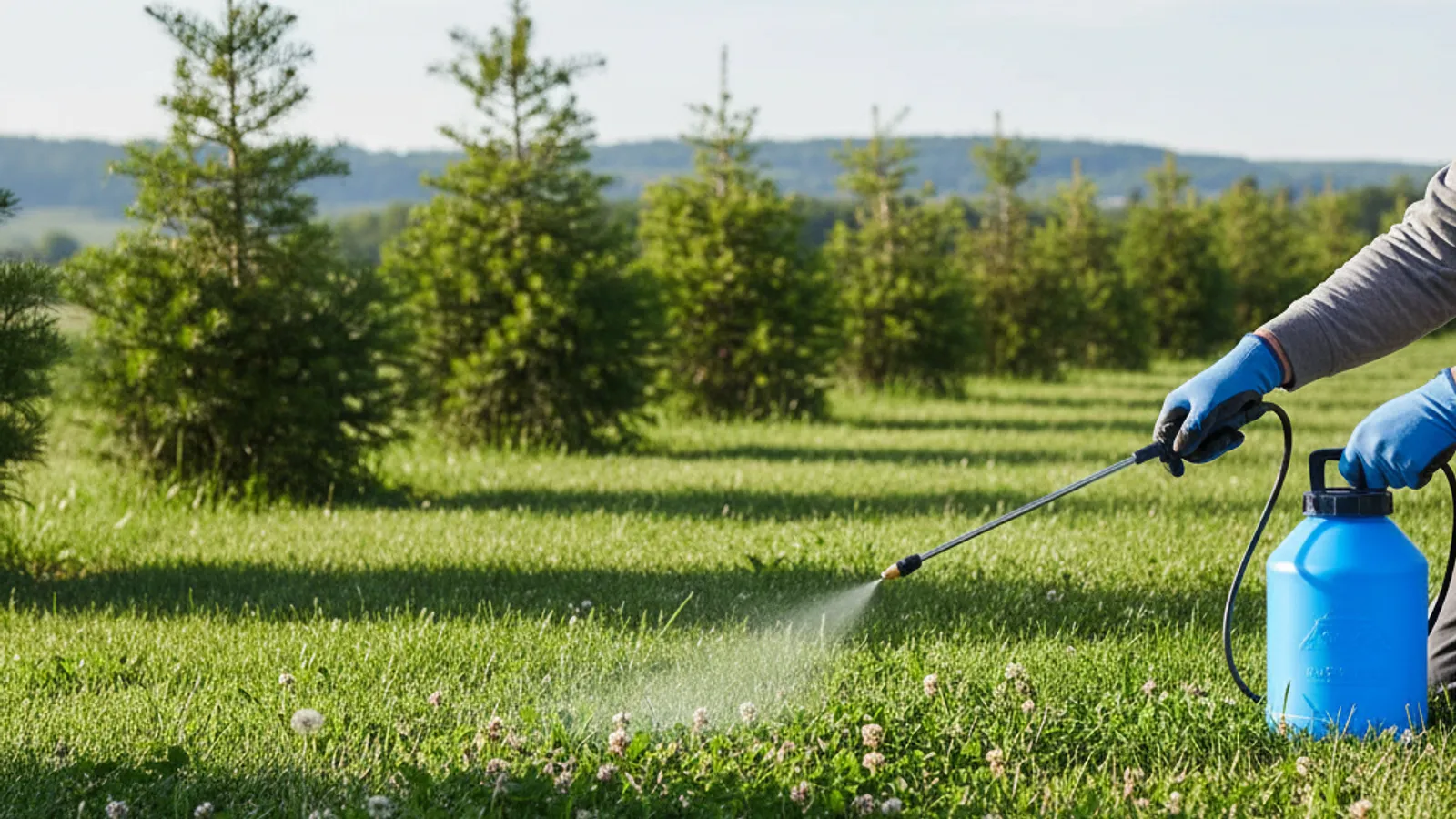
If you sprayed 2,4-D near pine trees, noticed distorted needles, or are concerned about herbicide drift from a neighbouring property, the important questions are how the trees were exposed and whether new growth or other symptoms have appeared.
This guide examines the available forestry research, common symptoms, factors affecting pine tree survival, and steps to take if you suspect herbicide damage.
What Is 2,4-D and How Does It Affect Plants?
2,4-D is a selective herbicide in the synthetic auxin family. Synthetic auxins imitate the action of plant growth hormones and disrupt normal growth processes in susceptible plants.
The herbicide is primarily used to control broadleaf weeds in settings such as lawns, pastures, agricultural fields, and certain non-crop areas. It is available in different formulations, including amine salts and ester formulations. Their properties and drift risks differ. The U.S. Environmental Protection Agency regulates 2,4-D and lists the uses it has reviewed.
Why Can 2,4-D Affect a Pine Tree?
Although pines have narrow needles rather than broad leaves, their tissues can still be affected by synthetic auxin herbicides.
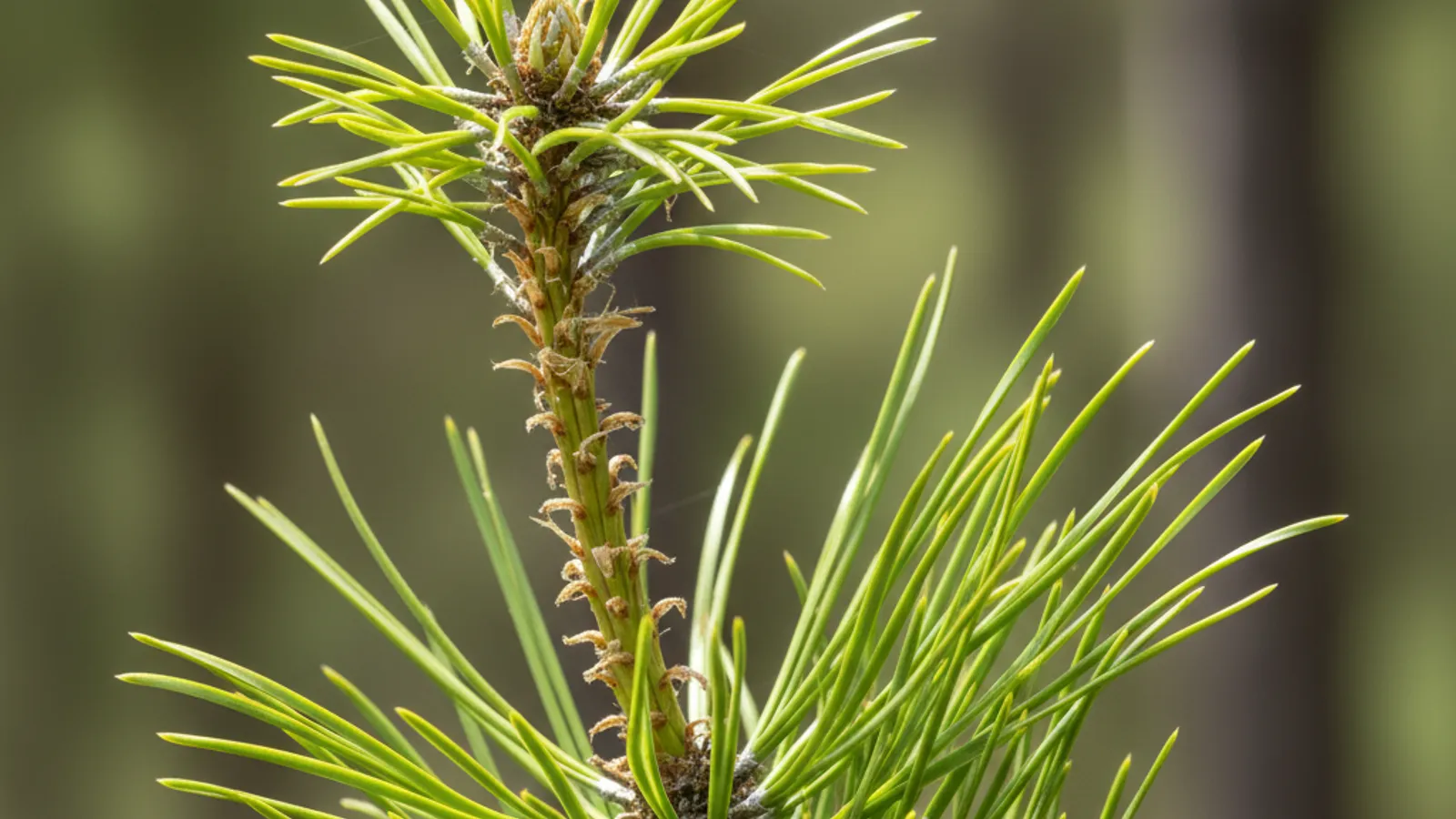
Exposure can interfere with normal development in susceptible tissues. Depending on the dose and conditions, symptoms may include:
- Abnormally curved or distorted needles.
- Deformed new shoots.
- Unusual growth around buds or needle bases.
- Reduced growth or loss of foliage.
- Branch dieback in more serious cases.
These symptoms are not exclusive to 2,4-D. Drought, root damage, disease, insects, and other herbicides can produce overlapping signs, so symptoms alone cannot conclusively establish the cause.
Can 2,4-D Kill a Pine Tree or Only Damage It?
The answer is that both outcomes are possible, but death is not inevitable.
The distinction matters because herbicide injury exists on a spectrum. A pine tree may develop temporary needle or shoot distortion, experience reduced growth, suffer substantial injury, or eventually die if the damage is severe enough.
The available evidence does not support a simple rule such as “2,4-D always kills pines” or “pines are immune to 2,4-D.”
What Does Forestry Research Tell Us?
Several studies help explain why the response varies.
| Study | Pines studied | What it found |
|---|---|---|
| King and Radosevich (1985), Weed Science | Jeffrey pine, sugar pine, red fir, white fir, Douglas-fir | Injury related to growth and physiological conditions; seasonal response differed between species. |
| Gratkowski (1978) | Ponderosa pine | Susceptibility changed with season and stage of development. |
| Forest Service study (1964), California | Pine seedlings | Substantial pine damage under some experimental conditions, but 2,4-D was tested alongside 2,4,5-T. |
Research on five conifer species: A study by Sandra P. King and Steven R. Radosevich, published in Weed Science in 1985, examined herbicide injury in Jeffrey pine, sugar pine, red fir, white fir, and Douglas-fir. The researchers found that injury patterns were related to growth and physiological conditions, and that the seasonal response differed between species.
Research on ponderosa pine: A 1978 study by H. J. Gratkowski examined annual variation in the effects of 2,4-D and 2,4,5-T on ponderosa pine. It reported that susceptibility changed with the season and stage of development, meaning that the time of exposure could affect the degree of injury.
Research on pine seedlings in California: A 1964 Forest Service study examined the effects of herbicide rate and application timing on pine seedlings and mountain whitethorn. The researchers reported substantial pine damage under some experimental treatment conditions.
However, that research included both 2,4-D and 2,4,5-T, so its findings must not be interpreted as a direct prediction of what any modern 2,4-D product will do to a mature pine tree.
These studies demonstrate that pine tolerance is conditional. They do not establish a universal lethal dose for every pine species, formulation, tree size, and environmental condition.
Does a Mature Pine Have More Resistance Than a Young Pine?
Not necessarily in every situation.
A mature tree may have a larger established root system and more stored resources than a seedling, but it can still be injured. Young trees may be particularly vulnerable because their developing tissues and limited reserves can make substantial injury more consequential.
Tree species, exposure, health, and growth stage all matter. It would be inaccurate to guarantee that a mature pine will survive simply because it is large.
What Are the Signs of 2,4-D Damage on Pine Trees?
One of the most useful ways to investigate suspected herbicide injury is to look for abnormal growth, particularly on new shoots and needles.
Distorted or Curled Needles
Needles may appear bent, curved, or unusually shaped. Montana State University Extension specifically illustrates pine needle distortion associated with synthetic auxin herbicide injury.
Abnormal New Growth
Emerging shoots or growing tips may develop irregular shapes. Compare affected growth with healthy shoots elsewhere on the same tree.
Browning and Needle Loss
These signs may accompany serious tree stress, but they are not specific to 2,4-D. Drought, root problems, pests, disease, and other environmental factors can cause similar symptoms.
Shoot or Branch Dieback
Dead or declining branch tips warrant investigation, especially when symptoms appeared after a documented herbicide application. Other causes must still be considered.
| Symptom | Points toward 2,4-D? | Other possible causes |
|---|---|---|
| Curved or distorted needles | Typical of synthetic auxin injury | Insects, disease |
| Deformed new shoots | Typical of synthetic auxin injury | Insects, frost |
| Browning and needle loss | Not specific | Drought, root problems, pests, disease |
| Shoot or branch dieback | Possible after severe exposure | Drought, root damage, disease |
How Soon Do Symptoms Appear?
There is no reliable universal timeline. Symptoms depend on the formulation, exposure, species, environmental conditions, and the tissue affected.
Some abnormal growth may become noticeable after exposure, while other injury may be harder to distinguish until the next period of growth. Herbicide-related symptoms can persist for more than one year.
If a pine tree looks healthy immediately after suspected exposure, that alone does not prove that it escaped injury.
Can 2,4-D Kill Pine Trees Through Spray Drift?
Yes, spray drift can expose pine trees growing outside the intended treatment area.
Spray drift occurs when herbicide droplets move through the air during application. Certain formulations can also produce vapour that moves away from the treated area after spraying.
The risk depends on the formulation, application method, weather, and surrounding vegetation. University of California Agriculture and Natural Resources explains that 2,4-D formulations differ in volatility, with some ester formulations generally presenting greater vapour-drift potential than amine formulations. Physical spray-particle drift is also an important cause of off-target injury. The EPA’s guide to reducing pesticide drift explains how wind and droplet size affect this.
This is important when 2,4-D is used on a lawn, roadside, pasture, or field near pine trees.
Can Drift From a Neighbour’s Property Damage Pine Trees?
It can. If you suspect that a nearby application affected your trees, document the timing, wind conditions if known, the product used if available, and the distribution of symptoms.
Look for patterns, such as several trees developing similar abnormalities after the same event. Such patterns can help an expert investigate the cause, although they do not prove that 2,4-D was responsible.
Do not assume that every tree affected near a sprayed area has been poisoned. A qualified arborist or plant diagnostic specialist can assess alternative explanations and advise whether laboratory testing would be useful.
Does 2,4-D in the Soil Kill Pine Trees Through Their Roots?
The answer depends on the product and how the exposure occurred.
It is important to distinguish 2,4-D from other herbicides that are sometimes mixed with it. Certain products contain multiple active ingredients, and their behaviour in soil can differ substantially. RM43, which pairs glyphosate with soil-active imazapyr, is one example, as our guide on whether RM43 kills trees explains.
For example, some herbicides have greater soil persistence and root-uptake potential than 2,4-D. The University of California’s herbicide-damage guidance distinguishes between herbicides that primarily cause injury through foliage exposure and products that can create additional risks through soil persistence and root uptake.
Consequently, if pine trees begin declining after a weed-control treatment around their base, identify the exact product and all its active ingredients before drawing conclusions.
Do not assume that every herbicide labelled for weed control is safe around tree roots, and do not assume that every 2,4-D exposure will cause lasting soil contamination.
If a product was accidentally applied to the soil around a pine tree, consult its label and a qualified local specialist before attempting remediation.
Which Pine Trees Are Most Susceptible to 2,4-D?
There is no dependable universal ranking that identifies one pine species as always most vulnerable to every 2,4-D formulation.
Research has examined species such as ponderosa pine, Jeffrey pine, and sugar pine, and has found that their responses depend on factors including herbicide formulation, growth stage, and environmental conditions.
A few distinctions are useful:
- Pine seedlings: Their developing tissues and limited reserves may make significant injury particularly consequential.
- Young established pines: Developing shoots may show visible growth abnormalities following exposure.
- Mature pines: Larger trees are not immune to herbicide injury, and serious exposure may cause substantial damage.
- Stressed pines: Trees already affected by drought, root damage, disease, or other stressors may have a reduced capacity to tolerate additional injury.
These are general considerations, not a definitive susceptibility ranking. The exact species and the product involved are essential when evaluating an individual tree.
What Should You Do If 2,4-D Gets on Your Pine Trees?
If you suspect accidental exposure, the priority is to prevent further injury and determine what actually happened.
- Identify the herbicide. Find the product container, label, or application record. Record the active ingredients, formulation, application date, and intended use.
- Document the symptoms. Photograph affected needles, new shoots, branch tips, and the overall tree. Record when symptoms first appeared and whether nearby plants are affected.
- Prevent further exposure. Avoid additional herbicide applications near the trees until the risk has been assessed. Follow the product label and avoid disturbing potentially contaminated soil.
- Get a professional assessment. Contact a qualified arborist, agricultural extension service, or plant diagnostic laboratory. They can assess the likely cause and the extent of the damage.
- Monitor recovery. Track needle condition, new growth, and branch health over time. Avoid premature removal unless the tree is dead or presents a safety hazard.
Should You Water a Pine Tree After Suspected Herbicide Exposure?
Do not automatically flood the soil or attempt to wash the herbicide into the ground. Whether irrigation is appropriate depends on the exposure route, product, soil, and tree condition.
Maintain appropriate care for the species, including sensible soil moisture, but avoid excessive watering that could cause root problems. A specialist can advise whether any immediate action is warranted for the particular product involved.
Can a Damaged Pine Tree Recover?
Yes, recovery is possible, depending on the severity of the injury and the tree’s condition.
Montana State University Extension recommends limiting further herbicide exposure and allowing time to assess recovery. It also notes that symptoms can persist for more than a year.
However, recovery cannot be guaranteed. If the tree develops extensive dieback, loses substantial foliage, or shows progressive decline, arrange a professional assessment.
Is 2,4-D Safe to Use Around Pine Trees?
The safest approach is to follow the specific product label and avoid exposing pine foliage or other non-target vegetation to the herbicide.
General weed-control instructions should not be interpreted as permission to spray underneath or near every type of tree. The product’s approved uses, restrictions, application method, and local regulations all matter.
In Australia, the Australian Pesticides and Veterinary Medicines Authority (APVMA) regulates agricultural chemical products and has taken action to strengthen 2,4-D label requirements concerning spray drift.
Agriculture Victoria also explains that ester formulations of 2,4-D can present vapour-drift risks and that specific restrictions apply to certain ester products in Victoria.
If you are in Australia, check the current product label and relevant state requirements rather than relying on US lawn-care instructions.
Frequently Asked Questions About 2,4-D and Pine Trees
Will one application of 2,4-D kill a pine tree?
Not necessarily. One application can cause injury if the tree is exposed, but the outcome depends on the formulation, amount absorbed, species, timing, and tree condition. A single exposure does not guarantee death.
Will 2,4-D kill pine trees if it drifts onto their needles?
It can injure exposed pines, and severe injury is possible. However, drift exposure does not automatically mean that the tree will die. Assess the extent of exposure and watch for abnormal growth or progressive decline.
Can pine trees recover from 2,4-D damage?
Yes. Some affected trees recover, particularly when the injury is limited. More severe cases can lead to lasting damage or death. Recovery depends on the species, the extent of exposure, and the tree's health.
How long does 2,4-D damage last on pine trees?
There is no single timeline. Visible symptoms can persist for more than one growing season, and the time needed for recovery depends on the severity of injury.
Does 2,4-D kill pine tree roots?
You should not assume that it will. The outcome depends on the product and exposure route. Other active ingredients in a herbicide mixture may have different soil persistence and root-uptake properties.
Is 2,4-D more dangerous to pine trees than glyphosate?
Neither chemical can be categorically declared more dangerous to every pine species under every condition. Research has compared their effects on conifers, but outcomes depend on the formulation, exposure, species, and timing.
Final Verdict: Will 2,4-D Kill Pine Trees?
Yes, 2,4-D can injure pine trees and may contribute to their death under sufficiently damaging exposure conditions, but it does not reliably kill every pine tree.
The strongest conclusion supported by the research is that pine trees have variable tolerance to herbicides. Species, growth stage, formulation, exposure, and environmental conditions influence the outcome.
If you are investigating suspected damage, identify the exact product, document the symptoms, prevent further exposure, and obtain a professional assessment before deciding whether a pine tree will recover.
If your goal is to control broadleaf weeds near healthy pines, select a product specifically labelled for the intended site and use it in accordance with its directions and applicable regulations.
This article is for general educational purposes. It does not establish a diagnosis of herbicide injury or replace the directions on a registered product label.