
Will Antifreeze Kill Trees? Effects on Tree Roots, Symptoms, and What to Do
Key Takeaways
- Antifreeze can harm trees, especially when a large spill reaches the root zone.
- A few drops on a driveway are very different from a leak that saturates soil around a tree.
- Tree decline may not be immediate, and yellowing or wilting has many other causes.
- Ethylene glycol and propylene glycol differ, but neither should be poured near trees.
- Stop the leak, keep people and pets away, and arrange proper cleanup.
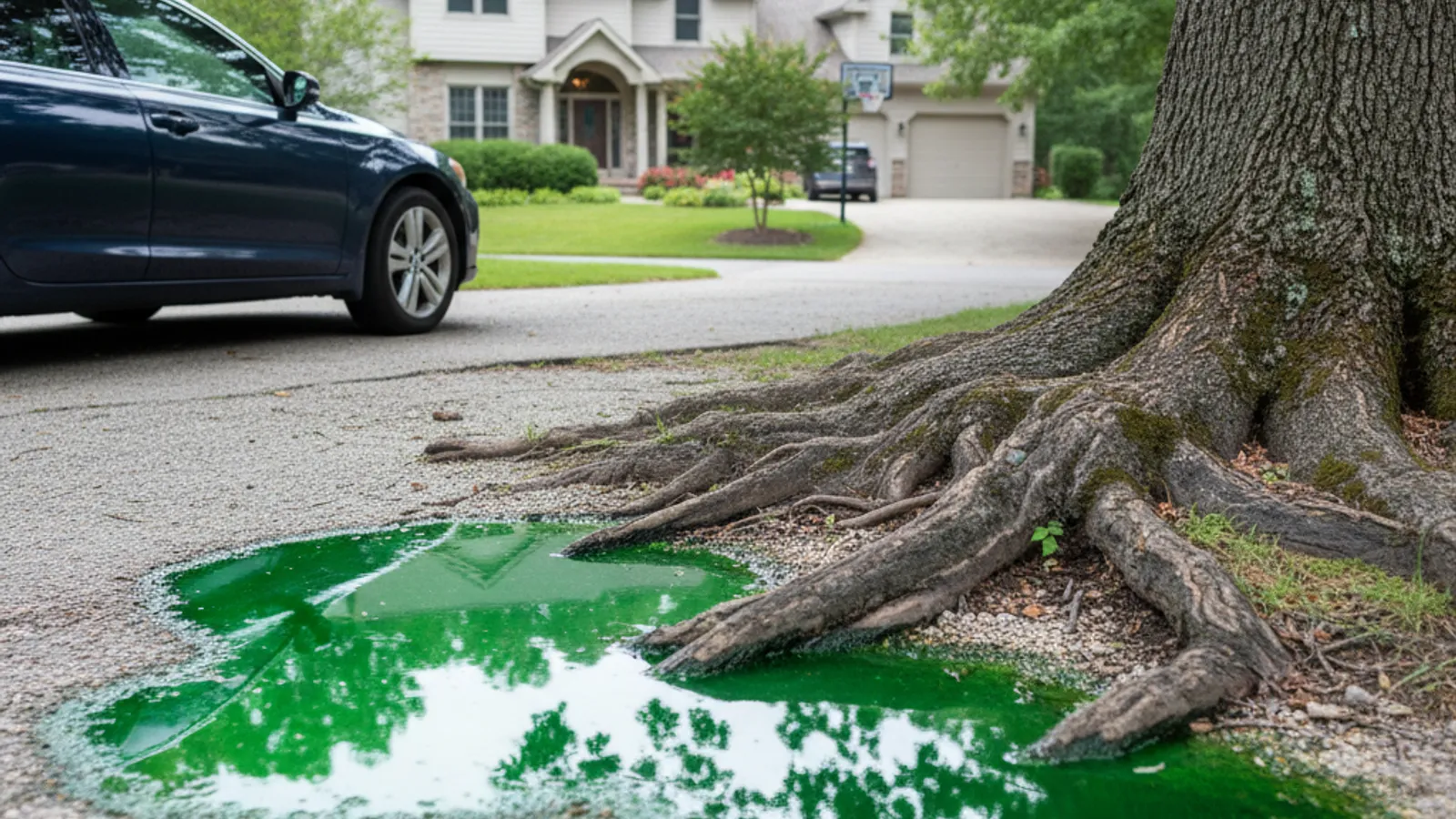
Yes, antifreeze can damage trees and may kill them if enough reaches the root zone or is absorbed by the plant. However, antifreeze does not automatically kill every tree it contacts.
The outcome depends on the type of antifreeze, the amount spilled, the concentration, the soil conditions, the tree species, and how long the roots are exposed.
Most conventional automotive antifreeze contains ethylene glycol, a chemical that can be harmful to people, pets, wildlife, and the environment. Some products use propylene glycol instead, but these should not automatically be considered harmless to plants or safe to pour onto soil.
If antifreeze has leaked from a vehicle, been spilled near a tree, or entered the soil around its roots, the main concern is whether the contamination is severe enough to injure the root system and interfere with water and nutrient uptake.
This guide explains how antifreeze affects trees, which factors influence the risk of tree death, the symptoms to watch for, and what to do if antifreeze contaminates the ground near a tree.
What Is Antifreeze, and Why Can It Harm Trees?
Antifreeze is a liquid used in vehicle cooling systems to help regulate engine temperature and prevent coolant from freezing. Many automotive products contain ethylene glycol, while others use propylene glycol or different formulations.
These products can contain additional ingredients, including corrosion inhibitors, dyes, and other additives. As a result, the potential environmental effects depend on the exact formulation rather than on one ingredient alone.
How Does Antifreeze Affect a Tree?
A tree relies on healthy roots to absorb water and essential nutrients from the soil. If a chemical spill damages the root environment, the tree may struggle to maintain normal growth.
Potential effects include:
- Root injury and reduced root function.
- Changes in the soil’s chemical conditions.
- Stress affecting water and nutrient uptake.
- Declining foliage and reduced growth.
- Progressive canopy decline if the root damage is severe.
Ethylene glycol is water-soluble and can move through soil with water. Its behaviour depends on factors such as soil type, moisture, microbial activity, and the amount released. The CDC’s ethylene glycol ToxFAQs summarize how it moves and breaks down in the environment.
It can also be broken down by microorganisms under suitable environmental conditions, but this does not make an antifreeze spill safe to leave in the ground.
Important distinction: The fact that antifreeze is toxic to some organisms does not establish a universal dose that will kill a tree. The outcome of a spill must be assessed based on the product and exposure conditions.
Can Antifreeze Kill a Tree Through Its Roots?
Yes, a substantial antifreeze spill around a tree’s root zone can contribute to serious root injury and poor tree health. However, the exact risk from a particular spill cannot be determined from the chemical name alone.
Tree roots absorb water and nutrients from the surrounding soil. When a large quantity of coolant enters that soil, the chemical can move with water and interact with the root environment.
What Happens When Antifreeze Enters the Soil?
There are several potential concerns.
Direct chemical exposure: Roots may be exposed to the spilled liquid and its other ingredients. The effects depend on the formulation and concentration.
Changes in the root environment: Microorganisms that break down ethylene glycol consume oxygen during biodegradation. Under sufficiently high contamination, this can contribute to oxygen depletion in the affected environment.
Movement through soil: Ethylene glycol is highly water-soluble and can move through soil rather than remaining fixed at the spill site. It may also reach drainage systems or groundwater, depending on the conditions.
These mechanisms explain why a large coolant spill should not be dismissed simply because the liquid disappears from the surface.
Will a Small Antifreeze Spill Kill a Large Tree?
Not necessarily. A few drops on a driveway, with no meaningful exposure to the root zone, present a different situation from litres of coolant soaking into soil around the base of a tree.
There is no reliable universal threshold for how much antifreeze will kill a tree. The size of the tree, the amount spilled, the contaminated area, the soil’s drainage, and the product’s formulation all influence the likely outcome.
| Situation | Likely concern for the tree |
|---|---|
| A few drops on a sealed driveway | Little or no meaningful root exposure |
| A small leak onto soil away from the trunk | Depends on amount, drainage and root spread |
| Litres soaking into soil around the base | Serious root-zone contamination is possible |
What Are the Signs of Antifreeze Damage to Trees?
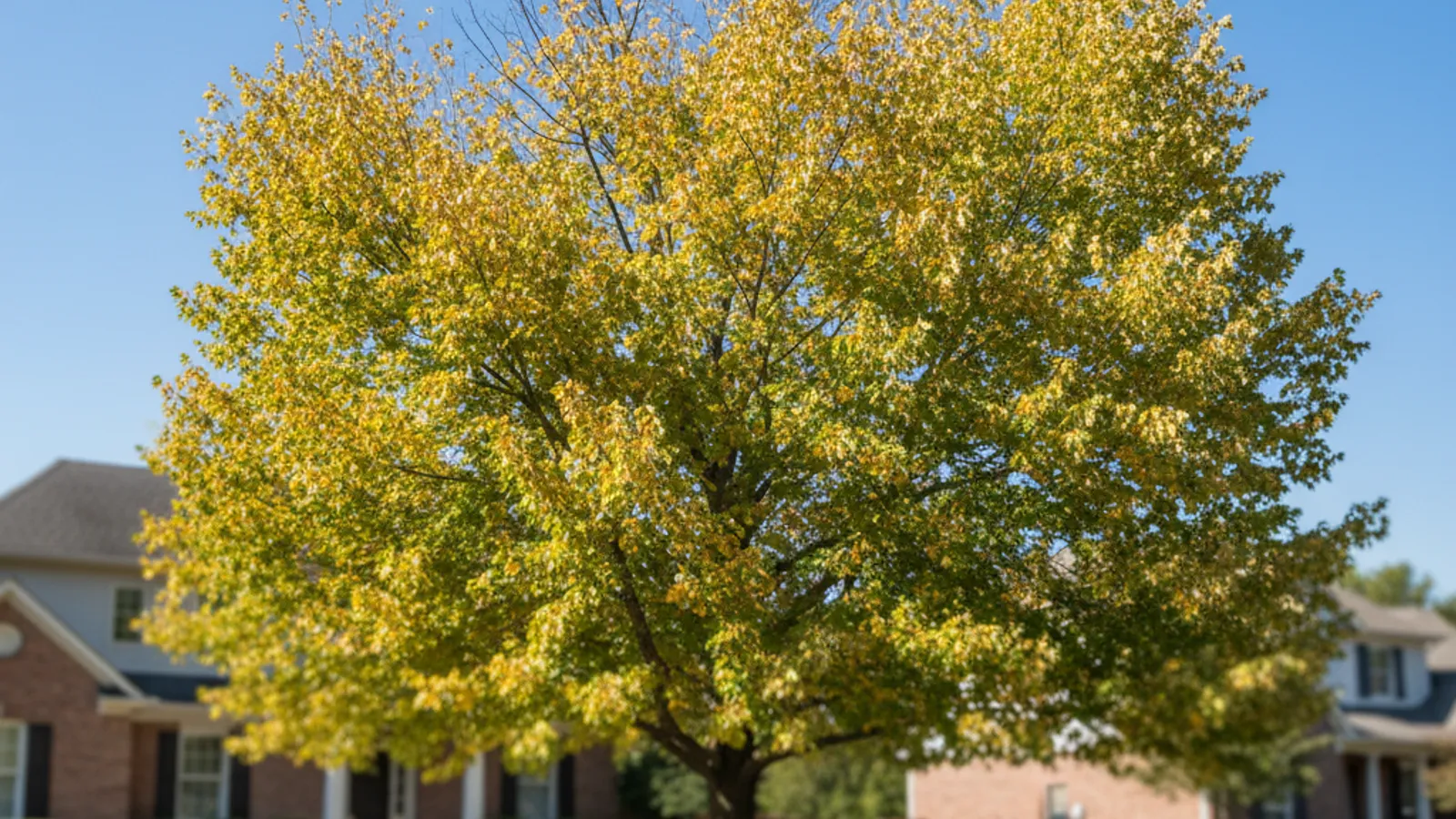
One challenge is that there is no single visual symptom that reliably identifies antifreeze poisoning in a tree. The following signs can indicate that a tree is under stress, but they can also result from drought, root damage, disease, pests, or other soil contaminants.
Yellowing Leaves
Leaves may turn yellow when a tree is experiencing stress or struggling to obtain adequate water and nutrients. Yellowing alone does not establish that antifreeze is responsible.
Wilting and Drooping Foliage
A tree may wilt when its roots cannot supply enough water to the canopy. Soil contamination is one possible explanation, but inadequate irrigation and damaged roots are also common causes.
Branch Dieback
Dead branch tips or progressive canopy thinning may indicate serious stress. The pattern and progression of the damage can help an arborist investigate the cause.
Reduced Growth
A tree may produce fewer leaves, shorter shoots, or less vigorous growth if its root system is impaired.
If a weed killer was used nearby around the same time, compare the symptoms with our guide on whether RM43 kills trees, since a soil-active herbicide can also cause yellowing and decline.
How Long Does It Take for a Tree to Show Antifreeze Damage?
There is no established timetable that applies to every tree or spill. Symptoms may become noticeable after exposure, while other cases may be difficult to diagnose until the tree begins to decline.
The timing depends on the quantity and concentration of coolant, the extent of root exposure, environmental conditions, and the tree’s existing health.
If a tree starts declining shortly after a known coolant spill, that timing is useful evidence for an investigation. It is not proof by itself that antifreeze caused the damage.
Does Ethylene Glycol or Propylene Glycol Make a Difference?
Yes. The type of glycol matters, although neither product should be deliberately poured around trees.
| Antifreeze ingredient | Environmental considerations |
|---|---|
| Ethylene glycol | A major ingredient in conventional automotive coolant. Large spills can harm plants, and the substance can move through soil and contaminate water. |
| Propylene glycol | Often used in products marketed as less toxic alternatives. It can still enter soil and water, and its effects depend on concentration, formulation, and exposure. |
The Australian Department of Climate Change, Energy, the Environment and Water reports that high concentrations of ethylene glycol associated with major spills can cause plant death or reduced growth. It also notes that ethylene glycol can break down in soil over several days to a week under the conditions described in its environmental assessment.
Propylene glycol generally has a lower toxicity profile for many organisms than ethylene glycol, but that does not make a spill harmless. Research has documented plant injury from propylene glycol vapour under specific controlled growing conditions, although those findings cannot be directly translated into a prediction for a tree growing outdoors.
The practical takeaway: Check the product label and treat spilled automotive coolant as a substance requiring proper containment and disposal, regardless of which glycol it contains.
What Should You Do If Antifreeze Spills Near a Tree?
If antifreeze has spilled near a tree, the priority is to stop further leakage, prevent the liquid from spreading, and determine whether the soil has been contaminated.
- Stop the source. If the spill comes from a vehicle, prevent further leakage if you can do so safely.
- Keep people and animals away. Ethylene glycol antifreeze can cause serious poisoning if swallowed, particularly by pets.
- Prevent the liquid from spreading. Use an appropriate spill kit for a small spill, following the product’s safety instructions. Avoid washing coolant into stormwater drains or across the root zone.
- Seek appropriate cleanup advice. A substantial spill may require contaminated soil to be removed and disposed of properly. The appropriate response depends on the quantity and location.
- Monitor the tree. Record the spill location and date, photograph the tree, and seek an arborist’s assessment if symptoms develop.
Victoria’s Environment Protection Authority explains that pollution cleanup depends on the substance involved, the affected environment, and the scale of the incident. Contaminated soil may need to be excavated and removed rather than simply washed away. In the US, used coolant and soaked absorbents are typically handled through household hazardous waste collection.
Do not dig extensively around a tree’s roots or apply large quantities of water without professional advice. Either action can cause additional damage or spread contamination.
Can a Tree Recover From Antifreeze Damage?
Yes, recovery may be possible, but it cannot be guaranteed.
A tree exposed to a small spill may experience little or no lasting damage, while a tree with extensive root-zone contamination may decline severely.
Recovery depends on factors such as:
- The amount and concentration of antifreeze released.
- How much of the root system was exposed.
- Whether the soil remains contaminated.
- The tree’s species, age, and general condition.
- Whether additional stressors are present.
Do not immediately remove a tree just because its leaves begin yellowing after a spill. An arborist can evaluate whether branches are alive, whether the tree is structurally safe, and whether its condition is improving or deteriorating.
Equally, do not assume that a tree will recover simply because antifreeze has disappeared from the ground. The absence of visible liquid does not establish that the soil is uncontaminated.
Frequently Asked Questions
Will pouring antifreeze around a tree kill it?
It can cause harm, particularly if a substantial amount enters the root zone, but there is no reliable amount that guarantees tree death. Antifreeze should never be used as a tree-killing chemical.
Will antifreeze kill grass and plants too?
High concentrations of ethylene glycol from major spills can cause plant death or reduced growth. The effects on grass and other plants depend on the product, concentration, and exposure conditions.
Does antifreeze stay in soil permanently?
No. Ethylene glycol can biodegrade in soil, often over days to weeks, depending on environmental conditions. However, the time required for a contaminated site to become safe cannot be determined from that general degradation estimate alone.
Will antifreeze kill tree roots without affecting the leaves immediately?
Root injury may not produce immediate, obvious canopy symptoms. However, the available evidence does not support a universal timeline or concentration that predicts when a particular tree will decline.
Is old antifreeze still harmful to trees?
Used antifreeze should be treated as potentially hazardous waste. Its composition may have changed through use and contamination, and it can contain additives or substances picked up from the cooling system. Do not dispose of it in soil, drains, or garden beds.
Final Verdict: Will Antifreeze Kill Trees?
Yes, antifreeze can damage trees and may contribute to their death when a substantial amount contaminates the root zone. However, tree death is not inevitable, and the outcome depends on the product, amount spilled, soil conditions, and tree health.
The best response to a spill is to prevent further contamination, arrange appropriate cleanup, and monitor the affected tree. If the spill is substantial or the tree begins to decline, consult an environmental cleanup professional and a qualified arborist rather than attempting to treat the soil yourself.
Most importantly, antifreeze should never be poured around a tree to kill it. If you need to remove an unwanted tree, use a lawful tree removal service and check any applicable local requirements.
This article is for general educational purposes. It does not replace professional environmental cleanup advice, an arborist’s assessment, or the safety instructions for the specific coolant product.