
Will Ortho GroundClear Kill Trees? Risks, Roundup Comparison and Safer Use
Key Takeaways
- Ortho GroundClear can injure or kill trees through spray, green bark contact or treated soil.
- GroundClear is a family of products; check the active ingredients on your label.
- Year Long and residual formulas pose the highest risk because they stay active in soil.
- Tree roots extend beyond the canopy, so the danger zone is wider than it looks.
- Whether GroundClear is safer than Roundup depends on the exact formulas compared.
- Keep pets off treated areas until dry and follow the label.
Ortho GroundClear can injure or kill trees, but only when enough reaches their leaves, green bark or roots. Which formula you use and where you spray matter more than the brand name.
Will Ortho GroundClear Kill Trees?
Yes, Ortho GroundClear can injure or kill trees if enough of the product reaches their roots, bark, or green tissue. The risk depends on which GroundClear formula you use, how much you apply, and how close you get to tree roots.
Many GroundClear products are non-selective. They damage most plants they contact, including trees, shrubs, lawn grass, and perennials.
Some formulas are soil-active and can move into the root zone. Once absorbed, systemic ingredients move inside the tree and can affect branches far from where you sprayed.
Tree damage ranges from temporary leaf burn to slow decline and death. Killing a few surface roots is very different from killing the entire root system, so results can vary widely by tree size, species, and site conditions.
How GroundClear Can Damage Trees
GroundClear can affect trees in several ways:
- Spray landing on leaves or green shoots can be absorbed and move into the plant.
- Spray hitting thin, green bark or small stems can enter directly through the bark.
- Soil-active ingredients can move downward into the root zone, especially in sandy or disturbed soils.
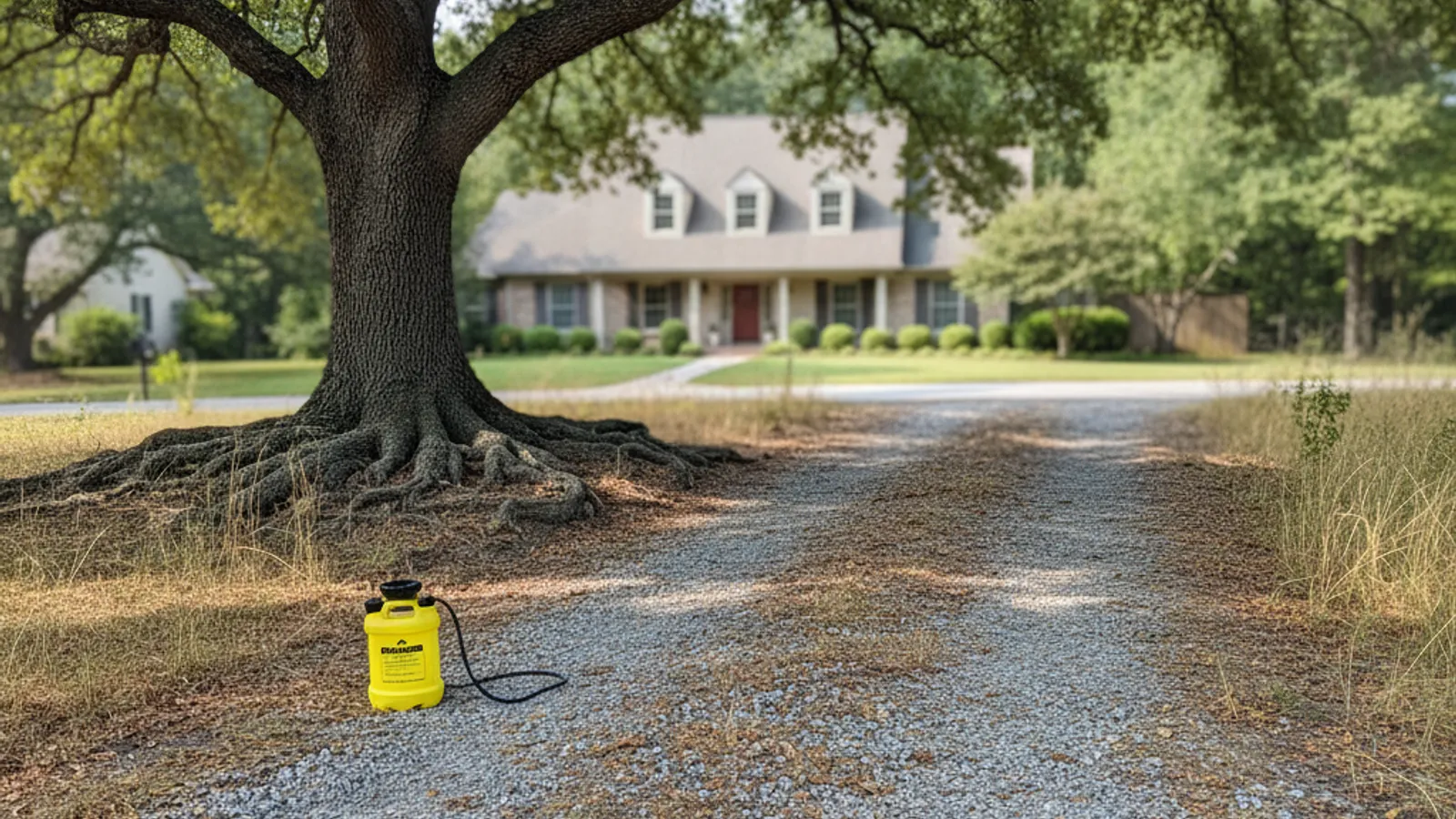
- Surface roots under gravel, mulch, or thin soil can be exposed directly when you treat driveways or paths.
Fast damage often shows up as scorched or wilted foliage. Longer-term damage occurs when systemic ingredients move to growing points and roots.
The soil route is the one most homeowners miss. Products that stay active in soil, like the imazapyr in RM43, can reach roots you never sprayed, as our guide on whether RM43 kills trees explains.
Factors That Increase the Risk to Trees
Tree injury is more likely when:
- You use a Year Long or ground sterilizer type GroundClear with long residual activity.
- The treated area overlaps the tree’s root zone. Roots usually reach well beyond the drip line.
- Soil is sandy, gravelly, or compacted so herbicide moves sideways more easily.
- Trees are young, stressed, or recently transplanted.
- You spray on hot, windy days, which increases drift and plant uptake.
Repeated applications in the same spot also build up risk over time.
Signs Your Tree Has Been Damaged by Herbicide
Herbicide injury usually appears within a few days to several weeks, depending on the product and tree activity. Possible signs include:
- Sudden wilting, yellowing, or browning of leaves on one side or one branch.
- Twisted, cupped, or misshapen new leaves and shoots.
- Sparse foliage, short new growth, or dieback at branch tips.
- Branches dying back from the ends inward over a season or two.
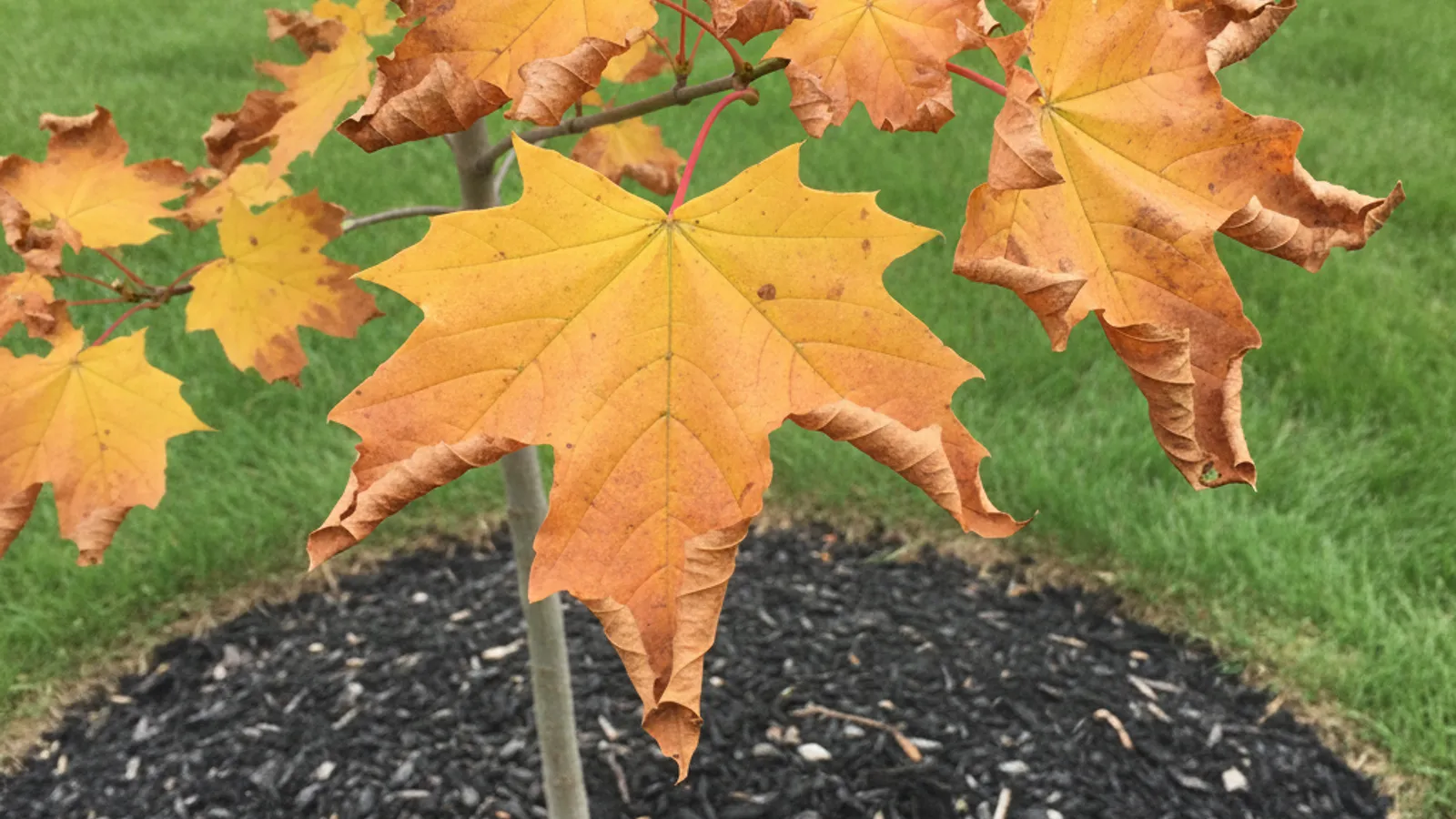
Root damage can show up later as increased susceptibility to drought, fungi, or insects. Diagnosis can be difficult, so patterns (only trees near treated areas) and timing (shortly after spraying) are important clues.
What Is in Ortho GroundClear and How Does It Work?
GroundClear is a family name used on several products, not a single formula. Some act mainly on contact with leaves, while others stay in the soil and affect roots for months.
The main concern for tree safety is whether the active ingredients move in soil and inside plants. Systemic or residual products have higher potential to reach tree roots.
Key GroundClear Products and Ingredients
Check your specific bottle, because names and actives can change. Common product types include:
- Year Long or Vegetation Killer products that combine a fast burndown ingredient with a long-lasting soil-active herbicide.
- Weed and Grass Killer products that work mainly on contact with leaves and break down more quickly in soil.
- Concentrates sold for mixing with water, which can be stronger and easier to over-apply than ready-to-use sprays.
Soil-active ingredients are the ones most likely to affect roots and persist in the treated area.
Does Ortho GroundClear Contain Glyphosate?
Some GroundClear products have included glyphosate, while others use different herbicides. The label on your specific bottle will list the active ingredients and their percentages.
If you do not see “glyphosate” in the active ingredient list, that particular GroundClear product does not contain it. If you do see it listed, you should treat it as a non-selective systemic herbicide that can move into plants and potentially into tree roots.
Because formulas change over time, always base your decisions on the actual label you have, not on older product descriptions. The EPA explains how to read the active ingredients and directions in its guide to pesticide labels.
How Long GroundClear Stays Active in Soil
Persistence in soil varies by:
- Which GroundClear product you use.
- Soil type and organic matter.
- Temperature and moisture.
Short-term weed and grass killer products typically break down more quickly and have limited soil activity. Year long or vegetation killer formulations are intended to keep areas bare for many months.
Some labels instruct you not to plant in treated soil for extended periods, sometimes a growing season or longer. That guidance is a good indicator of how long the active ingredients may remain available to plant roots.
How Close Can You Use GroundClear Around Trees?
Using GroundClear directly over tree roots, even if you do not see roots at the surface, carries real risk. Tree root systems often extend well beyond the edge of the canopy.
Because of this, “right up to the trunk” is not the only danger zone. Any soil where roots might be present can be affected by soil-active GroundClear.
Safe and Unsafe Areas to Spray Near Trees
Risk tends to increase as you move closer to the main root zone.
Rough guidance:
- Highest risk: Within a few feet of the trunk where main roots are concentrated.
- Moderate to high risk: Under and slightly beyond the tree’s drip line.
- Lower but still possible risk: Several feet beyond the drip line, particularly in light soils.
Avoid spraying:
- On exposed roots or cracks in the soil near trees.
- In planting beds or mulch rings around trunks.
- In low areas where runoff collects around trees.
Even outside the canopy, assume large trees may have feeder roots well beyond what you can see.
Using GroundClear on Driveways, Fencelines, and Mulch Rings
GroundClear is often used on:
- Gravel driveways and parking pads.
- Fencelines and property edges.
- Patios, sidewalk cracks, and along foundations.
If any of these areas are near trees, use extra caution. Gravel does not stop roots from growing underneath, and herbicides can wash down through it.
Safer practices include:
- Choosing non-residual products for cracks and edges near trees.
- Keeping a generous untreated buffer between treated gravel and nearby trunks.
- Avoiding GroundClear in decorative mulch rings or rock beds at the base of trees.
Safer Alternatives for Weed Control Around Trees
Around trees, consider approaches that avoid soil-active herbicides:
- A thick layer of wood chips or bark mulch kept away from the trunk flare.
- Hand pulling or hoeing young weeds before they set seed.
- A string trimmer used carefully to avoid bark damage.
- Spot applications of short-lived, non-residual herbicides applied with a shield.
For larger problem areas, mechanical edging, landscape fabric under mulch, or selective grass-friendly herbicides may be safer than GroundClear.
Does Ortho GroundClear Kill Grass and Other Desirable Plants?
GroundClear is generally non-selective. It is intended to kill or suppress most vegetation where it is applied, not just specific weed species.
GroundClear products can kill grass, flowers, shrubs, vegetables, and young trees if they are directly sprayed or if their roots contact treated soil.
Will Ortho GroundClear Kill My Lawn?
GroundClear is not a lawn herbicide and should not be used to control weeds in turf grass. If it contacts lawn grass:
- Leaves may yellow, wilt, and die.
- Patches of lawn may die completely, often in sharp patterns matching where you sprayed.
- Recovery can be slow or impossible if residual ingredients are present.
Broadcast spraying GroundClear over a lawn will usually create large dead areas that need to be re-established later. Even spot spraying can leave visible dead spots.
Impact on Shrubs, Perennials, and Young Trees
Shrubs, perennials, groundcovers, and young trees can be affected by:
- Direct spray on leaves and stems.
- Splash or drift from nearby applications.
- Root uptake from soil-active ingredients applied in the same bed.
Young plants and shallow-rooted ornamentals are particularly vulnerable. In mixed planting beds, it is difficult to confine GroundClear to only the weeds without risking nearby desirable plants.
Ortho GroundClear vs Roundup: Tree Safety and Effectiveness
Ortho GroundClear vs Roundup comparisons are common because both are used for killing unwanted vegetation. Their risk to trees depends on the specific formulation, not just the brand name.
Some Roundup products contain only glyphosate, while others include additional soil-active ingredients similar in purpose to GroundClear’s Year Long products.
Key Differences Between GroundClear and Roundup
Important distinctions include:
- GroundClear is marketed more often as a long-term bare ground product, especially the Year Long versions.
- Many Roundup products focus on foliar application with limited soil residual, although some extended control versions do exist.
- Different active ingredients have different mobility in soil and plants.
| Product type | Soil residual | Risk to tree roots |
|---|---|---|
| Contact weed and grass killers | Short | Lower, but still burns leaves it hits |
| Foliar glyphosate-only products | Limited | Moderate; harms leaves and green bark |
| Year Long, 365 or residual vegetation killers | Months | Highest; roots can take it up from soil |
For tree safety, products that break down quickly in soil and do not include residual herbicides are usually less risky around roots.
Is Ortho GroundClear Safer Than Roundup?
There is no simple answer to “is Ortho GroundClear safer than Roundup” around trees. It depends on:
- Which GroundClear formula you compare.
- Which Roundup product you are using.
- Whether you apply them to foliage only or to soil.
A foliar-only glyphosate product applied carefully to target weeds can sometimes be less risky to tree roots than a residual GroundClear applied to soil, even if both are non-selective.
Ortho GroundClear Year Long vs Roundup 365 Near Trees
“Year long” GroundClear and Roundup 365 type products are both aimed at long-term vegetation control. Both generally:
- Combine a fast-acting herbicide with soil-active components.
- Are intended for driveways, walkways, and fence lines.
- Can pose elevated risk to tree roots where applied over or near root zones.
Since both are residual, they should be treated with similar caution near any desirable trees or shrubs.
Is Ortho GroundClear Better Than Roundup for Tree Killing?
Both GroundClear and some Roundup formulations can kill trees if misused or intentionally applied for that purpose. However, using these consumer products specifically to kill trees or woody brush is not their primary labeled purpose.
If your goal is to remove unwanted trees or heavy brush, specialized brush or tree killers exist but also carry increased risks to other plants. Any such use should be approached carefully and in line with label restrictions.
Even on invasive plants, a glyphosate Roundup product usually needs repeat treatments, as our guide to using Roundup on bamboo shows.
Accidental Spray or Drift Onto Trees: What Should You Do?
If GroundClear or Roundup gets on your tree, quick action can sometimes reduce damage. The best response depends on whether the product hit leaves, bark, or soil.
Try to note which product you used and how concentrated it was, as this affects your options.
If You Sprayed GroundClear on Tree Bark or Leaves
If spray contacted leaves or green bark:
- As soon as possible, rinse foliage and bark thoroughly with plain water, directing flow downward to minimize runoff into soil.
- Focus on the areas you know were sprayed or show droplets.
- Avoid high pressure that could damage bark or wash large amounts into the root zone.
- Over the next weeks, monitor the tree for localized leaf dieback or distortion.
Once herbicide has dried and been absorbed, rinsing is less effective, but early washing may still limit uptake.
If You Sprayed GroundClear Onto Soil Over Tree Roots
If the ground near a tree was treated:
- Lightly irrigate the area to encourage dilution, unless the label warns against this in your situation.
- Do not heavily flood or move soil, which can spread the herbicide farther.
- If the treated area is small and accessible, some people lightly remove and dispose of the top layer of soil, but this is labor intensive and not always practical.
- Avoid additional stress on the tree that season, such as heavy pruning or drought.
Watch the tree through the next growing season, as root-related damage can appear with a delay.
When to Call a Certified Arborist
Contact a certified arborist if:
- A large or valuable tree was exposed.
- You see rapid, extensive browning or wilting soon after treatment.
- Several trees bordering a treated area show similar symptoms.
An arborist may recommend targeted pruning, supportive watering, or other measures. While there is no simple antidote for herbicide in trees, early professional input can help reduce long-term losses.
How to Kill Weeds Around Trees Without Harming Them
Controlling weeds near trees is often necessary, but it does not require heavy, long-lasting herbicides. Combining physical methods with careful chemical use can limit risk to tree roots.
The goal is usually to manage weeds, not sterilize the soil.
Manual and Mulch-Based Weed Control
Effective non chemical approaches include:
- Pulling or hoeing young weeds regularly before they seed.
- Applying 2 to 4 inches of organic mulch, such as wood chips, over bare soil around trees, leaving a small gap around the trunk.
- Using landscape fabric under mulch in difficult areas, avoiding tight wrapping around trunks.
- Mowing or string trimming weeds outside the mulch ring, taking care not to nick the bark.
These methods improve soil health and moisture retention while suppressing many weeds.
Careful Use of Non-Residual Herbicides Around Trees
If you choose herbicides near trees:
- Favor products labeled as non-residual or with short re-entry and replanting intervals.
- Use a hand sprayer with a narrow pattern for precise spot treatments.
- Shield tree trunks and desirable plants with cardboard or plastic while spraying nearby.
- Apply on calm days to avoid drift. The EPA’s guide to reducing pesticide drift explains how wind and droplet size affect where spray lands.
Directed glyphosate products are often used this way, applied only to the leaves of target weeds, avoiding bark and soil over main roots as much as possible.
When You Actually Want to Kill Unwanted Trees or Brush
If you have unwanted invasive trees or dense brush:
- Mechanical removal (cutting and digging out roots) is the most direct but labor intensive.
- Cut stump treatments with suitable herbicides applied immediately to freshly cut stumps can reduce resprouting, but must follow label directions very carefully.
- Broad soil applications of heavy-duty vegetation killers around other desirable trees are rarely advisable due to high root zone risk.
Consider consulting a forestry professional or arborist for large removals, especially near valuable trees or structures.
Is Ortho GroundClear Safe for Pets and People?
“Safe” with herbicides generally means “safe when used exactly as directed.” GroundClear products are designed for specific uses and come with label instructions to limit risks to pets and people.
Actual safety depends on avoiding direct contact, ingestion, and tracking through wet spray.
Is Ortho GroundClear Safe for Pets?
Key pet safety points:
- Keep pets away from the area while spraying and until sprays have fully dried.
- Do not allow pets to chew plants or dig in freshly treated soil, especially with residual products.
- Small animals that frequently dig, root, or lick their paws may have higher exposure in treated areas.
If a pet is exposed or seems unwell after contact with GroundClear, contact a veterinarian and provide the product label.
Is Ortho GroundClear Safe for Humans?
For people:
- Avoid breathing spray mist and prevent contact with skin and eyes.
- Wear the personal protective equipment (PPE) called for on the label, such as gloves or eye protection.
- Wash hands and exposed skin after mixing or spraying.
Children are more likely to put soil or treated plant material in their mouths, so avoid using residual GroundClear products in play areas.
How Long After Applying GroundClear Before Pets Can Return?
Most labels instruct that people and pets should stay off treated areas until sprays are completely dry. Drying time varies with temperature, humidity, and surface type.
For soil-active GroundClear products, additional caution may be advisable if pets tend to dig or roll in the treated area. Allowing extra time before unsupervised access can further reduce contact.
Does Ortho GroundClear Cause Cancer?
Cancer risk assessments are complicated and depend on specific active ingredients, doses, and exposure patterns. Regulatory agencies review herbicide components and classify them differently based on available evidence.
Product labels typically include any required warnings for known or suspected long-term health risks. If you are concerned about cancer or other chronic health effects, review the safety information on your product label and consult a medical professional about your individual situation.
How to Mix and Apply Ortho GroundClear More Safely
Using GroundClear at higher than labeled rates greatly increases the risk to trees and other non target plants. Precision and restraint are important both for effectiveness and safety.
Always read the exact instructions on your own product label before mixing or applying.
GroundClear Concentrate Mix Ratios and Settings
For Ortho GroundClear concentrate and similar products:
- Use the mix ratio specified for the weed type and area size you are treating.
- If your sprayer has dial settings, match them to the label’s guidance rather than guessing.
- Only mix the amount you can use that day to avoid storage and accidental reuse at the wrong concentration.
Using more than the recommended amount rarely improves weed control but does increase potential off target damage.
Application Tips to Reduce Tree and Lawn Damage
Safer application habits include:
- Spraying only when wind is calm to minimize drift.
- Keeping the nozzle close to the ground with a coarse spray to reduce fine mist.
- Avoiding use on slopes where runoff may carry herbicide toward trees or lawns.
- Spot treating individual weeds instead of broadcast treating large mixed areas near desirable plants.
Rinse sprayers thoroughly after use so remnants do not harm plants during future applications with other products.
How Long GroundClear Takes to Work and When You Can Replant
Visible weed injury usually appears within days to a couple of weeks, depending on weather and the product. Roots may take longer to die fully.
Replanting timelines vary widely:
- Shorter lived GroundClear products may allow replanting after a relatively brief waiting period.
- Year long or residual formulations may require waiting a full growing season or longer, as suggested on the label.
If you plan to establish new trees, shrubs, or a lawn, avoid using long-term GroundClear in that area in the preceding season.
Frequently Asked Questions
Will Ortho GroundClear kill tree roots permanently?
It can. Soil-active formulas may be taken up by roots, and severe exposure can cause lasting decline or death. Light or brief exposure may only cause temporary injury, so the outcome depends on the product, the dose and the tree.
Can Ortho GroundClear kill mature trees or only small ones?
Mature trees are not immune. Their roots often reach under driveways and beds that get treated, although a large tree may tolerate a small exposure better than a young one.
Is it safe to use Ortho GroundClear on a gravel driveway with trees nearby?
Use caution. Gravel does not stop roots growing underneath, so avoid residual Year Long formulas where roots of desirable trees may be present and keep a generous untreated buffer.
How long after using GroundClear can I plant a new tree in that spot?
It depends on the formula. Short-lived products may allow replanting fairly soon, while residual products can require waiting a growing season or longer. Follow the replanting interval on your label.
Can I use GroundClear in a flower bed under a tree?
It is not recommended. Flower beds under trees sit directly over feeder roots, and GroundClear is non-selective, so it can harm both the bed plants and the tree.
Is Ortho GroundClear safe for pets?
Keep pets off treated areas until the spray has completely dried and follow the label. If a pet is exposed or seems unwell, contact a veterinarian and have the label ready.
Final Verdict: Should You Use Ortho GroundClear Near Trees?
Ortho GroundClear can kill or seriously injure trees when used over or near their root zones, on their foliage, or on green bark. Residual Year Long products are particularly risky to tree roots and should not be used in beds, mulch rings, or gravel areas that likely contain roots from desirable trees or shrubs.
For most homeowners, GroundClear is best reserved for isolated hardscape areas located well away from important plants. Around trees, safer choices are mulch, manual weeding, and, when needed, carefully directed non-residual herbicides applied only to target weeds.
This information is for general education only and is not a substitute for reading product labels or obtaining professional safety, medical, or legal advice.