
Will Salt Kill Bamboo? Roots, Risks and Better Ways to Get Rid of It
Key Takeaways
- Salt can kill bamboo top growth, but it rarely reaches the whole rhizome network, so regrowth is common.
- Enough salt to hurt bamboo also poisons the soil, spreads with rain and can damage lawns, trees and a neighbour's garden.
- Vinegar, boiling water and bleach mostly burn what they touch and do not travel down into the rhizomes.
- Digging out rhizomes, repeated cutting and smothering, or a systemic herbicide on fresh cuts give far more permanent results.
- Running bamboo near fences, foundations or a property line is usually a job for a professional, not a bag of salt.
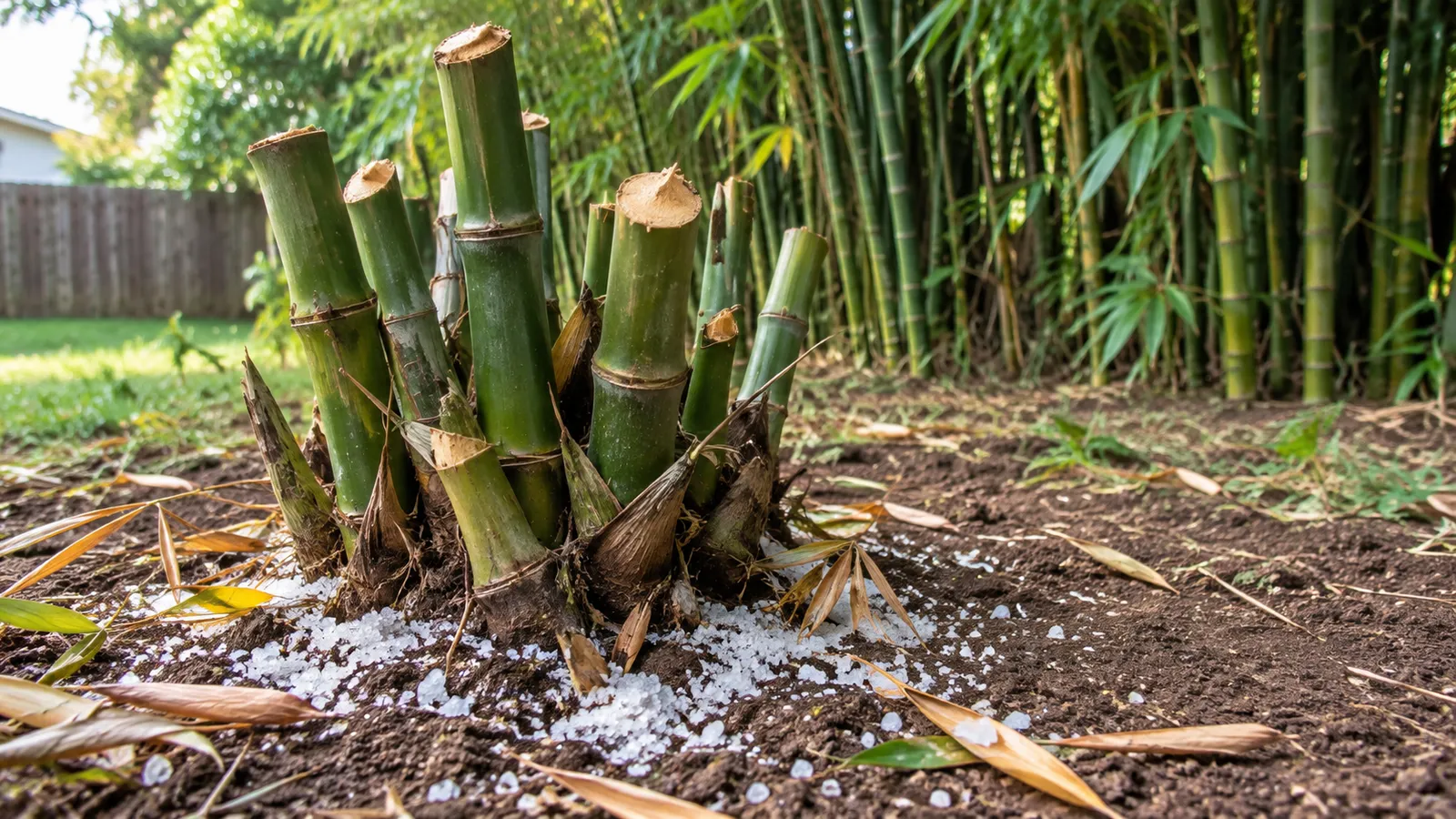
Salt can kill bamboo, but only if you use a lot of it and keep the soil very salty for a long time. In most gardens it is a poor choice: it works slowly, often misses the deep rhizomes that keep the plant alive, and can leave the ground unusable for other plants for years.
This guide explains what salt actually does to bamboo and soil, why it so often fails, and which methods kill bamboo properly instead, from digging and smothering to herbicides and simple home remedies.
Will Salt Kill Bamboo?
Yes, in high enough concentrations salt can kill bamboo canes and some of the roots near the surface. The real question is whether it kills the whole plant, and the answer is usually no.
Bamboo lives in its rhizomes, the thick underground stems that spread sideways and store energy. To kill bamboo for good you have to kill or remove those rhizomes, and salt is a blunt tool for that job.
How Does Salt Affect Bamboo and Soil?
Salt in the soil draws water out of roots and young shoots. This osmotic stress dries out and burns the tissue, so leaves yellow and brown and some culms die back.
The problem is that salt does not stay where you put it. It builds up in the soil, moves with rain and irrigation, and can injure lawns, shrubs, trees and the soil life that keeps a garden healthy. In heavier clay soils it can linger for years, and in free draining soils it tends to wash downslope or into drains.
Will Salt Kill Bamboo Roots Underground?
Rarely. Running bamboo rhizomes can travel a long way sideways and sit at different depths, while salt spread on the surface mostly stays in the top layer of soil. It seldom reaches every part of the network at a lethal dose.
The result is a stand that looks damaged rather than dead. Parts of the clump brown off, while rhizomes outside the salted zone keep feeding new shoots, often pushing into less salty soil nearby.
Is Salt a Good Way to Get Rid of Bamboo?
For most homeowners, no. Salt tends to cause wide soil damage while still letting the rhizomes survive and resprout, so you end up with poor soil and bamboo.
What Are the Pros and Cons of Killing Bamboo With Salt?
Salt has a few small advantages, but the downsides outweigh them in almost every garden.
| Pros | Cons |
|---|---|
| Cheap and easy to buy | Can leave soil barren for years |
| No special equipment needed | Rarely kills the full rhizome network |
| Not flammable or volatile | Spreads with rain to lawns, trees and drains |
| Can brown off top growth | Patchy results, especially on running bamboo |
When Is Using Salt on Bamboo a Bad Idea?
Salt is a bad idea anywhere the soil is shared with plants you want to keep, which in a suburban garden is almost everywhere. Avoid it near lawns, vegetable beds, hedges, trees, ponds and water tanks.
On slopes or near drains, salty water can run into stormwater systems and the neighbouring property. Stormwater generally flows untreated to creeks and bays, which is why EPA Victoria asks households to keep pollutants out of it. Along fences and shared boundaries, salt can also damage footings and a neighbour’s plants, which is a quick way to start a dispute.
What Are the Best Ways to Kill Bamboo Permanently?
The methods that work all target the rhizomes directly, without contaminating the soil for years. That usually means physical removal, steady pressure on regrowth, and in some cases a carefully applied herbicide.
Mechanical Removal and Root Excavation
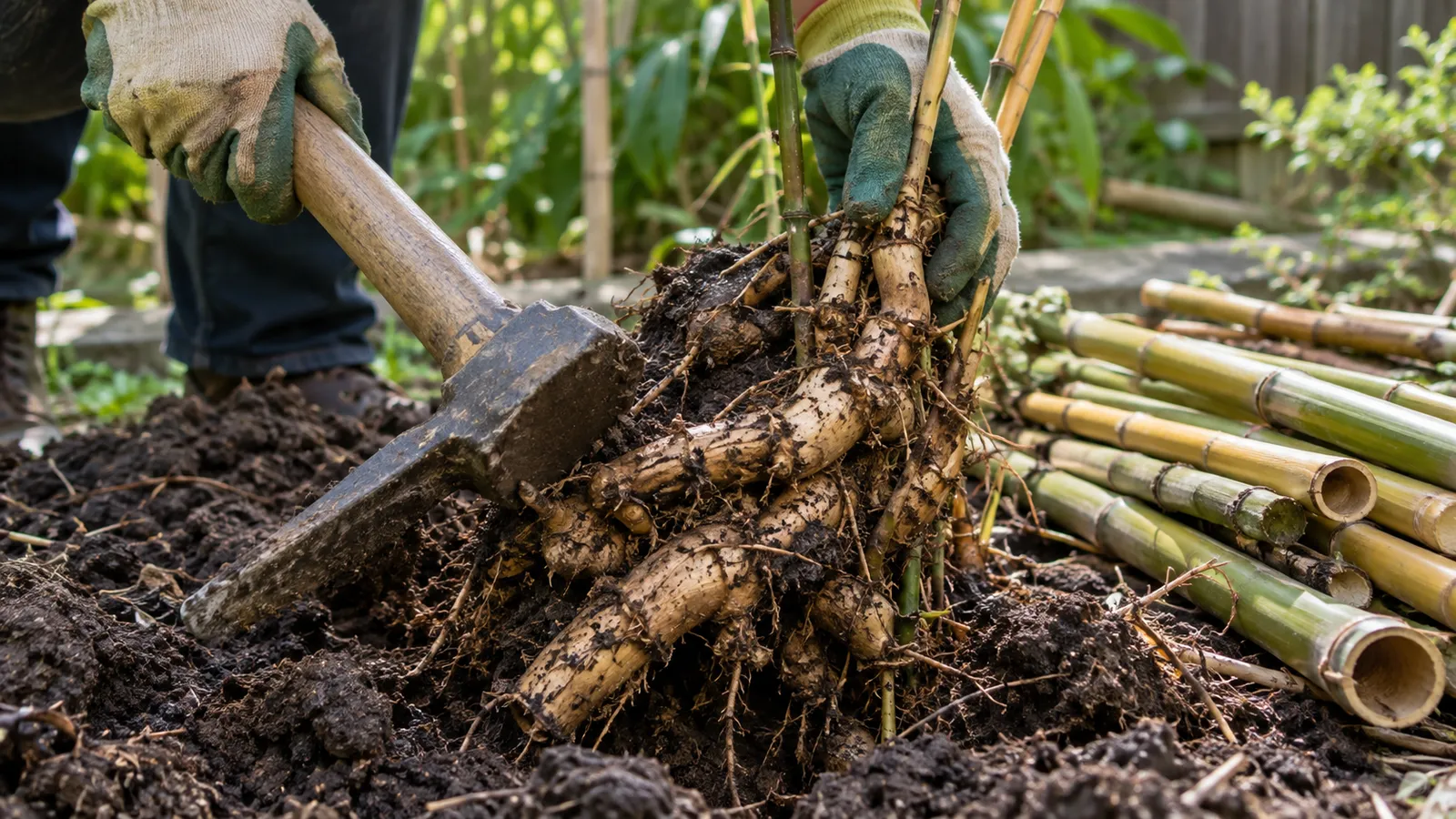
For small to medium patches, digging out the rhizomes is the most reliable long term method. Cut the canes near ground level, then use a spade or mattock to lift the thick, woody rhizomes and follow them through the soil.
Work in sections and remove every piece you can find, including the buds along each rhizome. Cut any new shoot that appears afterwards straight away so it cannot feed what is left. It is hard work, but once most of the rhizome mass is gone, the rest is easy to control.
Systemic Herbicides for Bamboo Control
A systemic herbicide is absorbed through leaves or fresh cuts and carried down into the rhizomes, which is exactly where salt fails. Products are either painted onto freshly cut culms or sprayed onto healthy leafy regrowth.
Timing matters. Treatment works best when the bamboo is actively growing and moving sugars down into its rhizomes, often late summer into early autumn. Expect repeat treatments as new shoots emerge. Our guide to how glyphosate kills bamboo walks through the cut stump and foliar methods in detail.
Barriers and Containment When You Cannot Remove All the Bamboo
Sometimes the bamboo starts on the other side of a fence, so you cannot remove the source. Containment keeps it out of your garden instead.
A root barrier of heavy plastic or metal is installed vertically along the boundary, with the top edge left slightly above soil level so you can spot rhizomes trying to jump over it. Combine it with regular cutting or mowing of any shoots on your side, and the invading rhizomes gradually weaken without any salt or harsh chemicals.
Which Chemicals Actually Kill Bamboo?
Several herbicides are used on bamboo, but none is an instant, one time fix. The effective ones are systemic, applied correctly and repeated until regrowth stops.
Glyphosate (Roundup and Similar Products)
Glyphosate can weaken and eventually kill bamboo when it is used methodically. It works best on lots of healthy green leaves or painted directly onto fresh cuts, and it needs several applications over months, letting regrowth reach a leafy stage before each treatment. In Australia it is regulated by the APVMA, so use a registered product exactly as labelled. If you are weighing up the brand name itself, see our guide on whether Roundup kills bamboo.
Imazapyr for Bamboo
Imazapyr is a stronger systemic herbicide that is also active in the soil. It moves through roots into rhizomes and can persist in the ground for an extended period, which is why it is sometimes used on large or wild infestations.
That same soil activity makes it risky in a garden, because it can injure trees and other plants whose roots reach the treated area. Use it only where label directions allow and where long term soil activity is acceptable.
Other Bamboo Herbicides and Root Killers
Brush killers and stump formulations, some containing triclopyr, are also used on woody plants and are usually painted onto cuts. Whatever the product, the realistic pattern is the same: reduce the stand, then spot treat new shoots whenever they appear until the rhizomes run out of energy.
| Active Ingredient | Typical Product | How It Works | Key Caution |
|---|---|---|---|
| Glyphosate | General weed killer | Systemic | Several treatments, avoid drift |
| Imazapyr | Brush and woody plant control | Systemic, soil active | Long soil persistence, harms nearby trees |
| Triclopyr | Brush and stump killer | Systemic | Mainly used on cut stumps |
| Acetic acid | Vinegar herbicide | Contact only | Burns foliage, little effect on rhizomes |
What Kills Bamboo Naturally?
Plenty of people look for a natural way to kill bamboo to avoid herbicides. Some natural methods work with patience, while others only damage the top growth and leave the rhizomes alive.
Cutting and Smothering
Repeated cutting combined with smothering is a fully chemical free strategy. Cut all canes close to the ground, then cover the area with overlapping cardboard or heavy landscape fabric topped with a deep layer of mulch.
Check regularly and cut any shoot that pushes through a seam or edge. Over one to several growing seasons, the lack of light and the constant loss of new leaves drain the rhizome reserves. It takes space and persistence, but it keeps the soil clean.
Will Vinegar Kill Bamboo?
Vinegar kills leaves, not roots. Household vinegar and stronger horticultural vinegar are contact herbicides: they burn the tissue they touch but do not travel down into the rhizomes.
Sprayed shoots may wilt within days, but regrowth from underground is typical. So when people ask how long it takes for vinegar to kill bamboo, the honest answer is that it rarely kills the whole plant at all.
Does Epsom Salt Kill Bamboo?
Epsom salt is magnesium sulfate, sold mainly as a plant nutrient for low magnesium soils. At heavy doses it can cause salt stress, but it is no more effective on rhizomes than table or rock salt and carries the same soil and runoff risks.
Will Boiling Water Kill Bamboo?
Boiling water scalds and kills the tissue it touches. Poured into freshly cut culms or onto a very small, young patch, it can do real damage. In an established stand, though, the water cools long before it reaches the rhizomes, so you get local dieback and plenty of regrowth.
How Do the DIY Methods Compare?
| Method | Reaches Rhizomes? | Time to Results | Risk to Soil and Plants |
|---|---|---|---|
| Digging out rhizomes | Yes, where removed | Immediate | Low |
| Systemic herbicide | Yes, gradually | Weeks to months | Medium if misapplied |
| Cutting and smothering | Indirectly | One to several seasons | Low |
| Salt or Epsom salt | Partly, shallow only | Weeks, often patchy | High |
| Vinegar or boiling water | Mostly top growth | Days | Low to medium |
Will Bleach Kill Bamboo?
Bleach is neither a reliable nor a safe way to kill bamboo, and it should never be poured on soil as a root poison. It is a disinfectant, not a systemic herbicide.
Why Do Bleach and Household Cleaners Not Work Well?
Bleach and household cleaners can burn leaves and shallow roots on contact, but they do not move through woody rhizomes. Outdoors they break down and dilute quickly, so deeper roots never receive a lethal dose.
Meanwhile they can kill soil organisms, corrode metal, harm pets and wash into drains. Purpose made methods are safer and far more effective.
How Do You Kill Bamboo Safely, Step by Step?
A planned approach beats trying every home remedy in turn. The goal is to remove or exhaust the rhizomes while keeping people, pets and the rest of the garden safe.
Assess the Size and Type of Bamboo
Start by working out whether you have running or clumping bamboo. Running types spread aggressively through long rhizomes, while clumping types expand slowly from a central mass.
Measure the affected area and note how close it is to buildings, fences, pipes and neighbours. Large running stands near structures often justify professional help from the start.
Cut the Canes and Treat Fresh Cuts
Cut the canes as close to the ground as is safe, using loppers or a pruning saw, and stack the material for disposal. If you are using a systemic herbicide, apply it to the fresh cuts straight away, following the label. If you are avoiding chemicals, cutting prepares the ground for digging or smothering.
Excavate or Weaken the Rhizomes
Dig out as much of the rhizome network as you can, following the thick runners sideways. Where you cannot dig, cut or mow every new shoot as it appears, or treat leafy regrowth with herbicide. Six to twelve months of steady pressure is typical before bamboo stops coming back.
Monitor, Spot Treat and Contain Regrowth
Inspect the area every few weeks during the growing season and deal with each new shoot while it is small. If the bamboo is coming from next door, install a root barrier along the boundary. If shoots keep appearing across a wide area despite your efforts, a professional with excavation equipment will usually be quicker.
Costs and When to Hire a Professional
Bamboo removal cost depends mostly on the size of the stand, how dense it is and how easy it is to reach.
What Affects Bamboo Removal Costs?
A small patch you can reach with hand tools costs little beyond your time, basic tools and green waste disposal. Large, dense stands, bamboo growing through fences or paving, or rhizomes tangled in tree roots are a different job. Professionals may need machinery, several loads of waste removal and follow up visits, and poor access, slopes or rocky soil all add to the effort.
When Are DIY Methods Not Enough?
DIY methods reach their limits when bamboo threatens foundations, pipes or shared structures, or when running bamboo has spread under driveways, retaining walls or into a neighbour’s yard. A reputable contractor can map the rhizome spread and remove it with far less trial and error than escalating home experiments with salt.
Frequently Asked Questions
How fast will salt kill bamboo?
Usually not fast at all. Leaves may brown within a few weeks, but killing a stand with salt takes months of heavy application, and the rhizomes often survive and send up new shoots in less salty soil.
Can bamboo grow in salty conditions?
Most garden bamboos dislike salty soil and grow poorly in it. Moderately salty or brackish conditions tend to stunt bamboo rather than reliably kill it, which is why salt is an unreliable control method.
What kills bamboo roots the fastest?
Digging out the rhizomes removes them immediately and is the fastest practical route on small to medium patches. On larger stands, combining excavation with a systemic herbicide on regrowth is usually quickest.
What kills bamboo permanently without chemicals?
Thorough digging to remove the rhizomes, followed by cutting every new shoot as it appears. Repeated cutting combined with smothering under cardboard and deep mulch also works, but it can take one to several growing seasons.
Will bamboo grow back after being cut down?
Yes. Cutting the canes leaves the rhizomes alive with stored energy, so new shoots appear unless you remove the rhizomes or keep cutting regrowth until those reserves run out.
Is there a good spray for killing bamboo?
A systemic herbicide such as glyphosate, sprayed on healthy leafy regrowth or painted on fresh cuts, is the most practical option for most gardens. Expect several applications, follow the label, and avoid drift onto wanted plants.
Can I use rock salt to stop bamboo spreading along a fence line?
It is usually a bad idea. Salt along a boundary can harm your neighbour's plants, damage fence posts and footings, and leave a strip of soil where nothing grows, while the rhizomes simply run beneath it. A root barrier is the better choice.
Final Verdict: Should You Use Salt to Kill Bamboo?
Salt will kill some bamboo over time, but it is slow, inconsistent and likely to cause lasting damage to your soil and the plants around it. It also misses the deep rhizomes that keep the stand alive.
For almost every garden, digging, cutting and smothering, a root barrier or a carefully applied systemic herbicide will do a better job. Focus on the rhizomes, stay patient with follow up, and leave the salt in the kitchen.
This article is general information only. Always follow product labels and your local rules, and get professional advice for large or sensitive sites.