
Will Glyphosate Kill Bamboo? Concentrations, Cut Stump and Foliar Methods
Key Takeaways
- Glyphosate can kill bamboo, but established stands usually need several treatments over more than one season.
- The active ingredient matters more than the brand: check the glyphosate concentration on the label, not the name on the front.
- Foliar spraying uses a diluted mix at the label's brush rate; cut stump treatment uses a much stronger mix on fresh cuts.
- Fresh cuts must be treated within minutes, before the surface dries and stops absorbing.
- Glyphosate only reaches rhizomes connected to treated leaves or stumps, so missed culms keep the patch alive.
- Combining glyphosate with digging and prompt follow up on new shoots gives the most permanent result.
Glyphosate can kill bamboo, but it usually takes strong, well timed applications over more than one season. How you apply it, and how strong the mix is, matter far more than which bottle you buy.
This guide focuses on the active ingredient itself: what concentration you are actually buying, how the two proven methods (cut stump and foliar spray) work, how long each takes, and why some rhizomes survive. If you are wondering about one specific brand, our guide to whether Roundup kills bamboo covers that product line and the non chemical options in more depth.
Will Glyphosate Kill Bamboo?
Yes, glyphosate is one of the few herbicides that can kill bamboo roots without heavy digging. It is a non selective, systemic herbicide, which means the plant absorbs it and carries it from the leaves or freshly cut stumps down into the underground rhizomes.
The catch is scale. An established stand has a huge rhizome network with large energy reserves. One treatment usually kills the top growth and weakens the roots, but sections of rhizome that did not receive enough glyphosate send up new shoots later. Expect several treatments before the stand really declines.
How Does Glyphosate Work on Bamboo?
Glyphosate is absorbed through green tissue and moves with the sap to the plant’s growing points, including the buds on the rhizomes. It blocks an enzyme the plant needs to make certain amino acids, so the plant slowly starves rather than burning on contact.
That slow, systemic action is exactly what you want on bamboo, because the goal is to get the chemical deep into the root network. It also means results take weeks, not days.
Why Is Bamboo So Difficult to Kill?
Bamboo spreads through a dense, woody rhizome network that can run well beyond the visible canes. Those rhizomes store a lot of energy and can reshoot again and again after the tops are cut or killed.
Running bamboo is the hardest, with thick mats of rhizomes at different depths. Clumping bamboo is more compact but still forms a tough root mass. As long as some healthy rhizome remains, new shoots can appear for years.
How Does Glyphosate Reach the Rhizomes?
The only entry points that matter are healthy leaves, soft new shoots and fresh cuts on live culms. Old woody cane walls absorb very little, and the soil absorbs almost none, because glyphosate binds tightly to soil particles. That is very different from soil active weed killers, which can move through the ground to roots you never meant to treat, as our guide to whether Ortho GroundClear kills trees explains.
So coverage beats dose. Treating every culm, or wetting every leaf, gets more glyphosate into more of the network than an extra strong mix applied to only part of the stand.
What Glyphosate Concentration Is Best for Bamboo?
The right strength depends on the method. Foliar sprays are diluted; cut stump treatments are much stronger. In both cases you must stay within the rates printed on the label of the product you are using.
How Do You Read the Active Ingredient on the Label?
Look past the brand name to the active ingredient line. It will read something like “contains 360 g/L glyphosate” or give a percentage of glyphosate as a salt, such as the isopropylamine salt. Many home garden concentrates sit around 360 g/L, and some stronger concentrates go higher.
| Product Type | What the Label Shows | Mixing Needed | Best Use on Bamboo |
|---|---|---|---|
| Ready to use spray | Low glyphosate content | None | Spot spraying small shoots only |
| Standard concentrate | Around 360 g/L or similar | Dilute per label table | Foliar spray or cut stump |
| Higher strength concentrate | Above standard concentrates | Dilute per label table | Larger jobs, less product to carry |
Ready to use sprays are convenient but weak and expensive for bamboo. A concentrate gives you the flexibility to mix a foliar rate and a cut stump rate from the same bottle. Two products with different glyphosate levels need different amounts of concentrate to reach the same strength, which is why you follow the mixing table rather than copying a ratio from another product.
In Australia, glyphosate products are registered and reviewed by the APVMA, and only registered products used as labelled are legal to apply. Most other countries have a similar system, so always use a product approved where you live.
How Strong Should a Foliar Spray Be?
For established bamboo, use the rate the label gives for tough woody weeds, brush or perennial grasses, not the light rate for small garden weeds. Bamboo is a perennial grass with woody stems, and weak mixes tend to yellow the leaves without carrying enough glyphosate into the rhizomes.
Stay at the upper end of the brush range the label allows, but never go above it. A stronger than labelled foliar mix can scorch the leaves so fast that they stop moving the herbicide down to the roots, which works against you.
How Strong Should a Cut Stump Treatment Be?
Cut stump rates are much stronger than foliar rates, and some labels allow the concentrate to be used undiluted or close to it on freshly cut stumps of woody plants. Because you are only treating the cut surface, the total amount of product used is still small.
Find the row in the mixing table for cut stump, stem injection or “woody weeds, cut and paint”. If your product has no cut stump directions, it is not labelled for that use, so choose one that is.
How Do You Use the Cut Stump Glyphosate Method on Bamboo?
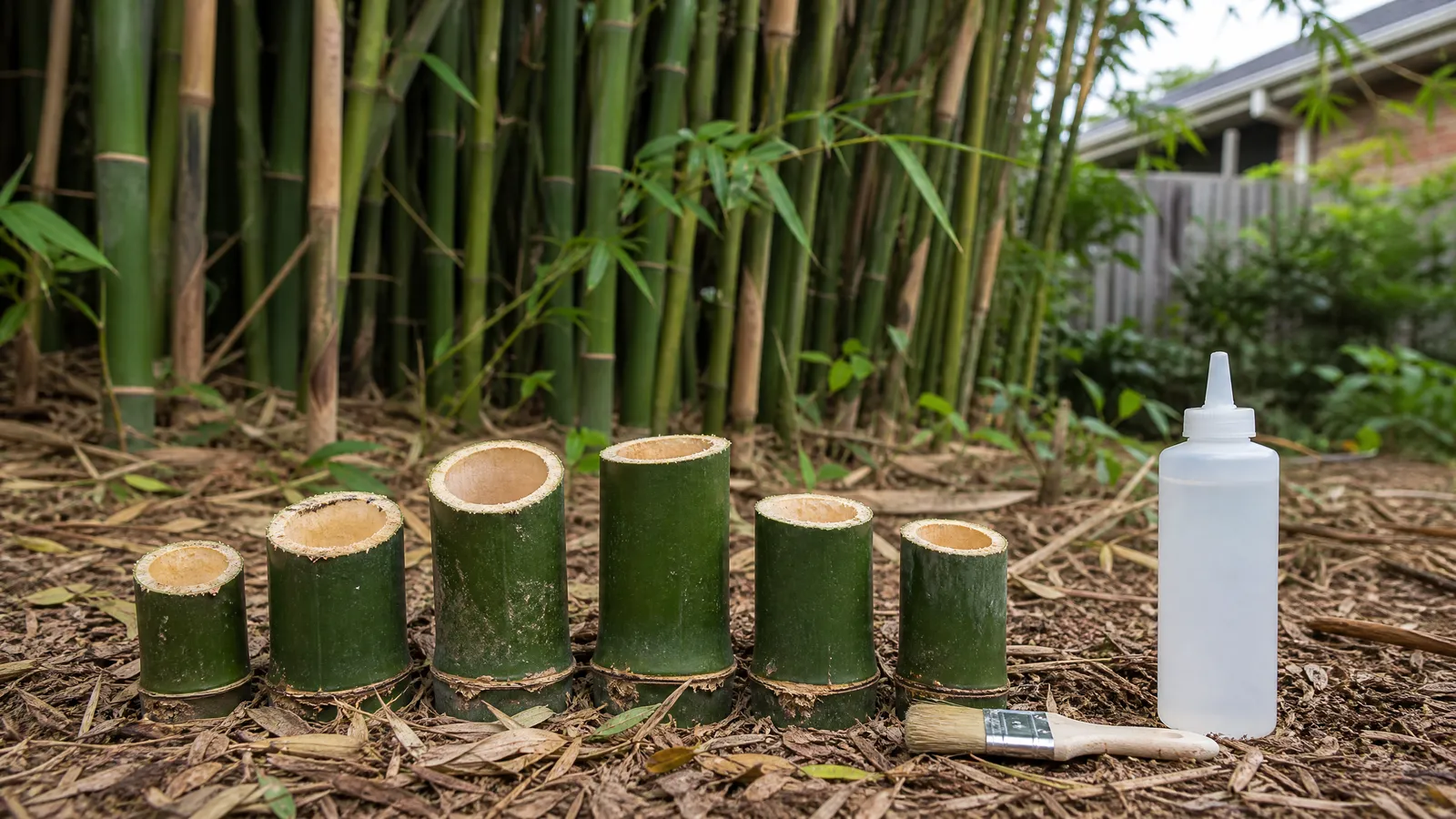
The cut stump method means cutting each culm close to the ground and treating the fresh cut with glyphosate straight away. It gives the herbicide a direct route into the tissue that feeds the rhizomes, with almost no risk of drift.
When Is the Cut Stump Method the Best Choice?
It suits clumping bamboo, small patches, and any stand growing among plants you want to keep, such as ornamentals, vegetable beds or a neighbour’s hedge. It is also the better option near fences, ponds and drains, or anywhere spraying would worry the people around you.
Step by Step Cut Stump Application
- Pick a dry, calm day when the bamboo is actively growing and not drought stressed.
- Put on chemical resistant gloves, eye protection, long sleeves and closed shoes.
- Mix glyphosate at the label’s cut stump rate in a small bottle with a brush, sponge applicator or low pressure hand sprayer.
- Cut each culm as close to soil level as is safe.
- Within a few minutes, coat the cut surface, paying most attention to the outer ring where the living tissue is. Avoid runoff onto the soil.
- Mark the treated clump so you can find it again.
- Remove the cut canes so they do not get in the way of follow up work.
- Check monthly and cut and treat any new shoots that appear.
Common Cut Stump Mistakes to Avoid
- Waiting too long: As the cut dries and seals, absorption drops sharply. Cut and treat one culm at a time if you need to.
- Treating only some culms: Every untreated cane keeps feeding the rhizomes it is connected to.
- Using a foliar strength mix: A diluted spray mix painted on stumps is usually too weak to do the job.
- Not coming back: New shoots from surviving rhizomes are normal. Missing them lets the stand rebuild its reserves.
How Do You Spray Glyphosate on Bamboo Leaves?
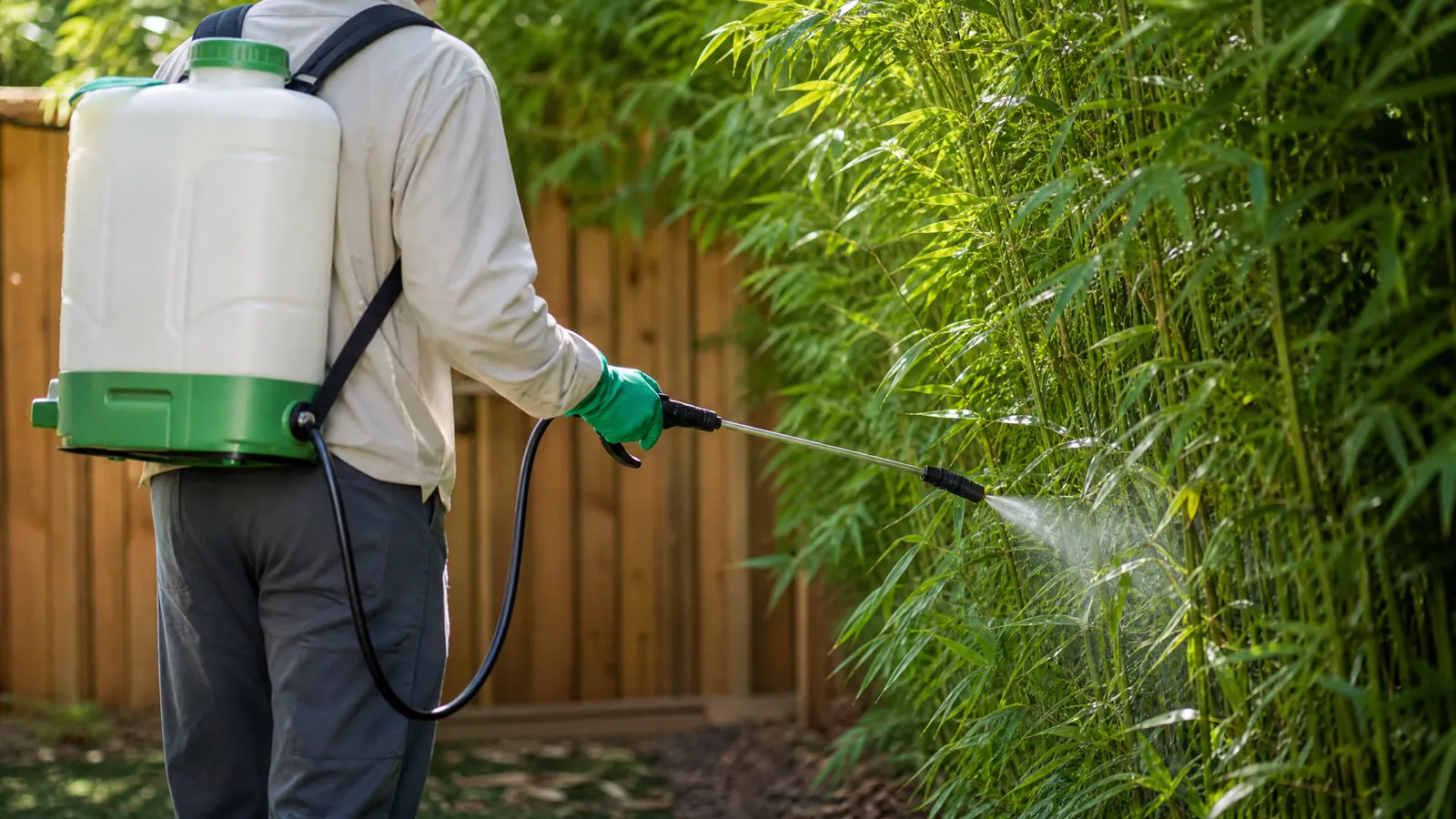
Foliar spraying means wetting the bamboo leaves with a diluted glyphosate mix. On a healthy, fully leafed stand there is a large leaf area to absorb the herbicide, so it is often the fastest way to treat a bigger patch.
When Does Foliar Spraying Work Best?
It works best on moderate stands where you can reach most of the foliage from the ground, and when the bamboo is in active growth with lush green leaves. In many climates that means late summer into early autumn, when the plant is sending sugars down to its rhizomes.
A useful trick is to avoid cutting the stand for several weeks beforehand, or to cut it down and let it regrow to a dense flush of leafy shoots at a reachable height. Choose a calm day with no rain forecast for at least several hours, and skip very hot or droughty spells when the plant absorbs less.
How Do You Get Good Coverage?
Use a pump or backpack sprayer with a nozzle that gives a medium to coarse spray, and set the pressure low enough to avoid a fine mist. Spray until the leaves are wet but not dripping.
Work from the outside edge inward so you can see what you have covered. Over the next few weeks, watch for yellowing and browning. Once surviving canes or new shoots have a full set of leaves, treat them again.
How Do You Reduce Drift and Protect Nearby Plants?
- Keep the nozzle close to the leaves and use the lowest pressure that still gives good coverage.
- Do not spray in any noticeable wind.
- Cover nearby shrubs and perennials with plastic or fabric, and remove the covers once the spray has dried.
- Keep well back from ponds, streams and drains, and follow any buffer distances on the label.
How Long Does It Take Glyphosate to Kill Bamboo?
Leaves usually start to yellow within one to two weeks of a good treatment, then brown and dry over the following weeks as the canes die back. Rhizome decline is much slower and often takes many months.
On an established stand, plan for a process that can run from one to three growing seasons. Small or young clumps treated during strong growth often respond far faster.
What Should You Expect After Treatment?
| Stage | What You See | What It Means |
|---|---|---|
| First week or two | Leaves lose their shine and start to yellow | Glyphosate is moving through the plant |
| Following weeks | Leaves brown and drop, canes start to die back | Top growth is dying |
| Months later | New green shoots from the ground | Some rhizomes survived and need retreating |
| Next season | Fewer, weaker shoots | The network is running out of reserves |
Regrowth does not mean the treatment failed. It means some rhizome sections were weakened rather than killed, and they now need another targeted round.
How Many Applications Are Usually Needed?
It depends on the size, age and type of bamboo, and on how thorough each round is. A small clump treated by cut stump can be largely controlled in one season. Dense, long established running bamboo often needs several treatments over two or more seasons, especially without any digging.
Does Glyphosate Kill Bamboo Roots Permanently?
It can, but only in the parts of the rhizome network that were connected to treated leaves or stumps at the time. In a large stand, some fragments almost always escape and resprout later.
Why Do Some Rhizomes Escape Treatment?
Scattered culms around the edges, small shoots hidden under the canopy, and rhizomes that had already separated from the main clump all miss out. Each one can keep a section of the network alive. Repeated rounds that target every new shoot gradually wear these holdouts down.
Why Combine Glyphosate With Physical Removal?
After a good dieback, weakened rhizomes are easier to dig out, and removing them takes away the pieces most likely to resprout. Cutting any regrowth that appears between treatments also drains the remaining reserves, which is why cut bamboo keeps growing back until the rhizomes are exhausted.
If the rhizomes are heading for foundations, pipes or a boundary, or the patch is too large to dig by hand, it is worth having a professional excavate the bulk of the root mass once the glyphosate has done its work.
How Does Glyphosate Compare With Natural Bamboo Killers?
Many people would rather try home remedies first. Most of them act as surface burners: they damage what they touch but do not travel into the rhizomes.
| Method | Kills Rhizomes? | Typical Timeframe | Effect on Soil and Nearby Plants |
|---|---|---|---|
| Glyphosate | Often, with repeat treatments | Months to a few seasons | Non selective, but little soil activity when targeted |
| Salt | Only near the surface | Months, with lasting side effects | Can leave soil unable to grow plants for a long time |
| Vinegar | Rarely, mostly burns leaves | Leaves brown in days, regrowth follows | Little soil effect, little root effect |
| Boiling water | Only where it directly contacts | Needs many repeats | Local scalding, hard to apply safely |
Do Salt, Vinegar or Boiling Water Work?
Vinegar burns foliage and soft shoots but does not reach the rhizomes, so bamboo grows back. Salt can damage shallow roots, but it builds up in the soil, can move with runoff and may stop anything growing there for a long time. Boiling water kills what it touches, which makes it useful only for spot treating exposed rhizome pieces in a very small clump. Our guide to whether salt kills bamboo explains why salt so rarely reaches the rhizomes.
Why Are Diesel and Other Unregistered Chemicals a Bad Idea?
Diesel, bleach and similar substances are not herbicides. Using them on bamboo can contaminate soil and groundwater, create a fire risk and harm wildlife, and in many places it is illegal. They also do a poor job of reaching the rhizomes, so you end up with a polluted patch and the same bamboo.
When Should You Choose a Non Chemical Approach?
Non chemical control makes sense for very small patches, food gardens, sites next to water, or when local rules or your own preference rule out herbicides. Options include cutting every shoot as it appears to starve the rhizomes, digging out the rhizome mat, and installing a root barrier along the boundary. Expect it to take longer, often several seasons.
Safety, Legal and Neighbour Issues
How Do You Handle Glyphosate Safely?
Follow the safety directions on the label. That normally means chemical resistant gloves, eye protection and long sleeves, and washing skin and clothes after use. Mix only what you need, store concentrate locked away from children and pets, and keep people and animals out of treated areas until the spray has dried.
Do Local Rules Apply?
Some councils, states and countries restrict glyphosate, especially near waterways, in public spaces or for contractors. Use only products registered for your type of site, never decant herbicide into unlabelled containers, and never exceed the label rate to speed things up. Commercial applicators may need a licence.
What If the Bamboo Is Spreading From a Neighbour?
Start by documenting where it is coming from, with dated photos of shoots on your side. Then talk to your neighbour about joint solutions, such as a root barrier along the boundary or treating both sides at once. Treating only your side often fails, because rhizomes keep walking back in. If you cannot agree and there is real damage, get local legal advice, as the rules on encroaching plants vary widely.
Step by Step Plan to Kill a Bamboo Patch With Glyphosate
Assess the Bamboo Stand
Measure roughly how big the patch is and work out whether it is clumping or running bamboo. Running types often have shoots popping up well away from the main clump. Note any slopes, water, structures and plants you want to keep, because they decide where you can spray and where you should cut and paint.
Choose Cut Stump, Foliar or Both
| Situation | Best Method |
|---|---|
| Small clump or bamboo among ornamentals | Cut stump on every culm |
| Large, open stand with reachable leaves | Foliar spray at the brush rate |
| Dense thicket too tall to spray | Cut stump to thin it, then foliar spray the leafy regrowth |
| Next to water, food gardens or a boundary | Cut stump only, plus digging at the edges |
Follow a Seasonal Schedule
- Growing season, year one: Treat healthy, leafy bamboo by foliar spray or cut stump, depending on your choice.
- Late season, year one: Check for dieback and treat any missed or resprouting culms once they have enough leaves.
- Dormant season: Cut and remove the dead canes and dig out weakened rhizomes where you can.
- Growing season, year two: Treat every new shoot as soon as it has enough foliage, or cut and paint it straight away.
- After that: Inspect the area a few times each season and deal with stray shoots before they can rebuild the network.
Frequently Asked Questions
Is glyphosate the best herbicide to kill bamboo?
For most home gardens it is the most practical option because it is systemic, widely available and does not stay active in the soil the way some brush and total vegetation killers do. Products with ingredients such as imazapyr can be stronger on bamboo, but they can also harm nearby trees through the soil.
Will glyphosate kill bamboo in one application?
Rarely. A small, young clump can collapse after one careful treatment, but established stands almost always resprout from rhizomes that escaped a lethal dose and need repeat treatments.
Can I pour concentrated glyphosate directly on bamboo roots?
No. Glyphosate is absorbed through green tissue and fresh cuts, not through the soil, and it binds tightly to soil particles. Pouring it on the ground wastes product, breaks label rules and does little to the rhizomes.
What time of year should I apply glyphosate to bamboo?
Treat when the bamboo is actively growing and has plenty of healthy leaves, typically late summer into early autumn in many climates. That is when the plant is moving sugars down into the rhizomes and carries the herbicide with them.
Can I replant where I used glyphosate to kill bamboo?
Usually yes, once the label's waiting period has passed and you have removed as many rhizomes as possible. Watch the area for a full season first so any surviving shoots do not come up through your new plants.
Will glyphosate kill grass and other plants around bamboo?
Yes. Glyphosate is non selective, so any spray that lands on lawn, shrubs or garden plants can damage or kill them. Shield nearby plants, spray only in calm weather, or use the cut stump method in tight spaces.
When should I hire a professional for bamboo removal?
Call a professional for very large stands, bamboo close to foundations, pipes or a property line, steep or waterside sites, or when your local rules require a licensed applicator for the product you need.
Final Verdict: Will Glyphosate Kill Bamboo?
Yes, used carefully and repeatedly, glyphosate can kill bamboo, including much of the rhizome network. The keys are the right strength for each method, a fresh cut or a healthy leafy canopy to treat, and the patience to come back for every new shoot.
Cut stump treatment is the precise option for small clumps and tight spaces. Foliar spraying is faster on bigger, open stands. Combine either with digging and steady follow up, and the bamboo eventually runs out of places to hide.
This article is general information only. Always follow the product label and your local rules, and get professional advice for large or sensitive sites.