
What Can Bamboo Grow Through? Concrete, Asphalt, Plastic, Metal, Wood and More
Key Takeaways
- Bamboo cannot drill through solid, sound concrete, metal or thick plastic, but running bamboo exploits every crack, joint and weak spot it reaches.
- Asphalt, thin plastic and wood in the ground fail first, often within one to a few growing seasons once rhizomes arrive.
- Sound, reinforced house foundations are rarely penetrated; the real risk is to thin slabs, paths, steps and walls built against the house.
- A continuous thick HDPE root barrier buried 60 to 75 cm deep, with a lip above the soil, is the most reliable way to stop rhizomes.
- Clumping bamboo spreads slowly and is far safer near structures than running bamboo.
Bamboo cannot drill straight through solid, sound materials like intact concrete, steel or thick plastic. What it can do is spread aggressively through soil and push into any crack, joint, gap or soft spot it finds, then widen that weakness as new shoots thicken. That is why bamboo often appears to grow through driveways, patios and garden walls.
This guide goes material by material: concrete and cement, house foundations, asphalt, plastic, metal, wood, pavers and pots. It also covers how fast bamboo does damage to each one and how to stop it.
How Does Bamboo Actually Grow and Spread?
Bamboo spreads using underground stems called rhizomes that creep outward from the original plant and send up new shoots some distance away. Roots grow from the rhizomes to anchor and feed the plant, but they do not twist slabs apart the way large tree roots can.
Running vs Clumping Bamboo
Running bamboo sends rhizomes outward quickly, often several metres from the original clump, and it is the type that causes trouble around structures. Its rhizomes travel sideways near the surface, so they readily reach slabs, driveways and walls.
Clumping bamboo forms tight clumps that expand slowly. It can press on nearby edging, but it is far less likely to travel under a patio or across a property line. Our guide on how running and clumping bamboo regrow explains the difference in more detail.
Rhizomes vs Roots: Where Does the Damage Come From?
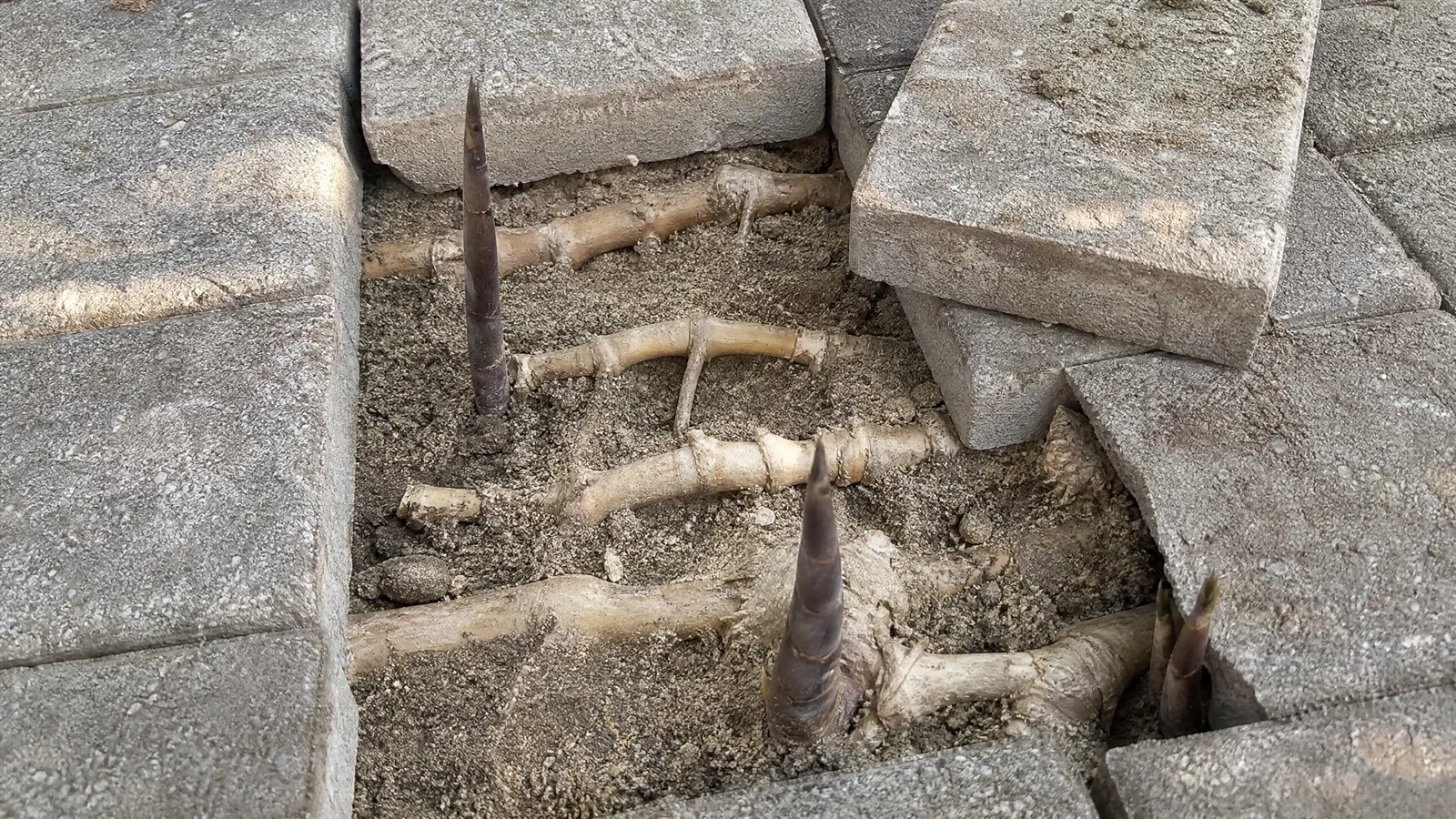
Rhizomes are the tough, woody runners that do the travelling. They are what slip into joints between pavers, run along foundation edges and find gaps under asphalt.
Roots mostly fill the soil the rhizomes have already reached. When bamboo seems to grow through something, it is almost always a rhizome entering an existing crack, followed by a shoot forcing that weak point wider from below.
Can Bamboo Grow Through Concrete or Cement?
Bamboo cannot bore through intact, good quality concrete. Running bamboo can, however, reach joints, hairline cracks and poorly poured sections, then lift or widen them over time. Thin patios, old paths and decorative concrete laid straight onto soil are the most vulnerable.
How Does Bamboo Damage Concrete Structures?
Around footpaths and driveways, rhizomes follow the soil along the slab edge, then work into control joints or cracks. The typical result is lifted sections or cracking that follows those weak lines.
Concrete garden walls and planters suffer when rhizomes run behind or beneath them. Thickening rhizomes in the backfill can push a lightly built wall outward or open existing gaps. Reinforced footings, thick slabs and well built steps usually resist direct damage.
How Fast Can Bamboo Roots Grow Through Concrete?
Vigorous running bamboo can extend its rhizomes a metre or more in a single growing season in good conditions, and much less in poor, dry or shaded soil. Reaching the concrete is the quick part.
Once rhizomes are under a slab or in a crack, visible effects build up over several seasons. If bamboo is planted right beside a thin slab, slight lifting or shoots in expansion joints can appear within a few years. In compacted soil next to quality concrete, it may take many years, or never happen at all.
Can Bamboo Grow Through Concrete Blocks or Mortar Joints?
Bamboo cannot punch through the solid face of a dense concrete block. Hollow core blocks, crumbling mortar and open gaps in retaining walls are a different story.
Rhizomes can enter block cavities from behind a wall and send shoots out through cracks or weep holes. Weak mortar joints widen as rhizomes thicken. Newer, well mortared walls have fewer problems, but any unsealed gap that meets the soil can eventually be found.
Can Bamboo Grow Through a House or Foundation?
A solid, reinforced foundation in good condition is almost never penetrated by bamboo. Bamboo planted too close can still exploit existing cracks and unprotected edges, and it can damage the lighter structures built against the house.
What Are the Real Risks to Foundations?
Most house footings sit deeper than the upper soil layer where bamboo rhizomes prefer to travel. Where the foundation is sound and crack free, bamboo rarely causes structural harm.
Risk rises with existing foundation cracks, loose backfill, or shallow unreinforced slabs, steps and patios that abut the house. Rhizomes fill those gaps and add pressure as they grow. The more common outcome is damage to adjoining paths and small structures rather than a failing foundation. The same pattern applies to trees, as our guide on whether palm tree roots damage foundations and concrete shows.
What Are the Warning Signs Near Your House?
Watch for these signs if a running bamboo stand is nearby:
- New shoots appearing between the house wall and nearby paving
- Cracks at the base of exterior walls widening on the side closest to the bamboo
- Narrow paths or steps beside the house lifting or tilting
- Thick rhizomes turning up when you dig garden beds close to the house
If you see these, contain or remove the bamboo before the damage progresses.
Can Bamboo Grow Through Asphalt?
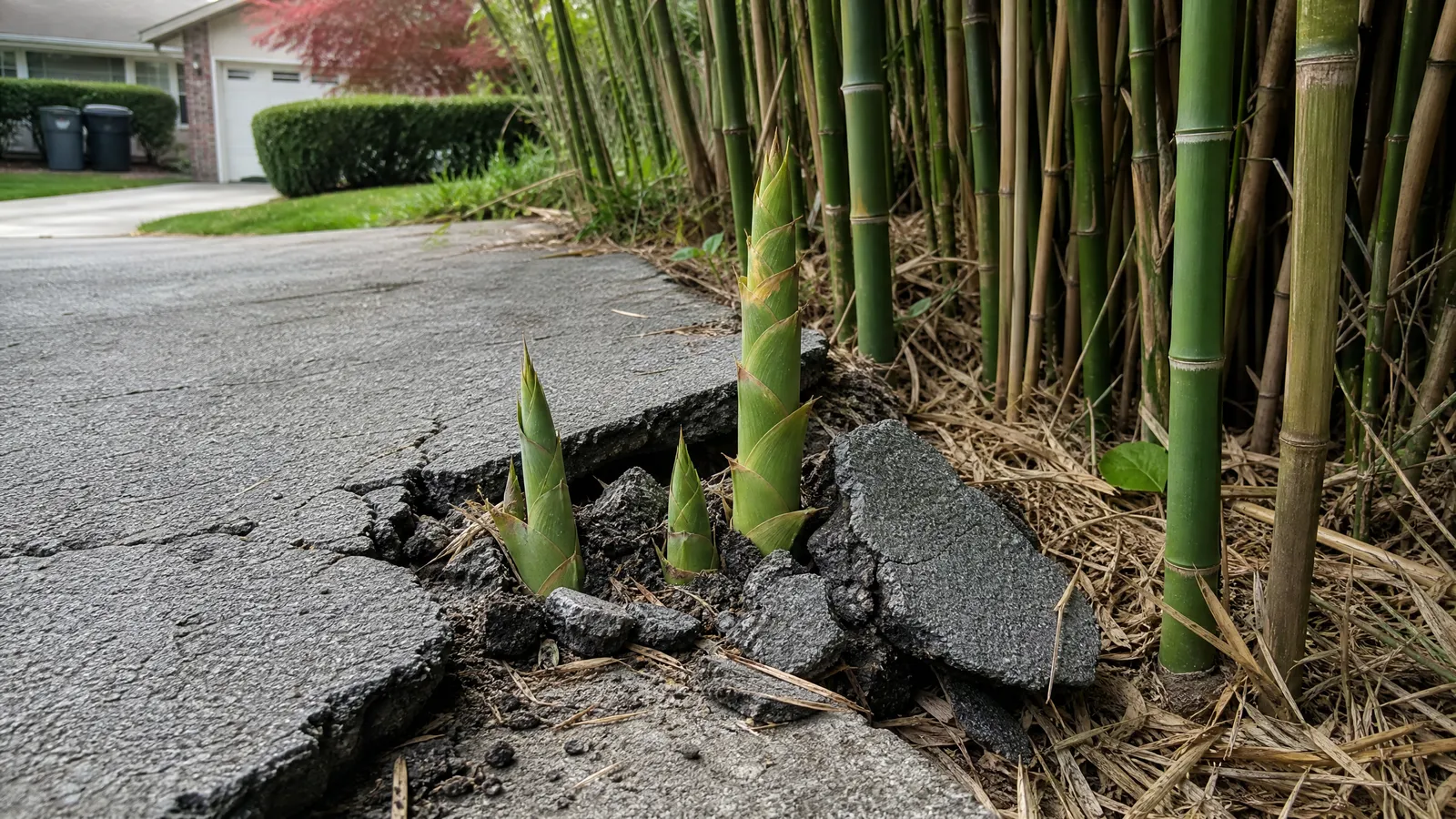
Yes, bamboo grows through asphalt far more easily than through concrete. Asphalt is softer, more flexible and usually thinner, so shoots can split it and leave small volcano shaped mounds in driveways and paths.
Why Does Asphalt Fail More Easily Than Concrete?
Asphalt is designed to flex slightly, and summer heat softens it further. Residential driveways and paths are often a thin layer over compacted gravel, sometimes with small voids underneath that give rhizomes room to travel.
Edges, utility cuts and fine cracks are the weak points. Over time, shoot pressure turns minor flaws into visible breaks and bumps.
How Fast Can Bamboo Push Through Asphalt?
Once rhizomes are under a section of thin asphalt, shoots can break through in as little as one growing season. Thicker, well laid asphalt may hold out for several seasons. Shoots where the asphalt meets the soil usually mean rhizomes are already underneath.
Can Bamboo Grow Through Plastic, Metal and Wood?
These are the materials people most often use to hold bamboo back. Some work very well when installed properly, while others break down or leave gaps.
Can Bamboo Grow Through Plastic?
Thin plastics such as pond liners, weed mat and soft nursery pots are easily punctured or torn by rhizome tips, and sunlight and soil break them down further over time.
Purpose made HDPE root barrier is much thicker and designed for the job. Bamboo does not usually pierce it when it is unbroken and deep enough. Plastic barriers fail at poorly sealed seams and overlaps, or where they are too shallow and rhizomes simply pass underneath.
Can Bamboo Grow Through Metal?
Bamboo cannot drill through intact steel or aluminium sheet. Strong metal panels can be an effective barrier when buried deep with tight joints.
Problems start where panels meet with gaps, where thin metal buckles, or where rust opens holes near soil level. Shallow decorative metal edging is not a bamboo barrier, because rhizomes run straight underneath it.
Can Bamboo Grow Through Wood?
Bamboo does not bore through solid, sound timber, but timber in the ground rarely stays sound. Moisture, insects and fungi cause rot, splits and soft spots.
In sleeper retaining walls, raised garden beds and fence bases, rhizomes find their way through joints or decaying boards, then widen the flaws. Shoots coming up between deck boards have usually travelled through the soil underneath, not through the timber.
What Other Surfaces Can Bamboo Grow Through?
Beyond the main building materials, bamboo regularly meets pavers, bricks, stone and containers. Success here depends almost entirely on joints, gaps and drainage holes.
Pavers, Bricks and Stone Paths
Individual pavers, bricks and stones are rarely damaged directly. Rhizomes use the joints between them instead.
Sand set patios are especially easy to invade because the joints and shallow bedding layer are loose. Rhizomes weave through the bedding and lift or tilt pavers as they grow. Mortared paths resist better until the mortar cracks.
Raised Beds, Planters and Pots
In raised beds, bamboo escapes through gaps at the base or around drainage openings. Timber or thin plastic sides do little against running bamboo unless lined with proper root barrier.
Pots can crack or bulge as rhizomes circle and thicken inside, especially brittle ceramic and thin plastic. Indoors, bamboo cannot grow through intact flooring; it escapes through drainage holes or over the rim.
How Fast Does Bamboo Grow Through Each Material?
Growth speed in open soil is only part of the story. How quickly bamboo damages a material depends on how far away it was planted, the species, the soil and the quality of the material itself.
How Far Do Rhizomes Spread Each Year?
In average garden conditions, many running bamboos extend their rhizomes somewhere between half a metre and a couple of metres a year, more in rich, moist soil with full sun and less in dry, compacted or shaded ground. Clumping bamboos usually widen their clump by only a small amount each year. Warm climates with long growing seasons, including much of coastal Australia, push spread toward the faster end.
How Long Until Each Material Shows Damage?
The table below compares materials once rhizomes have reached them. Timeframes vary widely with conditions, so treat them as a rough guide.
| Material | Can Bamboo Grow Through It? | Risk Level | Typical Time to Problems |
|---|---|---|---|
| Thin plastic (liners, weed mat, pots) | Yes, punctures or tears it | High | One season or less |
| Asphalt | Yes, splits thin or cracked areas | High | One to a few seasons |
| Timber in the ground | Through rot and joints | High | A few seasons, faster once rotting |
| Sand set pavers and bricks | Through the joints and bedding | Medium | A few seasons |
| Thin or cracked concrete | Through cracks and joints only | Medium | Several seasons |
| Block walls with open joints | Through cavities and mortar gaps | Medium | Several seasons |
| Sound reinforced foundation | No, only existing cracks | Low | Rarely, if ever |
| Solid metal with sealed joints | No | Low | Rarely, unless rusted or gapped |
| Thick HDPE root barrier | No, if continuous and deep | Low | Rarely, unless seams fail or rhizomes go over |
How Do You Stop Bamboo Growing Through Things?
Strong barriers, correct depth and sensible planting distances prevent far more damage than repairs ever fix. Treat running bamboo as a plant that is always looking for more space.
Which Barrier Materials Work and How Deep?
Thick, purpose made HDPE root barrier is the most reliable option. Install it as a continuous ring or along a trench 60 to 75 cm (24 to 30 in) deep, leave a lip of around 5 cm above the soil so rhizomes trying to cross over are easy to spot, and seal any overlaps with the manufacturer’s joining strip or tape.
Deep reinforced concrete walls or footings also make good permanent boundaries if they have no through cracks. A gravel filled trench will not stop rhizomes, but it makes them easy to find and cut.
Where Should You Not Plant Running Bamboo?
Keep running bamboo well away from the house, driveways, pools, footpaths, underground services and the property boundary. A wide buffer of open soil makes it far easier to spot and cut wandering rhizomes. In small yards, clumping bamboo or bamboo in large, sturdy containers is the safer choice.
What If Bamboo Is Already Growing Toward a Structure?
Dig a trench between the grove and the structure and cut out every rhizome you find. Prune any new rhizomes crossing the trench once or twice a year, and expect to keep at it for several seasons.
For dense stands or bamboo close to the house, a professional can remove the grove and, where legal and appropriate, follow up with herbicide on the regrowth. Our guide on whether glyphosate kills bamboo explains how that treatment works.
What Are the Downsides and Legal Issues of Bamboo Near Structures?
Planting bamboo without planning for its spread can lead to costly repairs and neighbour disputes, so it is worth weighing the risks before you plant.
What Does Bamboo Damage Cost to Fix?
Repairing driveways, paths or patios lifted by bamboo can mean cutting out and relaying sections, or replacing them entirely. Cracked garden walls and steps may need partial demolition, better footings and new backfill, which is often more work than the original build. Removing the grove itself adds to the bill.
Is Planting Bamboo Ever Illegal or Regulated?
Some councils and states treat certain running bamboos as invasive or environmental weeds, and the Australian Government’s weeds information explains how weed species are managed and listed. Rules vary between areas, so check with your local council before planting near boundaries, footpaths or drains.
When bamboo spreads into a neighbour’s yard, owners can be held responsible for the damage. In Victoria, the Dispute Settlement Centre of Victoria offers free help to sort out disputes between neighbours before they escalate.
Frequently Asked Questions
Is there anything bamboo can actually grow through?
Bamboo does not drill through solid, sound materials. It spreads through soil and exploits cracks, gaps, joints, rot and thin or degraded materials such as old asphalt, rotting timber, flimsy plastic and loose paver joints.
Will bamboo go under a footpath or road and pop up on the other side?
Yes. Running bamboo rhizomes can travel under footpaths, driveways and even narrow roads if the soil beneath is continuous and no deep barrier blocks them. New shoots then appear on the far side where there is light and space.
Can bamboo grow indoors through pots or flooring?
Indoors, bamboo is limited by its container. It can crack or bulge thin plastic pots or escape through large drainage holes, but it will not grow through intact tiles, timber floors or a concrete subfloor.
How long does it take bamboo to reach full height?
Each new cane reaches its full height within a single growing season. Most groves need two to three years after planting to build enough rhizome mass to send up full height canes.
What stops bamboo from growing into unwanted areas?
Digging out the rhizomes and pruning new ones along a trench each year is the most reliable method. Where appropriate and legal, a systemic herbicide on fresh regrowth can help, but several rounds are usually needed for established groves.
Will bamboo damage my retaining wall?
It can. Rhizomes press against the back of lightly built or ageing retaining walls, enter gaps and weak mortar, and can contribute to bowing, cracking or tilting over time.
Final Verdict: What Can Bamboo Really Grow Through?
Bamboo cannot truly grow through solid, intact materials, but its rhizomes travel through soil and push into any crack, joint, rot or thin barrier they reach. Asphalt, thin plastic, timber, paver joints and light or cracked concrete are at real risk, while sound foundations, sealed metal and a deep, continuous HDPE barrier hold it back. If running bamboo is already heading for your house or paving, act early: it is far cheaper to contain than to repair.