
Will Bamboo Grow Back if Cut Down? Regrowth, Control and Proper Cutting
Key Takeaways
- Yes, bamboo grows back after being cut down, because new shoots come from the living rhizomes, not the cut canes.
- A cut cane never grows taller again. New height always comes from fresh shoots at soil level.
- Running bamboo can resprout far from where you cut, while clumping bamboo regrows right beside the old clump.
- Cutting every new shoot before its leaves open, for several seasons, can eventually exhaust and kill the rhizomes.
- Potted bamboo regrows from its root mass, but a dried out or badly root bound plant may not come back.
- Lucky bamboo is not a true bamboo. A trimmed stem branches from the node below the cut and the tops can be rooted as new plants.
Yes, bamboo will grow back if it is cut down, as long as its underground root system is still alive. Cutting removes the canes you can see, but the new growth comes from rhizomes below the soil, not from the stumps of the old stems.
That is good news if you want to tidy or renew a grove, and bad news if you want it gone. This guide explains how bamboo regrows, how running and clumping types differ, how to cut it so it comes back healthy, and what it really takes to stop it returning.
Does Bamboo Grow Back After Being Cut Down?
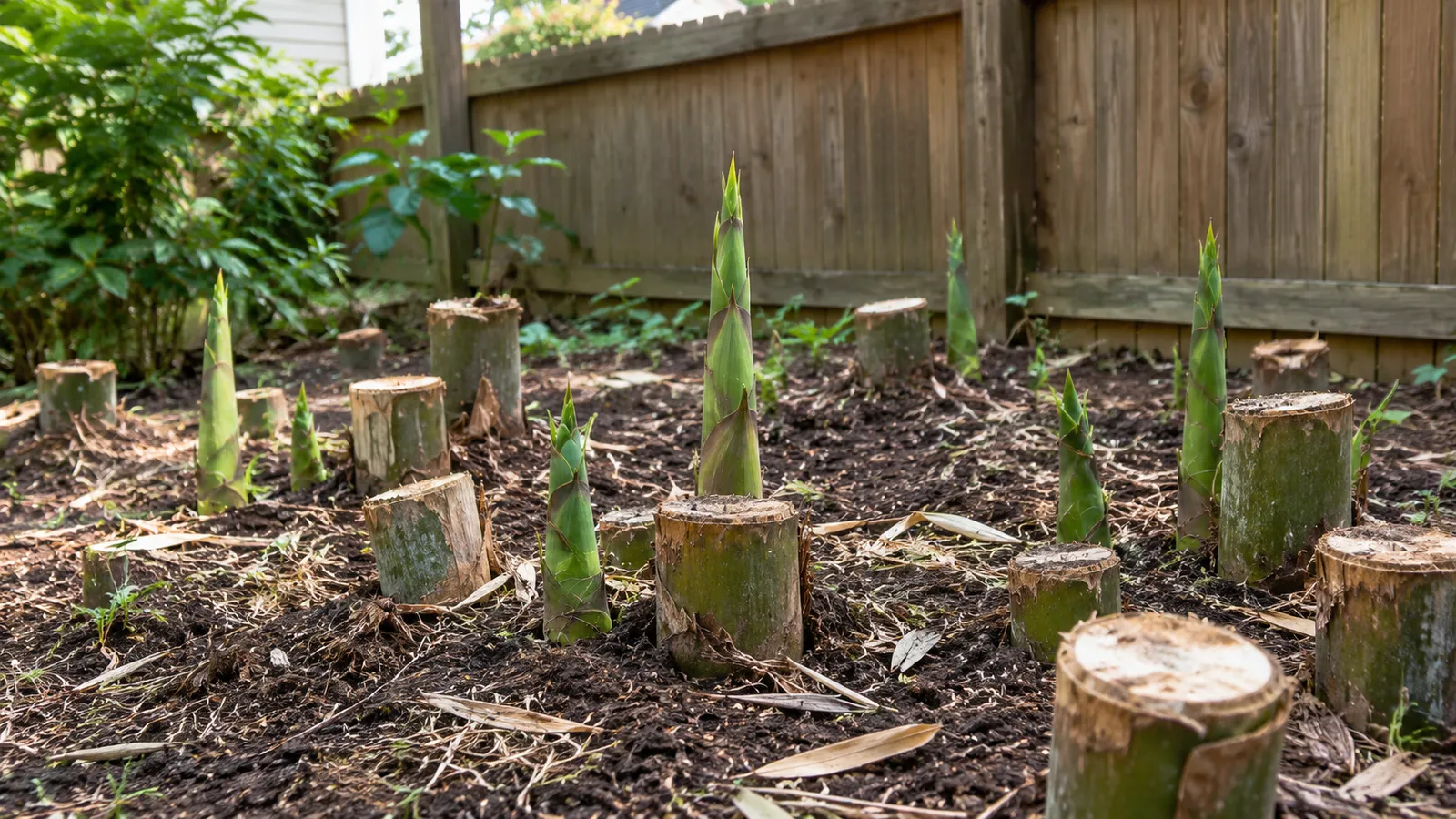
It does. A bamboo cane, or culm, reaches its full height in a single growing season and never grows taller after that. If you cut a mature cane shorter, it stays that height. New height and spread always come from fresh shoots that rise from the rhizomes or from the base of the clump.
That is why bamboo seems to “come back from the stumps”. The stumps are not growing. The shoots are coming up beside them from the same root network.
Climate and timing change how fast it returns. In mild or warm areas with long growing seasons, new shoots can appear soon after cutting. In cooler areas, bamboo cut in winter may show nothing until spring warms the soil. Only removing the rhizomes, or exhausting them over time, truly stops regrowth.
How Bamboo Regrows From Rhizomes, Not Stems
Bamboo rhizomes are thick underground stems that store energy. They send up new canes over time, much like a lawn sends up new blades from below the surface. While the rhizome network is alive, it can keep producing shoots even if every cane above ground has been cut off.
The canes themselves are hollow, jointed stems. Younger canes can push out side branches and leaves from their nodes, but a brand new cane only ever starts at or below soil level. Cutting the top of a cane changes its shape, not the plant’s ability to come back.
What Happens When You Cut Bamboo to Ground Level
Cutting bamboo at soil level removes all the leaves that were feeding the rhizomes. The plant responds by drawing on its stored energy to push up replacement shoots. A healthy grove usually bounces back strongly after a single cut.
New shoots tend to appear near the old cane bases, or some distance away along the rhizomes in running types. The roots only start to die back when cutting is combined with digging, or when new shoots are removed again and again before they can refill the reserves.
Running vs Clumping Bamboo Regrowth
Running and clumping bamboos behave very differently after cutting. Runners spread sideways through long rhizomes, while clumpers expand slowly from a tight base.
How Running Bamboo Regrows and Spreads
Running bamboo forms long, often shallow rhizomes that can push up shoots well away from the original planting. When you cut the canes down, those rhizomes are still waiting under the soil, often far beyond the area you think of as the patch.
After cutting, running bamboo typically:
- Sends up new shoots along the rhizome network, including outside the original area
- Draws on reserves in the long rhizomes to fuel repeated flushes of growth
- Shifts growth towards less disturbed sections if one area is heavily cut or dug
That is why a single clear cut rarely reduces the spread. The plant simply redirects its energy elsewhere along the rhizomes.
How Clumping Bamboo Regrows and Stays Contained
Clumping bamboo has short, thick rhizomes that stay close to the parent plant. After cutting, new canes come up within or just around the existing clump rather than metres away.
For clumping types, regrowth after cutting:
- Stays tightly grouped and makes the clump denser over time
- Is easy to shape with regular thinning and height control
- Can be weakened more effectively by cutting, because the energy is concentrated in a small area
Why Running Types Are Harder to Get Rid Of
Running bamboo is hard to eliminate because its rhizomes reach well beyond the visible canes, survive as small fragments left in the soil and draw water and nutrients from a wide area. Cut or dig one section and the rest of the network can stay vigorous and grow back into the cleared space. Several running species are treated as invasive in some regions, as the National Invasive Species Information Center notes for golden bamboo.
A clumping bamboo can usually be removed by digging out its defined root ball. With runners, you often need barriers, repeated cutting and sometimes herbicide to fully stop regrowth.
| Type | Root System | Regrowth After Cutting | Best Control Approach |
|---|---|---|---|
| Running | Long, wandering rhizomes that can spread several metres | Very strong, including from distant rhizomes | Barriers, repeated cutting and digging |
| Clumping | Short, tight rhizomes that expand slowly | Moderate and confined to the clump | Digging out the clump and selective thinning |
Spread rates vary widely with species, climate and soil.
Will Bamboo Keep Growing if You Cut It?
Cut bamboo will keep trying to grow for as long as the rhizomes are alive and have energy stored. How much cutting achieves depends on how often you do it and which type you have.
If You Keep Cutting Bamboo Will It Die?
Yes, if you keep cutting it persistently enough, bamboo can be severely weakened and eventually killed. Every time you remove new shoots before they leaf out, the plant loses the chance to make food and refill its reserves.
With running bamboo, regular cutting gradually starves the rhizomes in the treated area, although some energy may shift to parts of the network you are not cutting. With clumping bamboo, repeated cutting is more likely to finish off the whole clump, because the reserve is smaller. In both cases you need to cut the new growth while it is young, before the leaves unfold.
How Long Regrowth Can Continue After Cutting
How long bamboo keeps resprouting depends on the size and age of the rhizome network, the soil moisture and fertility, and the length of the growing season. A mature running grove can keep trying to regrow for years after the first cut. A small or young clump in poor conditions can run out of energy much sooner. There is no reliable timeline, so consistent checking matters more than any single cut.
Best Time of Year to Cut for Weakening Bamboo
Cutting while bamboo is actively growing weakens it more than cutting while it is dormant. In most areas that means late spring through summer, when new shoots are coming up and leaves are expanding.
Removing shoots at this stage means the plant loses fresh growth before it can pay back the roots, and each replacement shoot costs it more energy. Over successive seasons the rhizomes start to shrink. Winter cutting still clears the canes and improves access, but it does far less to drain the root reserves.
How to Cut Bamboo Plants So They Regrow
If you want to keep your bamboo but manage its size, the aim is healthy regrowth without stressing the roots. That comes down to careful pruning, modest topping and removing older canes selectively.
Pruning Canes Without Killing the Plant
You can prune bamboo without harming it as long as plenty of leafy growth remains overall. Removing a few whole canes is better for long term health than cutting every cane hard.
- Cut unwanted canes at ground level, not halfway down, so you do not leave dead stubs
- Keep plenty of younger, leafy canes so the rhizomes stay well fed
- Avoid stripping all the foliage from one side of a small clump in a single season
Rotating which canes you remove each year keeps the grove stable and attractive.
Cutting Height and Nodes for Clean Regrowth
When topping canes to reduce height, cut just above a node, the ring where branches join the cane. The cut end dries and seals more neatly there and is less likely to split.
Remove no more than about a third of a cane’s height at a time, and angle the cut slightly so water runs off. The topped cane will not grow taller again, but the side branches near the top often thicken up. New height will only come from fresh shoots at the base.
Thinning Older Canes to Encourage New Shoots
Older canes often become crowded, dull and less leafy. Thinning them improves airflow and encourages the plant to send up young, vigorous canes.
- Pick out the oldest, dull or damaged canes, especially inside the clump.
- Cut them at or just below soil level with sharp loppers or a pruning saw.
- Leave a mix of cane ages so the plant keeps a strong canopy of leaves.
Healthy rhizomes usually respond with new shoots around the thinned area in the next growing season.
Will Bamboo Grow Back if Cut Down in Pots?
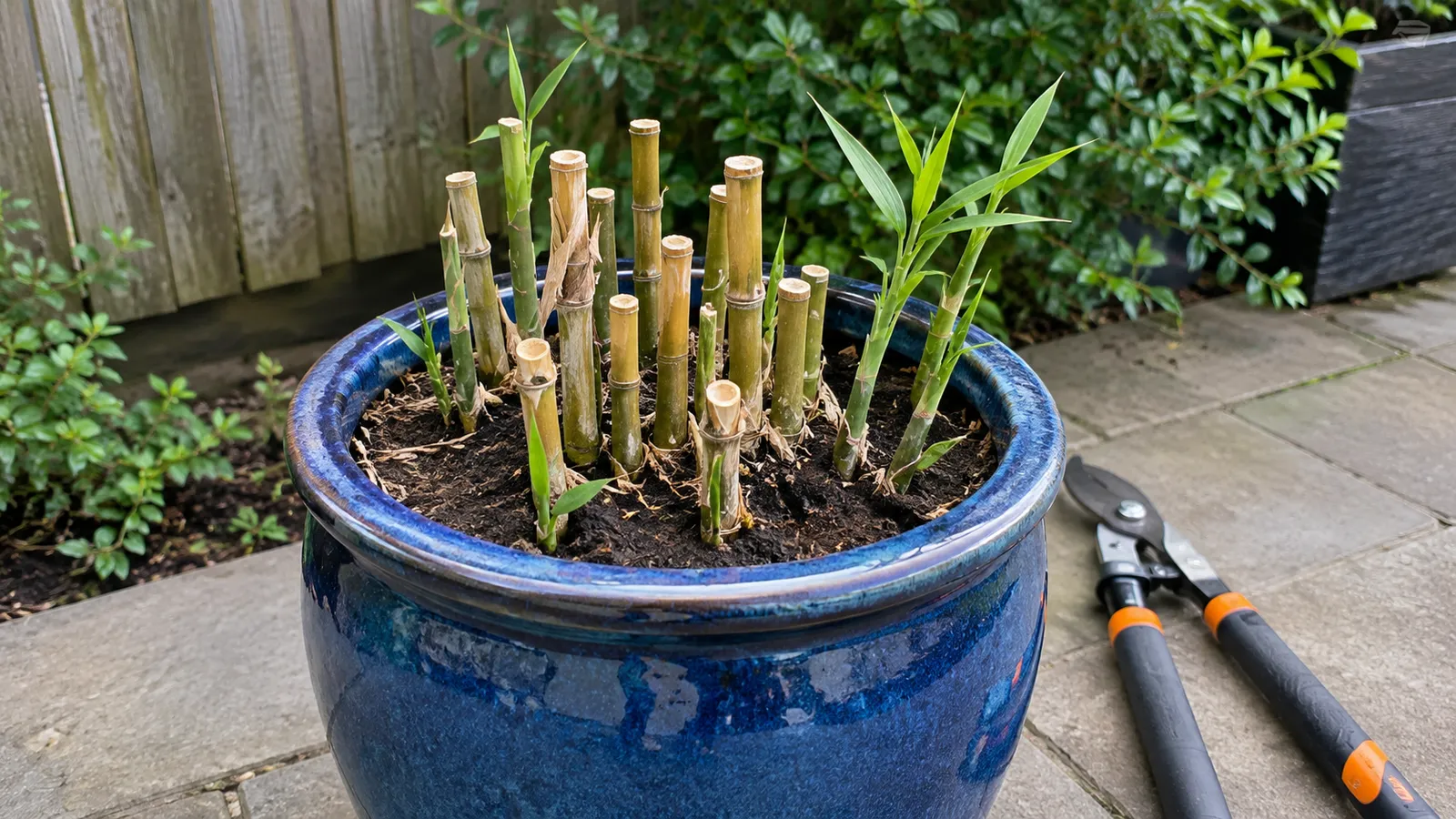
Yes, potted bamboo usually grows back after cutting, as long as the root mass is healthy. It regrows from its rhizomes just like bamboo in the ground, but the limited soil, water and nutrients in a container cap how strong that regrowth can be.
How Container Size Affects Regrowth
In a pot, the rhizomes eventually circle the container and become root bound. That reduces the height and vigour of new shoots, limits how many canes appear after cutting and makes the plant more prone to drying out and running short of nutrients. Larger containers support stronger regrowth, while small or crowded pots can slow or stop new shoots until the plant is divided and refreshed.
Cutting Back Overgrown Potted Bamboo
- Cut the tallest canes down to the height you want, just above a node.
- Remove some of the oldest canes at soil level to open up the clump.
- If it is badly crowded, lift the root ball, slice off the outer sections and repot in fresh mix.
Together these steps keep the plant compact and encourage new, manageable shoots without overwhelming the pot.
When a Potted Bamboo Will Not Grow Back
A potted bamboo may not regrow after cutting if the root ball has dried out completely for a long period, if long term overcrowding has killed much of the rhizome mass, or if repeated hard cutting has left too few leaves to support the roots. To check, tip the plant out and look inside the root ball. Firm, pale rhizomes mean there is still living tissue. Soft, dark or hollow ones mean the plant is probably finished.
Lucky Bamboo Regrowth and Trimming
Lucky bamboo is not a true bamboo at all. It is a Dracaena grown in water or soil, and it regrows and trims quite differently from garden bamboo.
If You Cut Lucky Bamboo Will It Grow Back?
Yes. If you cut a lucky bamboo stem correctly, it grows new shoots from the node just below the cut, and the rooted base keeps producing leaves as long as it has healthy sections and roots. The stem will not grow taller from the cut tip. Instead, the new growth comes out as side shoots, so repeated trimming makes the plant bushier rather than taller.
How to Trim Lucky Bamboo Without Harming It
- Use clean, sharp scissors or pruners so you do not crush the stem.
- Cut just above a node, leaving at least two or three nodes on the rooted part.
- Remove any yellowing leaves or mushy sections completely.
Avoid cutting every stem short at once. A mix of longer and shorter stems keeps enough leaves on the plant to stay strong.
Can You Cut and Replant Lucky Bamboo?
Yes. The trimmed tops make good cuttings as long as each one has at least one or two nodes, because roots form from the nodes.
- Trim the cutting so it has a few healthy nodes and some leaves.
- Stand the cut end in clean water or moist, well drained potting mix.
- Keep it in bright, indirect light and change the water regularly if rooting it in a vase.
Roots normally form from the lowest nodes, and once established the cutting grows on as a new plant.
Can You Cut and Replant Bamboo?
You can, but how you do it matters. Moving a piece of rhizome with canes attached is far more reliable than trying to root a bare section of cut cane.
Dividing Clumps and Rhizomes for New Plants
The most dependable way to make new bamboo plants is to divide an existing clump or rhizome section that already has buds or small shoots. This works for both running and clumping types.
- Dig around the section you want to expose part of the clump or rhizome.
- Cut out a piece with at least one healthy cane and plenty of roots.
- Replant it promptly at the same depth in prepared soil and water it well.
Divisions usually take off quickly because they already have working roots and stored energy.
Using Cut Canes as Cuttings or Stakes
Cut canes without roots are unreliable for propagation. Some species will root from the nodes if treated as cuttings, but many simply dry out. If you want to try, keep the cuttings consistently moist and expect mixed results. Otherwise, cut canes are far more useful as stakes, trellises and garden edging.
How to Cut Bamboo to Stop or Kill Regrowth
To stop bamboo growing back you have to target the rhizomes, usually with a mix of cutting, digging, barriers and sometimes herbicide. A single cut or mow will not solve it.
Why Bamboo Is So Hard to Get Rid Of
Bamboo rhizomes store a lot of energy, new shoots can grow from small leftover fragments, and most species tolerate cutting and resprout vigorously. The roots also weave through neighbouring plants, fences and paving, which makes them hard to reach. The US Forest Service’s species review of golden bamboo describes how its dense rhizome mats let it persist and spread.
Repeated Cutting and Mowing to Exhaust the Roots
Cutting every new shoot as soon as it appears is a simple, chemical free way to wear bamboo down. It works best when you remove shoots while they are short, before the leaves open, keep it up through the whole growing season for several years, and stop watering and fertilising that area. The goal is to make the rhizomes spend energy on shoots that never pay it back.
Using Barriers and Digging Out Rhizomes
Digging and containment attack the root system directly. Dig out every rhizome you can reach with a spade or mattock, install a deep root barrier around anything that remains, and check the barrier edges regularly for rhizomes escaping over or under it. It is hard work, but it avoids chemicals and is very effective on smaller or younger patches. Barrier depth and material matter, as our guide on what bamboo can grow through explains for plastic, metal, timber and concrete.
Weedkillers, Vinegar and Other Kill Methods
A systemic weedkiller applied to fresh, leafy regrowth or freshly cut canes can travel down into the rhizomes and help stop regrowth. Results depend on the product, timing and how vigorous the plant is, and every product must be used exactly as the label directs. Our guide on whether glyphosate kills bamboo covers the cut cane and leaf spray methods step by step.
Vinegar and similar home remedies burn leaves and young shoots but rarely kill established rhizomes. Salt is no better and can leave the soil unusable, as our guide on whether salt kills bamboo explains.
| Method | Works Best For | Time to See Results | Risk of Return |
|---|---|---|---|
| Repeated cutting | Both running and clumping bamboo | Seasons to years | Moderate |
| Digging and barriers | Smaller patches and edges | Weeks to months | Low to moderate |
| Systemic weedkiller | Vigorous, leafy regrowth | Weeks to a season | Moderate |
| Vinegar or scorching | Very young shoots only | Days to weeks | High |
What to Do With Cut Bamboo
Cut bamboo can be reused around the garden or disposed of, but how you handle it affects whether it grows somewhere new.
Safe Disposal So It Does Not Reestablish
Dried canes without roots will not regrow, so let small canes dry out thoroughly before disposal. Rhizome chunks and rooted bases are different. Never dump them in bushland or on a compost heap that sits on bare soil. Bag them and send them out through your council green waste service, or landfill if your council requires it, and do not leave moist rooted pieces lying on the ground where they could sprout again.
Reusing Canes in the Garden or Home
Dried, leafless canes make good plant stakes and climbing frames, simple fencing or edging panels, and craft pieces such as blinds or frames. Dry them in a sheltered spot first to reduce splitting and insect problems before using them structurally or bringing them indoors.
Key Takeaways on Bamboo Regrowth
Whether bamboo grows back after cutting depends on the rhizomes, not the canes. If the underground network is healthy, it will send up new shoots, whether the plant is in the ground, in a pot or growing indoors as lucky bamboo.
Running bamboo spreads further and is much harder to remove than clumping bamboo. If you like your bamboo, prune whole canes at ground level, top above a node and thin out old canes to keep fresh growth coming. If you want it gone, cut every shoot early and often, dig out what you can and use barriers or carefully applied weedkiller where they are needed.
Frequently Asked Questions
Will bamboo grow back if cut down in winter?
Yes. Winter cutting removes the canes, but the rhizomes stay alive underground and usually send up new shoots once the soil warms in spring.
Will bamboo grow back if cut down in summer?
Yes. Summer cutting removes leaves while the plant is actively growing, which stresses it more, but the rhizomes can still push up new shoots afterwards.
Does bamboo grow back faster in warm climates?
Usually, yes. A long, warm growing season gives the rhizomes more time to resprout and recharge, so control in mild climates normally needs barriers, digging or very consistent cutting.
Does potted bamboo regrow the same way as bamboo in the ground?
It regrows from its root mass in the same way, but the limited soil, water and nutrients in a pot restrict how strongly it comes back. A severely root bound or dried out plant may fail to regrow.
Does bamboo die after flowering?
Many bamboos decline sharply after heavy flowering and some die, although surviving rhizomes can keep resprouting for a while. A grove that has flowered heavily often needs replacing.
Is it illegal to grow bamboo in your yard?
Rules vary by area. Some places restrict running bamboo, particularly near boundaries, so check with your local council and any invasive plant lists before planting.
Can I take action if a neighbour's bamboo spreads into my yard?
In some areas you can, especially if the bamboo causes damage, but the rules differ widely. Document the spread, talk to your neighbour and check with your local council before going further.
Final Verdict: Will Bamboo Grow Back if Cut Down?
Bamboo cut at the surface almost always grows back from its living rhizomes. That means you can shape and renew it as often as you like, or slowly starve and remove it with persistent effort, but you should never expect a single cut to get rid of it.
If you are keeping it, cut whole canes and top above the nodes. If you are removing it, treat the job as a campaign against the rhizomes, not the canes, and keep at it until no new shoots appear for a full growing season.