Quick answer
Yes, in the warm south and coast
- USDA zones
- 4b to 11b
- Coldest winter lows
- about -25°F
- Mildest winter lows
- about 45°F
- Native palms
- Yes
Do Palm Trees Grow in California?
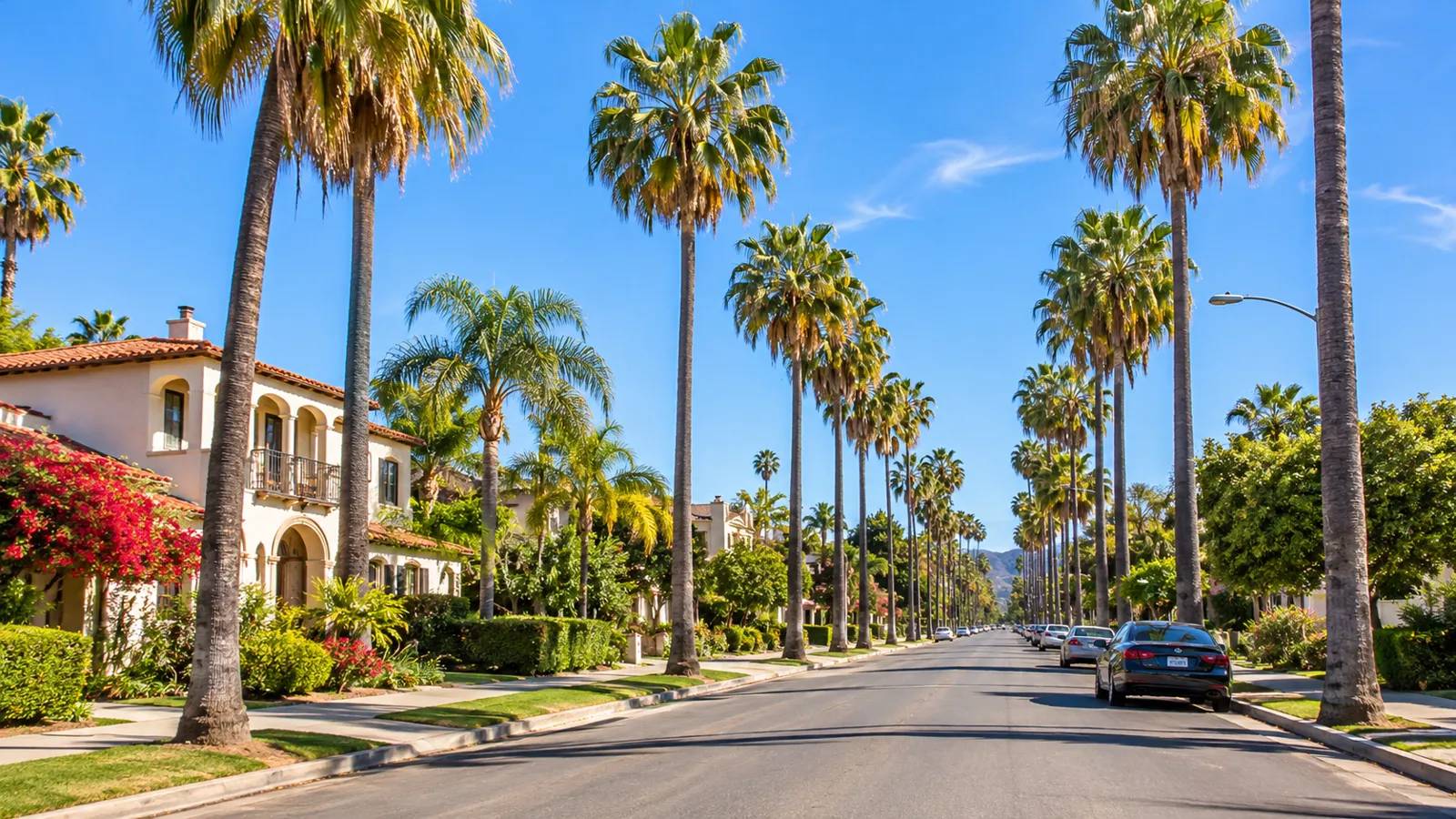
Yes. Palm trees grow well in California, especially in the warmer south and along the coast. Colder inland and northern areas are limited to cold-hardy palms.
Whether a palm survives comes down to one thing: how cold your winters get. Every palm has a temperature it can handle for a short time, and below that the leaves burn and the growing bud can die. California spans USDA hardiness zones 4b to 11b, so the answer changes depending on where you live in the state.
Where Do Palm Trees Grow in California?
Southern California is palm country. Los Angeles, San Diego, Orange County, Palm Springs and the Coachella Valley grow Mexican fan palms, queen palms, Canary Island date palms, king palms and date palms. The Central Valley, Sacramento and the Bay Area grow Canary Island date palms, windmill palms and Mexican fan palms. Mountain towns like Lake Tahoe and Mammoth are too cold.
Palm trees in California cities
| City | Zone | What grows there |
|---|---|---|
| San Diego | 10a to 10b | Queen, king, Mexican fan, Canary Island date and bird of paradise companions. Some of the best palm growing in the US. |
| Los Angeles | 10a to 10b | The famous skyline Mexican fan palms, plus Canary Island date palms, queen palms and king palms. |
| Palm Springs and the Coachella Valley | 9b to 10a | California fan palms grow wild in desert oases. Date palm farms around Indio grow most US dates. |
| Santa Barbara | 10a | Mild coastal climate. Big Canary Island date palms and Chilean wine palms. |
| San Francisco Bay Area | 9b to 10a | Canary Island date palms line Dolores Street and the Embarcadero. Cool summers slow tropical palms. |
| Sacramento and the Central Valley | 9a to 9b | Mexican and California fan palms and windmill palms. Frost nights limit queen palms. |
| Fresno and Bakersfield | 9a to 9b | Fan palms and date palms do well in the hot, dry summers. |
| Lake Tahoe and the Sierra | 5b to 7a | Too cold. Snow country, where palms are houseplants. |
California Climate and Hardiness Zones
Coastal Southern California rarely frosts, and the low desert is hot and dry. The Central Valley gets light frost. The Sierra Nevada and far north get real winter, with snow and single digit nights at elevation.
| Area | Typical extreme winter low |
|---|---|
| Coldest parts (zone 4b) | -25°F to -20°F |
| Mildest parts (zone 11b) | 45°F to 50°F |
Zones come from the 2023 USDA Plant Hardiness Zone Map. They show the average coldest night of the year, not the record. A rare arctic outbreak can go 10°F or more below these numbers.
Are There Native Palm Trees in California?
Yes. The California fan palm (Washingtonia filifera) is the only palm native to the western US. It grows wild in desert oases such as Palm Canyon near Palm Springs, Anza-Borrego and Joshua Tree. The famous palms of Los Angeles were planted, many in the 1930s.
California's Only Native Palm
Of the roughly 2,500 palm species in the world, only one is native to California: the California fan palm (Washingtonia filifera). It grows wild in desert canyons where groundwater reaches the surface, mainly in the Colorado Desert.
The largest natural grove is in Palm Canyon near Palm Springs, on land of the Agua Caliente Band of Cahuilla Indians. Other wild oases are in Anza-Borrego Desert State Park and Joshua Tree National Park, such as the Fortynine Palms and Lost Palms oases. The Cahuilla people used the fruit for food and the fronds for roofs and baskets.
Wild California fan palms keep a "skirt" of dead fronds hanging down the trunk. In the wild it protects the trunk and gives shelter to owls and bats.
How Palm Trees Became the Symbol of Los Angeles
The palms of LA are not native. Most of the tall, skinny ones are Mexican fan palms (Washingtonia robusta), and most of them were planted in a burst in the 1930s. Ahead of the 1932 Olympics, the city planted about 25,000 palms along hundreds of miles of streets as a work program during the Great Depression.
Today many of those palms are near the end of their lives at 90 years or more, and some are falling or dying of disease. Los Angeles has said it will mostly replace them with shade trees that cool streets better, while keeping palms on famous roads. Beverly Hills and Hollywood still protect their iconic rows.
Other common California palms include the Canary Island date palm, which is suffering from a fungal disease called fusarium wilt, and the queen palm, which is easy to grow but needs regular cleaning.
How to Grow Palm Trees in California
- Water wisely: most California palms are drought tolerant once established, but young palms need deep watering through the dry summer. Drip irrigation works well.
- Clean tools: fusarium wilt spreads on pruning saws. Disinfect tools between palms, and never use a chainsaw on Canary Island date palms.
- Watch for weevils: the South American palm weevil has killed thousands of Canary Island date palms in San Diego County since 2011.
- Fire safety: remove dead skirts from fan palms near homes. Dry fronds burn fast and carry embers in wildfires.
- Height: Mexican fan palms reach 80 to 100 feet. Plant them where tall trunks will not hit power lines.
Best Palm Trees for California
These palms match the winter lows in California. Hardier choices are safest in the colder parts of the state.
| Palm | Cold limit and notes |
|---|---|
| Coconut palm Cocos nucifera | About 35°F. 50 to 80 ft tall. Needs a frost-free tropical climate. |
| Royal palm Roystonea regia | About 28°F. 50 to 70 ft tall. Smooth gray trunk like a concrete column. |
| Queen palm Syagrus romanzoffiana | About 25°F. 30 to 50 ft tall. Fast, graceful feather palm for frost-light areas. |
| Date palm Phoenix dactylifera | About 20°F. 50 to 80 ft tall. Grown for fruit in hot, dry deserts. |
| Mexican fan palm Washingtonia robusta | About 20°F. 60 to 100 ft tall. Very tall and slim. The classic Los Angeles skyline palm. |
| Canary Island date palm Phoenix canariensis | About 18°F. 40 to 60 ft tall. Huge, formal feather palm with a pineapple-like trunk. |
| California fan palm Washingtonia filifera | About 15°F. 30 to 60 ft tall. Thick trunk, desert tough and native to the Southwest. |
Tip: Mexican fan palms grow very tall. For smaller yards, choose a Mediterranean fan palm, pindo palm or king palm.
What Temperature Kills Palm Trees in California?
Most palms start to show leaf damage when temperatures fall below their cold limit, and the growing point (the bud at the top of the trunk) dies a few degrees lower. Duration matters as much as the number. A single night at 15°F is far less harmful than three days below freezing. In California, the coldest areas see lows around -25°F to -20°F, while the warmest areas rarely drop below 45°F. Tropical palms such as coconut and royal palms are damaged near 32°F. Queen palms suffer below about 25°F, and Mexican fan palms below about 20°F.
How to Care for Palms Through a California Winter
- Plant in spring so roots establish before winter.
- Before a hard freeze, water the soil, then wrap the trunk and bud with frost cloth.
- Add 3 to 4 inches of mulch over the root zone.
- For small palms, string non-LED holiday lights inside the wrap for gentle heat.
- Do not cut off brown fronds right after a freeze. Wait until spring to see what recovers.
Best Palm Tree Alternatives for California
If you want a tropical look in the colder parts of California, or just want variety, these plants pair well with palms.
- Hardy banana (Musa basjoo): Dies to the ground in winter and regrows huge tropical leaves each summer.
- Yucca (Yucca filamentosa, Y. rostrata): Spiky, palm-like rosettes that shrug off snow.
- Hardy hibiscus (Hibiscus moscheutos): Dinner plate flowers that look straight out of the tropics.
- Cordyline and New Zealand flax: Strappy, colorful leaves with a palm-like silhouette.
- Sago palm (Cycas revoluta): Not a true palm, but the look is close. Toxic to pets.
- Elephant ears (Colocasia): Giant leaves in summer. Lift or mulch the bulbs in winter.
- Ornamental grasses and bamboo: Fast screening with a lush, tropical feel. Choose clumping bamboo to avoid spreading.
Can You Grow Palm Trees Indoors in California?
Yes. Indoor palms grow anywhere, including California. Give them bright, indirect light, water when the top inch of soil is dry, and keep them away from heating vents and cold drafts. Good indoor palms include the parlor palm (chamaedorea elegans), kentia palm (howea forsteriana), lady palm (rhapis excelsa) and areca palm. Many people also move potted palms outside for summer and bring them back inside once nights drop below about 45°F.
Frequently Asked Questions
Can palm trees grow in California?
Yes. Palm trees grow well in California, especially in the warmer south and along the coast. Colder inland and northern areas are limited to cold-hardy palms.
What is the best palm tree for California?
Good choices for California include the coconut palm, royal palm and queen palm. Mexican fan palms grow very tall. For smaller yards, choose a Mediterranean fan palm, pindo palm or king palm.
What hardiness zone is California?
California spans roughly USDA zones 4b to 11b on the 2023 USDA map, which means average extreme winter lows from about -25°F in the coldest areas to 45°F in the mildest.
Do palm trees grow naturally in California?
Only one, the California fan palm, in desert oases. Almost every palm in Los Angeles and San Diego was planted.
Why are there so many palm trees in Los Angeles?
They were planted for city beautification, especially in the 1930s, and they suit the mild climate. Many are now aging and not being replaced.
Are palm trees native to California?
Only one, the California fan palm, which grows wild in desert oases like Palm Canyon near Palm Springs. The famous palms of Los Angeles are mostly Mexican fan palms planted in the 1930s.
Why does Los Angeles have so many palm trees?
The city planted about 25,000 palms along streets ahead of the 1932 Olympics as a Depression-era work program. They became a symbol of Southern California.
Can palm trees grow in Northern California?
Yes. Canary Island date palms, Mexican fan palms and windmill palms grow in San Francisco, Sacramento and much of Northern California. Only the high mountains are too cold.
Palm Trees in Nearby States
- Do palm trees grow in Arizona? Yes, warm areas
- Do palm trees grow in Nevada? Yes, warm areas
- Do palm trees grow in Oregon? Hardy palms only
More States in This Guide
- Do palm trees grow in Tennessee? Hardy palms only
- Do palm trees grow in Texas? Yes, warm areas
- Do palm trees grow in North Carolina? Hardy palms only
- Do palm trees grow in Florida? Yes
- Do palm trees grow in New York? Hardy palms only
- Do palm trees grow in Ohio? Marginal
- Do palm trees grow in Georgia? Yes, warm areas
- Do palm trees grow in Virginia? Hardy palms only
- Do palm trees grow in New Jersey? Hardy palms only
- Do palm trees grow in Oklahoma? Hardy palms only
- Do palm trees grow in Michigan? Marginal
- Do palm trees grow in South Carolina? Yes, warm areas
- Do palm trees grow in Colorado? Marginal
- Do palm trees grow in Pennsylvania? Hardy palms only
- Do palm trees grow in Kentucky? Hardy palms only
- Do palm trees grow in Maryland? Hardy palms only
- Do palm trees grow in Arkansas? Hardy palms only
- Do palm trees grow in Illinois? Marginal
- Do palm trees grow in Missouri? Hardy palms only
- Do palm trees grow in Indiana? Marginal
- Do palm trees grow in Washington? Hardy palms only
- Do palm trees grow in Louisiana? Yes, warm areas
- Do palm trees grow in Alabama? Yes, warm areas
- Do palm trees grow in Mississippi? Yes, warm areas
- Do palm trees grow in Utah? Hardy palms only
- Do palm trees grow in New Mexico? Hardy palms only
- Do palm trees grow in Hawaii? Yes
- Do palm trees grow in Massachusetts? Hardy palms only
- Do palm trees grow in Connecticut? Hardy palms only
- Do palm trees grow in Delaware? Hardy palms only
- Do palm trees grow in Washington, DC? Hardy palms only
- Do palm trees grow in West Virginia? Hardy palms only
- Do palm trees grow in Kansas? Marginal
- Do palm trees grow in Iowa? Marginal
- Do palm trees grow in Nebraska? Marginal
- Do palm trees grow in Minnesota? Indoors only
- Do palm trees grow in Wisconsin? Indoors only
- Do palm trees grow in Idaho? Marginal
- Do palm trees grow in Rhode Island? Hardy palms only
- Do palm trees grow in Maine? Indoors only
- Do palm trees grow in New Hampshire? Indoors only
- Do palm trees grow in Vermont? Indoors only
- Do palm trees grow in Montana? Indoors only
- Do palm trees grow in Wyoming? Indoors only
- Do palm trees grow in North Dakota? Indoors only
- Do palm trees grow in South Dakota? Indoors only
- Do palm trees grow in Alaska? Indoors only
- Do palm trees grow in Puerto Rico? Yes
See palm trees by state for all 50 states, DC and Puerto Rico.