Quick answer
Cold-hardy palms only
- USDA zones
- 3b to 7b
- Coldest winter lows
- about -35°F
- Mildest winter lows
- about 5°F
- Native palms
- None
Do Palm Trees Grow in New York?
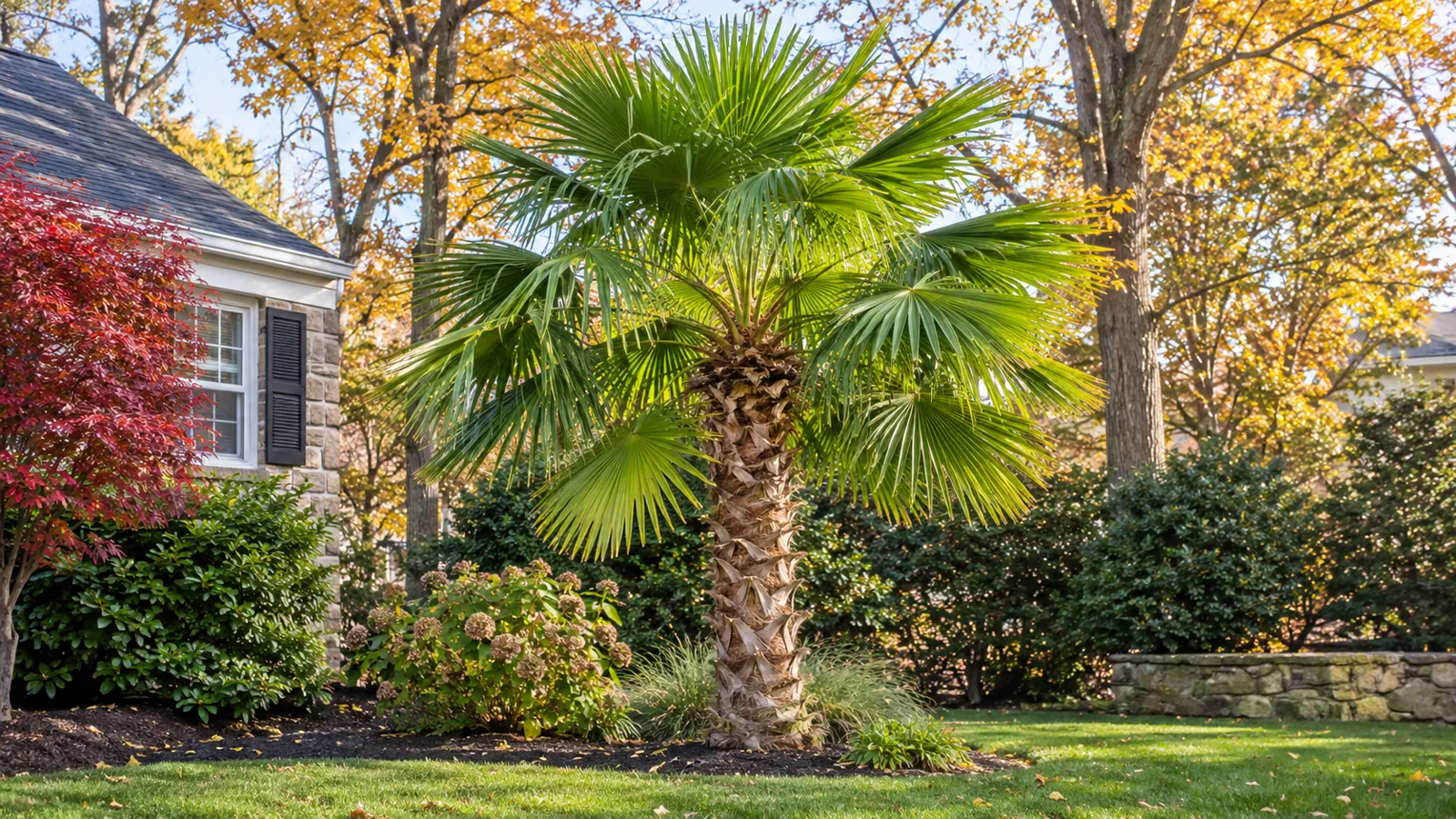
Yes, but only cold-hardy palms. New York gets winters that kill tropical palms, but tough species like the needle palm and windmill palm can survive in the mildest areas, often with some winter protection.
Whether a palm survives comes down to one thing: how cold your winters get. Every palm has a temperature it can handle for a short time, and below that the leaves burn and the growing bud can die. New York spans USDA hardiness zones 3b to 7b, so the answer changes depending on where you live in the state.
Where Do Palm Trees Grow in New York?
New York City and Long Island are the only realistic places in the state for palms in the ground. Windmill palms and needle palms survive in sheltered yards in Brooklyn, Queens, Staten Island and the South Shore of Long Island. Upstate New York, including Albany, Syracuse, Rochester and Buffalo, is too cold.
Palm trees in New York cities
| City | Zone | What grows there |
|---|---|---|
| New York City | 7b | Windmill and needle palms grow in sheltered yards in Brooklyn, Queens and Staten Island. Rooftops and courtyards act as heat islands. |
| Long Island (South Shore and Hamptons) | 7a to 7b | The ocean keeps winters milder. Windmill palms, needle palms and dwarf palmettos grow with winter wrapping. |
| Westchester and the Lower Hudson Valley | 6b to 7a | Needle palms and dwarf palmettos next to south-facing walls. |
| Buffalo | 6b | Lake Erie moderates the worst cold but brings heavy snow. Needle palms only, well mulched. |
| Rochester and Syracuse | 6a to 6b | Very marginal. Needle palms with full winter enclosures. |
| Albany | 5b to 6a | Too cold for in-ground palms. Use pots and bring them inside. |
| Adirondacks and North Country | 4a to 5a | No palms outdoors. Indoor palms only. |
New York Climate and Hardiness Zones
New York City usually stays above 5°F thanks to the urban heat island and the ocean. Upstate New York regularly drops below 0°F.
| Area | Typical extreme winter low |
|---|---|
| Coldest parts (zone 3b) | -35°F to -30°F |
| Mildest parts (zone 7b) | 5°F to 10°F |
Zones come from the 2023 USDA Plant Hardiness Zone Map. They show the average coldest night of the year, not the record. A rare arctic outbreak can go 10°F or more below these numbers.
Are There Native Palm Trees in New York?
No. New York has no native palms.
Palm Trees in New York City
New York City surprises people. Windmill palms grow in yards across Brooklyn and Queens, and some have lived through more than a decade of winters. City heat helps. Buildings, pavement and the ocean keep nights a few degrees warmer than the suburbs.
Some growers push even further. One New Yorker has documented trying to grow a Canary Island date palm, a species rated only to about 18°F, with heavy winter protection. It shows what is possible with effort, but it is not something most homeowners should try.
Every summer, Manhattan bars, rooftop restaurants and beach clubs in the Rockaways bring in potted palms. These are tropical palms that are removed in fall. Several Long Island and New Jersey nurseries now deliver palms in spring and pick them up for winter storage.
Protecting Palms Through a New York Winter
In New York, winter protection is not optional. Growers on Long Island and in the city follow a routine:
- Late November: spray with a copper fungicide to keep rot out of the crown, then tie the fronds upward.
- Before the first night in the teens: wrap the trunk and crown with frost cloth or burlap. Some growers string C9 incandescent holiday lights inside the wrap for gentle heat.
- Below 5°F: add a frame of stakes and plastic or a pop-up greenhouse over smaller palms, with a small heat source.
- March to April: remove covers gradually once nights stay above about 25°F. Uncovering too early leaves the palm exposed to spring cold.
Snow sitting on fronds is less of a problem than you might think. It actually insulates. Ice and cold wind are the real enemies.
Can You Grow Palms in Upstate New York?
Upstate is much harder. Winters around Syracuse, Rochester and Albany regularly fall below 0°F. Only the needle palm has any chance, and it needs to be buried in mulch or enclosed in a heated box each winter.
For most upstate gardeners, the better plan is to grow a palm in a pot. Put it outside on the deck from late May to September, then bring it into a bright room for winter. Kentia, parlor and lady palms handle indoor life best. For a tropical look in the ground, use hardy bananas, yuccas and hardy hibiscus.
Best Palm Trees for New York
These palms match the winter lows in New York. They are listed hardiest first.
| Palm | Cold limit and notes |
|---|---|
| Needle palm Rhapidophyllum hystrix | About -5°F. 4 to 8 ft tall. The hardiest palm in the world. Slow, shrubby and spiny. |
| Dwarf palmetto Sabal minor | About 0°F. 3 to 6 ft tall. Low, trunkless fan palm that regrows from the ground after hard freezes. |
| Windmill palm Trachycarpus fortunei | About 5°F. 10 to 25 ft tall. The classic cold-hardy trunked palm. Likes cool, wet climates. |
| Mediterranean fan palm Chamaerops humilis | About 10°F. 6 to 15 ft tall. Clumping, drought tolerant and good in dry cold. |
| Cabbage palm Sabal palmetto | About 10°F. 30 to 50 ft tall. Tall, salt tolerant and hurricane tough. |
Tip: Plant near a south-facing brick wall in the city. Brick stores heat and protects palms at night.
What Temperature Kills Palm Trees in New York?
Most palms start to show leaf damage when temperatures fall below their cold limit, and the growing point (the bud at the top of the trunk) dies a few degrees lower. Duration matters as much as the number. A single night at 15°F is far less harmful than three days below freezing. Much of New York sees winter lows between -35°F and 10°F. That rules out tropical palms. Windmill palms handle about 5°F, dwarf palmettos about 0°F and needle palms about -5°F, so those are the palms that make it.
How to Care for Palms Through a New York Winter
- Choose the hardiest palms: needle palm, dwarf palmetto and windmill palm.
- Plant against a south or west-facing wall, out of the north wind.
- Mulch the base with 4 to 6 inches of straw or bark in late fall.
- On nights below 10°F, tie up the fronds and wrap the trunk and crown with frost cloth or burlap.
- Use well-drained soil. Cold plus soggy soil causes rot.
Best Palm Tree Alternatives for New York
If palms are too risky where you live, these plants give a similar tropical look and handle New York winters.
- Hardy banana (Musa basjoo): Dies to the ground in winter and regrows huge tropical leaves each summer.
- Yucca (Yucca filamentosa, Y. rostrata): Spiky, palm-like rosettes that shrug off snow.
- Hardy hibiscus (Hibiscus moscheutos): Dinner plate flowers that look straight out of the tropics.
- Elephant ears (Colocasia): Giant leaves in summer. Lift or mulch the bulbs in winter.
- Ornamental grasses and bamboo: Fast screening with a lush, tropical feel. Choose clumping bamboo to avoid spreading.
Can You Grow Palm Trees Indoors in New York?
Yes. Indoor palms grow anywhere, including New York. Give them bright, indirect light, water when the top inch of soil is dry, and keep them away from heating vents and cold drafts. Good indoor palms include the parlor palm (chamaedorea elegans), kentia palm (howea forsteriana), lady palm (rhapis excelsa) and areca palm. Many people also move potted palms outside for summer and bring them back inside once nights drop below about 45°F.
Frequently Asked Questions
Can palm trees grow in New York?
Yes, but only cold-hardy palms. New York gets winters that kill tropical palms, but tough species like the needle palm and windmill palm can survive in the mildest areas, often with some winter protection.
What is the best palm tree for New York?
Good choices for New York include the needle palm, dwarf palmetto and windmill palm. Plant near a south-facing brick wall in the city. Brick stores heat and protects palms at night.
What hardiness zone is New York?
New York spans roughly USDA zones 3b to 7b on the 2023 USDA map, which means average extreme winter lows from about -35°F in the coldest areas to 5°F in the mildest.
Can palm trees grow in New York City?
Yes, cold-hardy windmill palms and needle palms can survive in sheltered spots.
Do palm trees grow in upstate New York?
No. It is too cold. Grow palms indoors there.
Do palm trees grow in New York City?
Yes. Windmill palms and needle palms grow in sheltered yards in Brooklyn, Queens and Staten Island. They need winter wrapping when temperatures fall into the single digits.
Can palm trees survive winter on Long Island?
Cold-hardy ones can. Windmill palms, needle palms and dwarf palmettos survive Long Island winters, especially on the South Shore, with mulch and winter wraps.
Palm Trees in Nearby States
- Do palm trees grow in New Jersey? Hardy palms only
- Do palm trees grow in Connecticut? Hardy palms only
- Do palm trees grow in Pennsylvania? Hardy palms only
More States in This Guide
- Do palm trees grow in Tennessee? Hardy palms only
- Do palm trees grow in Texas? Yes, warm areas
- Do palm trees grow in North Carolina? Hardy palms only
- Do palm trees grow in Florida? Yes
- Do palm trees grow in California? Yes, warm areas
- Do palm trees grow in Ohio? Marginal
- Do palm trees grow in Georgia? Yes, warm areas
- Do palm trees grow in Virginia? Hardy palms only
- Do palm trees grow in Oklahoma? Hardy palms only
- Do palm trees grow in Michigan? Marginal
- Do palm trees grow in South Carolina? Yes, warm areas
- Do palm trees grow in Arizona? Yes, warm areas
- Do palm trees grow in Colorado? Marginal
- Do palm trees grow in Kentucky? Hardy palms only
- Do palm trees grow in Maryland? Hardy palms only
- Do palm trees grow in Arkansas? Hardy palms only
- Do palm trees grow in Illinois? Marginal
- Do palm trees grow in Missouri? Hardy palms only
- Do palm trees grow in Indiana? Marginal
- Do palm trees grow in Washington? Hardy palms only
- Do palm trees grow in Louisiana? Yes, warm areas
- Do palm trees grow in Alabama? Yes, warm areas
- Do palm trees grow in Mississippi? Yes, warm areas
- Do palm trees grow in Nevada? Yes, warm areas
- Do palm trees grow in Oregon? Hardy palms only
- Do palm trees grow in Utah? Hardy palms only
- Do palm trees grow in New Mexico? Hardy palms only
- Do palm trees grow in Hawaii? Yes
- Do palm trees grow in Massachusetts? Hardy palms only
- Do palm trees grow in Delaware? Hardy palms only
- Do palm trees grow in Washington, DC? Hardy palms only
- Do palm trees grow in West Virginia? Hardy palms only
- Do palm trees grow in Kansas? Marginal
- Do palm trees grow in Iowa? Marginal
- Do palm trees grow in Nebraska? Marginal
- Do palm trees grow in Minnesota? Indoors only
- Do palm trees grow in Wisconsin? Indoors only
- Do palm trees grow in Idaho? Marginal
- Do palm trees grow in Rhode Island? Hardy palms only
- Do palm trees grow in Maine? Indoors only
- Do palm trees grow in New Hampshire? Indoors only
- Do palm trees grow in Vermont? Indoors only
- Do palm trees grow in Montana? Indoors only
- Do palm trees grow in Wyoming? Indoors only
- Do palm trees grow in North Dakota? Indoors only
- Do palm trees grow in South Dakota? Indoors only
- Do palm trees grow in Alaska? Indoors only
- Do palm trees grow in Puerto Rico? Yes
See palm trees by state for all 50 states, DC and Puerto Rico.