Quick answer
Cold-hardy palms only
- USDA zones
- 6a to 8a
- Coldest winter lows
- about -10°F
- Mildest winter lows
- about 10°F
- Native palms
- Yes
Do Palm Trees Grow in Oklahoma?
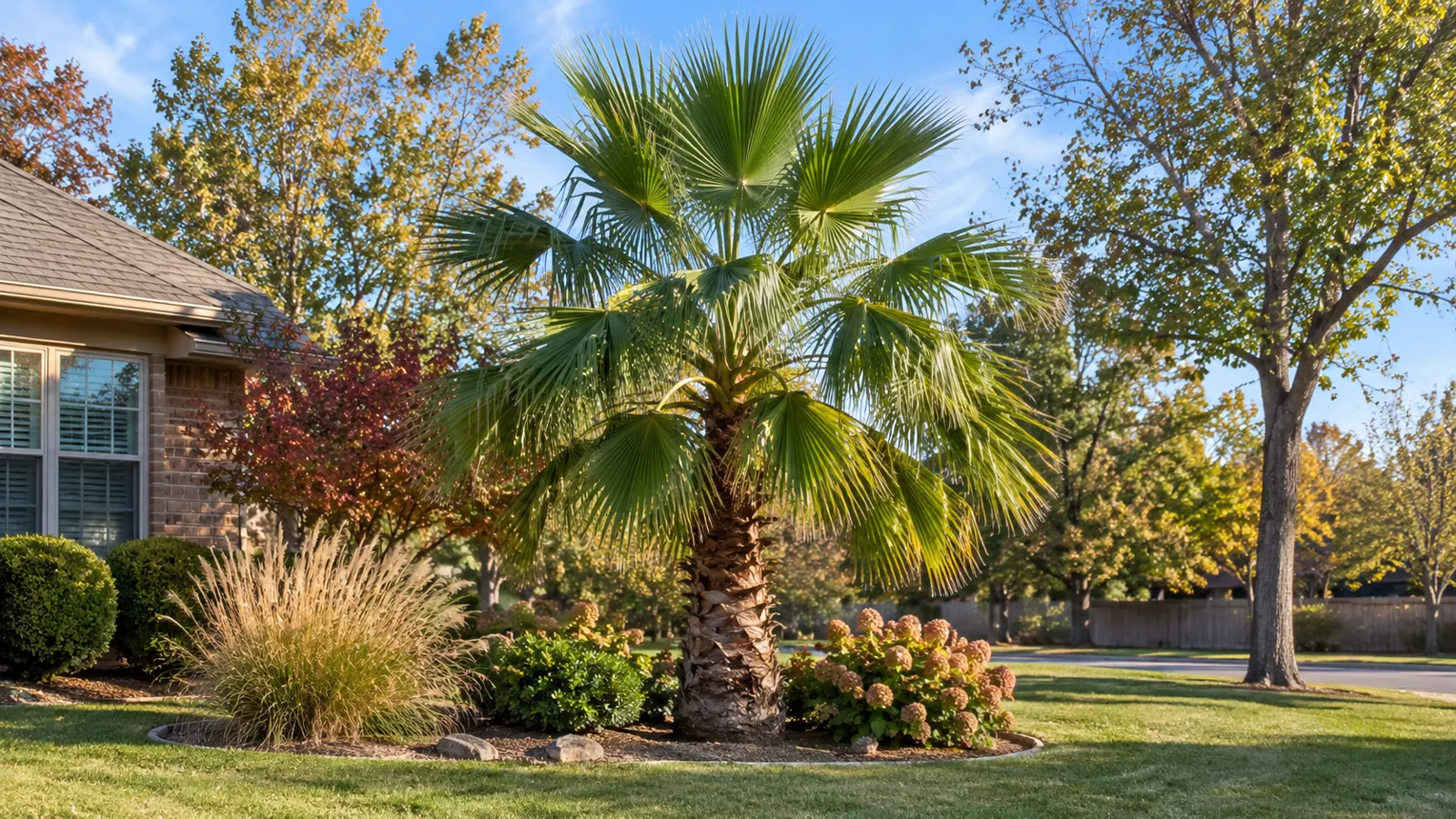
Yes, but only cold-hardy palms. Oklahoma gets winters that kill tropical palms, but tough species like the needle palm and windmill palm can survive in the mildest areas, often with some winter protection.
Whether a palm survives comes down to one thing: how cold your winters get. Every palm has a temperature it can handle for a short time, and below that the leaves burn and the growing bud can die. Oklahoma spans USDA hardiness zones 6a to 8a, so the answer changes depending on where you live in the state.
Where Do Palm Trees Grow in Oklahoma?
Southeast Oklahoma, including Idabel and Durant, is the mildest part of the state. Dwarf palmettos grow wild there, and needle palms and windmill palms grow well. Oklahoma City, Tulsa and Norman can grow needle palms and windmill palms with protection. The Panhandle is too cold and dry.
Palm trees in Oklahoma cities
| City | Zone | What grows there |
|---|---|---|
| Idabel and McCurtain County | 7b to 8a | Home to the famous McCurtain dwarf palmetto, a wild population that is among the hardiest palms in the world. |
| Durant and the Red River | 7b to 8a | The warmest area of Oklahoma. Windmill, needle and sabal palms grow well. |
| Lawton and Southwest Oklahoma | 7b | Windmill palms and dwarf palmettos with care. Dry winter wind is a problem. |
| Oklahoma City | 7a to 7b | Windmill palms, needle palms and dwarf palmettos in sheltered yards. |
| Tulsa | 7a | Needle palms and McCurtain palmettos. Windmill palms with winter wrapping. |
| The Panhandle (Guymon, Boise City) | 6a to 6b | Too cold and windy. Grow palms in pots. |
Oklahoma Climate and Hardiness Zones
Oklahoma winters swing between mild days and hard freezes. The southeast usually stays above 10°F, Oklahoma City can reach 0°F, and ice storms are common.
| Area | Typical extreme winter low |
|---|---|
| Coldest parts (zone 6a) | -10°F to -5°F |
| Mildest parts (zone 8a) | 10°F to 15°F |
Zones come from the 2023 USDA Plant Hardiness Zone Map. They show the average coldest night of the year, not the record. A rare arctic outbreak can go 10°F or more below these numbers.
Are There Native Palm Trees in Oklahoma?
Yes. A small native population of dwarf palmetto grows in McCurtain County in far southeast Oklahoma.
Oklahoma's Native Palm: The McCurtain Palmetto
Oklahoma has a wild palm. The dwarf palmetto grows in the forests of southeastern McCurtain County, near the Red River. It is the northwestern edge of the species' range.
Palm growers around the world prize this population as 'McCurtain' Sabal minor. Because it survived Oklahoma winters for thousands of years, it is one of the most cold-hardy palms known. Plants have survived temperatures below 0°F with little damage. If you grow palms in the Midwest or Northeast, there is a good chance your dwarf palmetto came from McCurtain seed.
Tulsa People magazine nicknamed these tough plants "iron palms", which is a good description.
Why Oklahoma Is Hard on Palms
Oklahoma has hot summers that palms love. The problem is winter, which brings three threats:
- Sudden cold: arctic fronts can drop the temperature 40 degrees in a few hours. In February 2021, Oklahoma City hit -14°F, its coldest temperature in decades.
- Ice storms: heavy ice breaks fronds and soaks the crown, leading to rot.
- Dry wind: winter wind dries out the leaves of evergreen palms. A windbreak or a spot behind the house helps a lot.
Oklahoma State extension and local gardeners in southwest Oklahoma suggest treating palms as an experiment. They can work, but plant hardy species and be ready to protect them.
How to Plant a Palm Tree in Oklahoma
- Buy hardy: McCurtain dwarf palmetto, needle palm and windmill palm. Local growers like OKPalms sell species tested in Oklahoma.
- Buy small enough to establish: palms larger than about 7 gallons may need extra winter protection in their first years.
- Plant in late spring so the palm has the whole summer to root.
- Use a windbreak: the south side of a house or fence is best.
- Water in summer: deep watering during Oklahoma's hot, dry spells keeps palms strong for winter.
Best Palm Trees for Oklahoma
These palms match the winter lows in Oklahoma. They are listed hardiest first.
| Palm | Cold limit and notes |
|---|---|
| Needle palm Rhapidophyllum hystrix | About -5°F. 4 to 8 ft tall. The hardiest palm in the world. Slow, shrubby and spiny. |
| Dwarf palmetto Sabal minor | About 0°F. 3 to 6 ft tall. Low, trunkless fan palm that regrows from the ground after hard freezes. |
| Windmill palm Trachycarpus fortunei | About 5°F. 10 to 25 ft tall. The classic cold-hardy trunked palm. Likes cool, wet climates. |
| Mediterranean fan palm Chamaerops humilis | About 10°F. 6 to 15 ft tall. Clumping, drought tolerant and good in dry cold. |
| Cabbage palm Sabal palmetto | About 10°F. 30 to 50 ft tall. Tall, salt tolerant and hurricane tough. |
Tip: Plant palms where they are sheltered from north wind. Oklahoma winter wind dries palm leaves fast.
What Temperature Kills Palm Trees in Oklahoma?
Most palms start to show leaf damage when temperatures fall below their cold limit, and the growing point (the bud at the top of the trunk) dies a few degrees lower. Duration matters as much as the number. A single night at 15°F is far less harmful than three days below freezing. Much of Oklahoma sees winter lows between -10°F and 15°F. That rules out tropical palms. Windmill palms handle about 5°F, dwarf palmettos about 0°F and needle palms about -5°F, so those are the palms that make it.
How to Care for Palms Through a Oklahoma Winter
- Choose the hardiest palms: needle palm, dwarf palmetto and windmill palm.
- Plant against a south or west-facing wall, out of the north wind.
- Mulch the base with 4 to 6 inches of straw or bark in late fall.
- On nights below 10°F, tie up the fronds and wrap the trunk and crown with frost cloth or burlap.
- Use well-drained soil. Cold plus soggy soil causes rot.
Best Palm Tree Alternatives for Oklahoma
If palms are too risky where you live, these plants give a similar tropical look and handle Oklahoma winters.
- Hardy banana (Musa basjoo): Dies to the ground in winter and regrows huge tropical leaves each summer.
- Yucca (Yucca filamentosa, Y. rostrata): Spiky, palm-like rosettes that shrug off snow.
- Hardy hibiscus (Hibiscus moscheutos): Dinner plate flowers that look straight out of the tropics.
- Cordyline and New Zealand flax: Strappy, colorful leaves with a palm-like silhouette.
- Sago palm (Cycas revoluta): Not a true palm, but the look is close. Toxic to pets.
- Elephant ears (Colocasia): Giant leaves in summer. Lift or mulch the bulbs in winter.
- Ornamental grasses and bamboo: Fast screening with a lush, tropical feel. Choose clumping bamboo to avoid spreading.
Can You Grow Palm Trees Indoors in Oklahoma?
Yes. Indoor palms grow anywhere, including Oklahoma. Give them bright, indirect light, water when the top inch of soil is dry, and keep them away from heating vents and cold drafts. Good indoor palms include the parlor palm (chamaedorea elegans), kentia palm (howea forsteriana), lady palm (rhapis excelsa) and areca palm. Many people also move potted palms outside for summer and bring them back inside once nights drop below about 45°F.
Frequently Asked Questions
Can palm trees grow in Oklahoma?
Yes, but only cold-hardy palms. Oklahoma gets winters that kill tropical palms, but tough species like the needle palm and windmill palm can survive in the mildest areas, often with some winter protection.
What is the best palm tree for Oklahoma?
Good choices for Oklahoma include the needle palm, dwarf palmetto and windmill palm. Plant palms where they are sheltered from north wind. Oklahoma winter wind dries palm leaves fast.
What hardiness zone is Oklahoma?
Oklahoma spans roughly USDA zones 6a to 8a on the 2023 USDA map, which means average extreme winter lows from about -10°F in the coldest areas to 10°F in the mildest.
Will palm trees grow in Oklahoma?
Yes, cold-hardy palms will, especially in the southeast.
Is there a native palm in Oklahoma?
Yes. Dwarf palmetto grows wild in McCurtain County.
Is there a palm tree native to Oklahoma?
Yes. The dwarf palmetto (Sabal minor) grows wild in McCurtain County in southeastern Oklahoma. The 'McCurtain' strain is one of the hardiest palms in the world.
Do palm trees grow in Oklahoma City?
Yes, cold-hardy ones. Windmill palms, needle palms and dwarf palmettos grow in Oklahoma City, which is in zone 7a to 7b, with winter protection in hard freezes.
Palm Trees in Nearby States
- Do palm trees grow in Texas? Yes, warm areas
- Do palm trees grow in Arkansas? Hardy palms only
- Do palm trees grow in Kansas? Marginal
More States in This Guide
- Do palm trees grow in Tennessee? Hardy palms only
- Do palm trees grow in North Carolina? Hardy palms only
- Do palm trees grow in Florida? Yes
- Do palm trees grow in California? Yes, warm areas
- Do palm trees grow in New York? Hardy palms only
- Do palm trees grow in Ohio? Marginal
- Do palm trees grow in Georgia? Yes, warm areas
- Do palm trees grow in Virginia? Hardy palms only
- Do palm trees grow in New Jersey? Hardy palms only
- Do palm trees grow in Michigan? Marginal
- Do palm trees grow in South Carolina? Yes, warm areas
- Do palm trees grow in Arizona? Yes, warm areas
- Do palm trees grow in Colorado? Marginal
- Do palm trees grow in Pennsylvania? Hardy palms only
- Do palm trees grow in Kentucky? Hardy palms only
- Do palm trees grow in Maryland? Hardy palms only
- Do palm trees grow in Illinois? Marginal
- Do palm trees grow in Missouri? Hardy palms only
- Do palm trees grow in Indiana? Marginal
- Do palm trees grow in Washington? Hardy palms only
- Do palm trees grow in Louisiana? Yes, warm areas
- Do palm trees grow in Alabama? Yes, warm areas
- Do palm trees grow in Mississippi? Yes, warm areas
- Do palm trees grow in Nevada? Yes, warm areas
- Do palm trees grow in Oregon? Hardy palms only
- Do palm trees grow in Utah? Hardy palms only
- Do palm trees grow in New Mexico? Hardy palms only
- Do palm trees grow in Hawaii? Yes
- Do palm trees grow in Massachusetts? Hardy palms only
- Do palm trees grow in Connecticut? Hardy palms only
- Do palm trees grow in Delaware? Hardy palms only
- Do palm trees grow in Washington, DC? Hardy palms only
- Do palm trees grow in West Virginia? Hardy palms only
- Do palm trees grow in Iowa? Marginal
- Do palm trees grow in Nebraska? Marginal
- Do palm trees grow in Minnesota? Indoors only
- Do palm trees grow in Wisconsin? Indoors only
- Do palm trees grow in Idaho? Marginal
- Do palm trees grow in Rhode Island? Hardy palms only
- Do palm trees grow in Maine? Indoors only
- Do palm trees grow in New Hampshire? Indoors only
- Do palm trees grow in Vermont? Indoors only
- Do palm trees grow in Montana? Indoors only
- Do palm trees grow in Wyoming? Indoors only
- Do palm trees grow in North Dakota? Indoors only
- Do palm trees grow in South Dakota? Indoors only
- Do palm trees grow in Alaska? Indoors only
- Do palm trees grow in Puerto Rico? Yes
See palm trees by state for all 50 states, DC and Puerto Rico.