Quick answer
Yes, almost everywhere
- USDA zones
- 8b to 11b
- Coldest winter lows
- about 15°F
- Mildest winter lows
- about 45°F
- Native palms
- Yes
Do Palm Trees Grow in Florida?
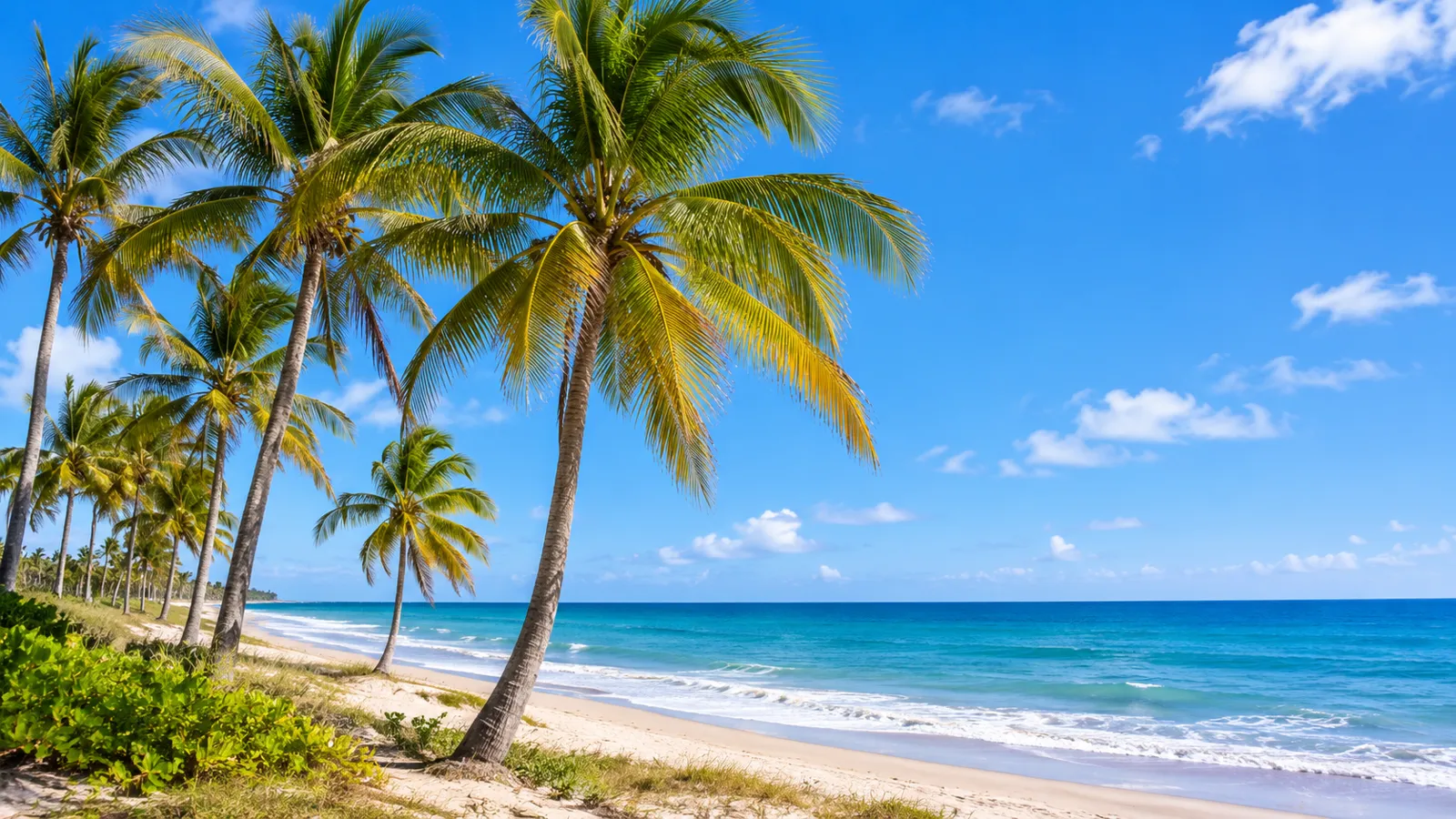
Yes. Palm trees grow almost everywhere in Florida. The climate stays warm enough that even tropical palms like coconut palms thrive in many areas.
Whether a palm survives comes down to one thing: how cold your winters get. Every palm has a temperature it can handle for a short time, and below that the leaves burn and the growing bud can die. Florida spans USDA hardiness zones 8b to 11b, so the answer changes depending on where you live in the state.
Where Do Palm Trees Grow in Florida?
Palms grow in every Florida county. South Florida, including Miami, Fort Lauderdale, Naples and the Keys, grows coconut palms, royal palms, foxtail palms and nearly any tropical palm. Central Florida, around Orlando and Tampa, grows queen palms, Canary Island date palms and cabbage palms. North Florida and the Panhandle, including Jacksonville, Tallahassee and Pensacola, get freezes, so cabbage palms, pindo palms and windmill palms are safer there.
Palm trees in Florida cities
| City | Zone | What grows there |
|---|---|---|
| Key West and the Florida Keys | 11a | True tropics. Coconut palms, royal palms, thatch palms and Christmas palms. The native Florida thatch palm and silver palm grow wild here. |
| Miami and Fort Lauderdale | 10b to 11a | Almost any palm in the world. Coconut, royal, foxtail, bismarck and dozens of rare species. |
| Naples and Fort Myers | 10a to 10b | Royal palms line McGregor Boulevard in Fort Myers, the "City of Palms". Coconut palms do well near the Gulf. |
| West Palm Beach and the Treasure Coast | 10a | Coconut palms on the barrier islands, royal and foxtail palms inland. |
| Tampa, St. Petersburg and Sarasota | 9b to 10a | Queen, Canary Island date, Mexican fan and sabal palms. Coconut palms grow near the water but get hurt in cold winters. |
| Orlando | 9b | Sabal, queen, Canary Island date and Washingtonia palms. Coconut and royal palms are risky. |
| Jacksonville and St. Augustine | 9a | Cabbage palms, pindo palms, windmill palms and Mexican fan palms. Queen palms freeze in some winters. |
| Tallahassee and the Panhandle | 8b to 9a | Cabbage palms, needle palms, dwarf palmettos and saw palmettos. Pensacola grows pindo and Canary Island date palms. |
Florida Climate and Hardiness Zones
South Florida is tropical with almost no frost. Central Florida gets occasional freezes. North Florida can drop into the teens during arctic outbreaks, such as the freezes of 1989 and 2010 that killed many palms.
| Area | Typical extreme winter low |
|---|---|
| Coldest parts (zone 8b) | 15°F to 20°F |
| Mildest parts (zone 11b) | 45°F to 50°F |
Zones come from the 2023 USDA Plant Hardiness Zone Map. They show the average coldest night of the year, not the record. A rare arctic outbreak can go 10°F or more below these numbers.
Are There Native Palm Trees in Florida?
Yes. Florida has about a dozen native palms, more than any other state. They include the cabbage palm (the state tree), saw palmetto, needle palm, dwarf palmetto, scrub palmetto, Florida royal palm, Florida thatch palm, silver palm and paurotis palm.
Florida's Native Palms
Florida has more native palms than any other state, about a dozen species. There are around 2,600 palm species in the world, so that is a small share, but it is far more than any other part of the US.
- Cabbage palm (Sabal palmetto): the state tree, found in every county.
- Saw palmetto (Serenoa repens): covers millions of acres of pine flatwoods. It is one of the most common plants in the state.
- Needle palm and dwarf palmetto: shady wet forests in North Florida.
- Scrub palmetto (Sabal etonia): dry sandy scrub in Central Florida.
- Florida royal palm (Roystonea regia): rare wild stands in the Everglades and Fakahatchee Strand.
- Florida thatch, brittle thatch, silver palm and paurotis palm: South Florida and the Keys. Several are listed as threatened.
Native palms need less water and fertilizer than imported ones and feed wildlife. Black bears, deer and many birds eat saw palmetto and cabbage palm fruit.
What Actually Kills Palms in Florida
In most of Florida, cold is not the main threat. These are:
- Lethal bronzing: a bacterial disease spread by a small insect. It has killed thousands of cabbage palms, Canary Island date palms and other species since it was found near Tampa in 2006. Infected palms turn bronze from the bottom up and die within months. There is no cure, though trunk injections can protect healthy palms.
- Lethal yellowing: a related disease that wiped out most of South Florida's tall coconut palms in the 1970s. Resistant types like Malayan dwarf coconuts were planted after.
- Nutrient deficiencies: Florida sand is poor. Potassium and magnesium deficiency cause yellow, frizzled fronds. Feed with an 8-2-12 palm fertilizer with magnesium.
- Hurricanes: most palms bend rather than break, but queen palms and Washingtonias often snap. Sabal palms are the toughest.
Cold still matters in North and Central Florida. The December 1989 freeze and the January 2010 cold wave killed queen palms and coconut palms as far south as Tampa and Orlando.
How to Plant a Palm Tree in Florida
- When: the rainy season, May to September, is ideal.
- Depth: plant at the same depth it grew in the nursery. Planting too deep is one of the most common causes of slow palm death in Florida.
- Water: daily for the first two weeks, then every few days until established.
- Brace: use wooden braces on tall palms for 6 to 12 months. Never nail into the trunk.
- Right palm, right place: match the palm to your zone. A coconut in Jacksonville or a queen palm on the Panhandle will die in the first hard freeze.
Best Palm Trees for Florida
These palms match the winter lows in Florida. Hardier choices are safest in the colder parts of the state.
| Palm | Cold limit and notes |
|---|---|
| Coconut palm Cocos nucifera | About 35°F. 50 to 80 ft tall. Needs a frost-free tropical climate. |
| Royal palm Roystonea regia | About 28°F. 50 to 70 ft tall. Smooth gray trunk like a concrete column. |
| Queen palm Syagrus romanzoffiana | About 25°F. 30 to 50 ft tall. Fast, graceful feather palm for frost-light areas. |
| Date palm Phoenix dactylifera | About 20°F. 50 to 80 ft tall. Grown for fruit in hot, dry deserts. |
| Mexican fan palm Washingtonia robusta | About 20°F. 60 to 100 ft tall. Very tall and slim. The classic Los Angeles skyline palm. |
| Canary Island date palm Phoenix canariensis | About 18°F. 40 to 60 ft tall. Huge, formal feather palm with a pineapple-like trunk. |
| California fan palm Washingtonia filifera | About 15°F. 30 to 60 ft tall. Thick trunk, desert tough and native to the Southwest. |
Tip: Coconut palms only thrive south of about Vero Beach on the east coast and Fort Myers on the west.
What Temperature Kills Palm Trees in Florida?
Most palms start to show leaf damage when temperatures fall below their cold limit, and the growing point (the bud at the top of the trunk) dies a few degrees lower. Duration matters as much as the number. A single night at 15°F is far less harmful than three days below freezing. In Florida, the coldest areas see lows around 15°F to 20°F, while the warmest areas rarely drop below 45°F. Tropical palms such as coconut and royal palms are damaged near 32°F. Queen palms suffer below about 25°F, and Mexican fan palms below about 20°F.
How to Care for Palms Through a Florida Winter
- Water deeply during dry spells and fertilize with a palm fertilizer containing magnesium and potassium.
- Prune only dead fronds. Removing green fronds weakens the palm.
- Before hurricanes, remove loose coconuts and dead fronds, but do not over-trim.
- In the rare cold snap, cover small palms with frost cloth and water the soil the day before.
Best Palm Tree Alternatives for Florida
If you want a tropical look in the colder parts of Florida, or just want variety, these plants pair well with palms.
- Hardy banana (Musa basjoo): Dies to the ground in winter and regrows huge tropical leaves each summer.
- Yucca (Yucca filamentosa, Y. rostrata): Spiky, palm-like rosettes that shrug off snow.
- Hardy hibiscus (Hibiscus moscheutos): Dinner plate flowers that look straight out of the tropics.
- Cordyline and New Zealand flax: Strappy, colorful leaves with a palm-like silhouette.
- Sago palm (Cycas revoluta): Not a true palm, but the look is close. Toxic to pets.
- Elephant ears (Colocasia): Giant leaves in summer. Lift or mulch the bulbs in winter.
- Ornamental grasses and bamboo: Fast screening with a lush, tropical feel. Choose clumping bamboo to avoid spreading.
Can You Grow Palm Trees Indoors in Florida?
Yes. Indoor palms grow anywhere, including Florida. Give them bright, indirect light, water when the top inch of soil is dry, and keep them away from heating vents and cold drafts. Good indoor palms include the parlor palm (chamaedorea elegans), kentia palm (howea forsteriana), lady palm (rhapis excelsa) and areca palm. Many people also move potted palms outside for summer and bring them back inside once nights drop below about 45°F.
Frequently Asked Questions
Can palm trees grow in Florida?
Yes. Palm trees grow almost everywhere in Florida. The climate stays warm enough that even tropical palms like coconut palms thrive in many areas.
What is the best palm tree for Florida?
Good choices for Florida include the coconut palm, royal palm and queen palm. Coconut palms only thrive south of about Vero Beach on the east coast and Fort Myers on the west.
What hardiness zone is Florida?
Florida spans roughly USDA zones 8b to 11b on the 2023 USDA map, which means average extreme winter lows from about 15°F in the coldest areas to 45°F in the mildest.
Do palm trees grow naturally in Florida?
Yes. Florida has about a dozen native palms, including the cabbage palm, saw palmetto and Florida royal palm. Many other palms you see, such as coconut and queen palms, were introduced.
Are coconut palms native to Florida?
No. Coconut palms were introduced, probably in the 1800s. They are naturalized in South Florida but are not native.
Are palm trees native to Florida?
Some are. About a dozen palm species are native to Florida, including the cabbage palm, saw palmetto and Florida royal palm. Coconut palms, queen palms and most street palms were brought in.
What is the state tree of Florida?
The cabbage palm, also called the sabal palm (Sabal palmetto). It grows wild throughout the state.
Why are palm trees dying in Florida?
The main cause is lethal bronzing, a disease spread by planthoppers that has killed many cabbage and date palms since 2006. Nutrient deficiencies, planting too deep and freezes in the north also kill palms.
Palm Trees in Nearby States
- Do palm trees grow in Georgia? Yes, warm areas
- Do palm trees grow in Alabama? Yes, warm areas
More States in This Guide
- Do palm trees grow in Tennessee? Hardy palms only
- Do palm trees grow in Texas? Yes, warm areas
- Do palm trees grow in North Carolina? Hardy palms only
- Do palm trees grow in California? Yes, warm areas
- Do palm trees grow in New York? Hardy palms only
- Do palm trees grow in Ohio? Marginal
- Do palm trees grow in Virginia? Hardy palms only
- Do palm trees grow in New Jersey? Hardy palms only
- Do palm trees grow in Oklahoma? Hardy palms only
- Do palm trees grow in Michigan? Marginal
- Do palm trees grow in South Carolina? Yes, warm areas
- Do palm trees grow in Arizona? Yes, warm areas
- Do palm trees grow in Colorado? Marginal
- Do palm trees grow in Pennsylvania? Hardy palms only
- Do palm trees grow in Kentucky? Hardy palms only
- Do palm trees grow in Maryland? Hardy palms only
- Do palm trees grow in Arkansas? Hardy palms only
- Do palm trees grow in Illinois? Marginal
- Do palm trees grow in Missouri? Hardy palms only
- Do palm trees grow in Indiana? Marginal
- Do palm trees grow in Washington? Hardy palms only
- Do palm trees grow in Louisiana? Yes, warm areas
- Do palm trees grow in Mississippi? Yes, warm areas
- Do palm trees grow in Nevada? Yes, warm areas
- Do palm trees grow in Oregon? Hardy palms only
- Do palm trees grow in Utah? Hardy palms only
- Do palm trees grow in New Mexico? Hardy palms only
- Do palm trees grow in Hawaii? Yes
- Do palm trees grow in Massachusetts? Hardy palms only
- Do palm trees grow in Connecticut? Hardy palms only
- Do palm trees grow in Delaware? Hardy palms only
- Do palm trees grow in Washington, DC? Hardy palms only
- Do palm trees grow in West Virginia? Hardy palms only
- Do palm trees grow in Kansas? Marginal
- Do palm trees grow in Iowa? Marginal
- Do palm trees grow in Nebraska? Marginal
- Do palm trees grow in Minnesota? Indoors only
- Do palm trees grow in Wisconsin? Indoors only
- Do palm trees grow in Idaho? Marginal
- Do palm trees grow in Rhode Island? Hardy palms only
- Do palm trees grow in Maine? Indoors only
- Do palm trees grow in New Hampshire? Indoors only
- Do palm trees grow in Vermont? Indoors only
- Do palm trees grow in Montana? Indoors only
- Do palm trees grow in Wyoming? Indoors only
- Do palm trees grow in North Dakota? Indoors only
- Do palm trees grow in South Dakota? Indoors only
- Do palm trees grow in Alaska? Indoors only
- Do palm trees grow in Puerto Rico? Yes
See palm trees by state for all 50 states, DC and Puerto Rico.