Quick answer
Yes, in the warm south and coast
- USDA zones
- 7a to 9a
- Coldest winter lows
- about 0°F
- Mildest winter lows
- about 20°F
- Native palms
- Yes
Do Palm Trees Grow in South Carolina?
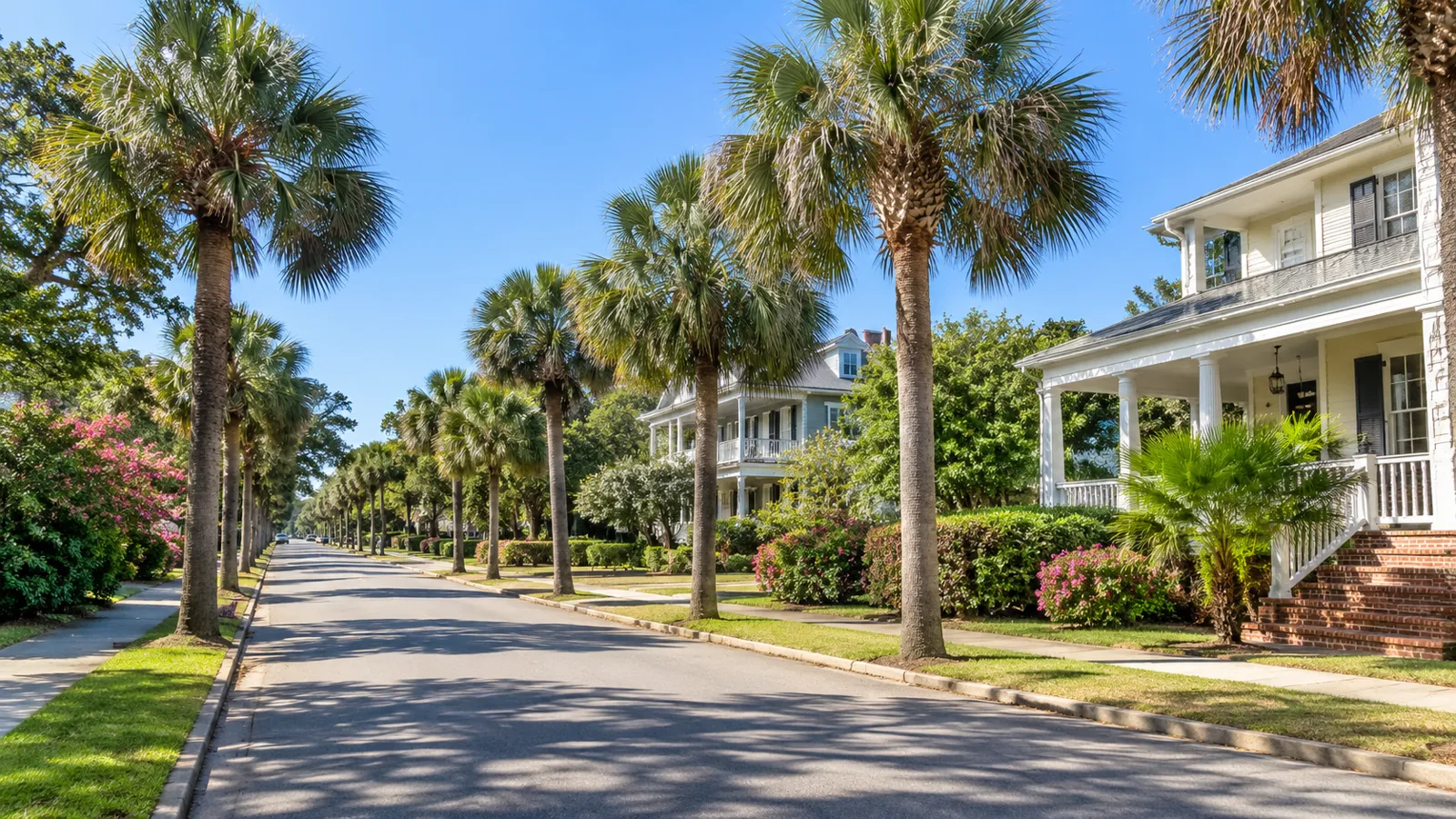
Yes. Palm trees grow well in South Carolina, especially in the warmer south and along the coast. Colder inland and northern areas are limited to cold-hardy palms.
Whether a palm survives comes down to one thing: how cold your winters get. Every palm has a temperature it can handle for a short time, and below that the leaves burn and the growing bud can die. South Carolina spans USDA hardiness zones 7a to 9a, so the answer changes depending on where you live in the state.
Where Do Palm Trees Grow in South Carolina?
Charleston, Myrtle Beach, Hilton Head, Beaufort and the Lowcountry are full of cabbage palms, also called palmettos, plus pindo palms, Canary Island date palms and windmill palms. Columbia grows cabbage palms and windmill palms. The Upstate, including Greenville and Spartanburg, is colder, so windmill palms and needle palms are safer there.
Palm trees in South Carolina cities
| City | Zone | What grows there |
|---|---|---|
| Charleston and the Lowcountry | 8b to 9a | Palmettos everywhere, plus pindo, Mexican fan, Canary Island date and windmill palms. |
| Hilton Head and Beaufort | 9a | The mildest part of the state. Queen palms and even some date palms grow in good years. |
| Myrtle Beach and the Grand Strand | 8b | Sabal palms line Ocean Boulevard. Windmill and pindo palms are common in yards. |
| Columbia | 8a | Sabal, needle, windmill and pindo palms. The "famously hot" capital grows palms well. |
| Aiken and Orangeburg | 8a | Sabal and windmill palms, with needle palms in shade. |
| Greenville and Spartanburg | 7b to 8a | Windmill palms and needle palms. Sabals in protected spots. |
| The Blue Ridge foothills | 7a to 7b | Needle palms and dwarf palmettos. |
South Carolina Climate and Hardiness Zones
The coast rarely drops below 20°F, Columbia usually stays above 15°F, and the Upstate can hit single digits.
| Area | Typical extreme winter low |
|---|---|
| Coldest parts (zone 7a) | 0°F to 5°F |
| Mildest parts (zone 9a) | 20°F to 25°F |
Zones come from the 2023 USDA Plant Hardiness Zone Map. They show the average coldest night of the year, not the record. A rare arctic outbreak can go 10°F or more below these numbers.
Are There Native Palm Trees in South Carolina?
Yes. The cabbage palm, also called sabal palmetto, is the state tree and appears on the state flag. Saw palmetto, needle palm and dwarf palmetto are also native.
Why South Carolina Is the Palmetto State
No state is more tied to a palm than South Carolina. The cabbage palm, called the palmetto here, is the state tree and is on the state flag.
The story goes back to June 28, 1776. Patriot soldiers on Sullivan's Island defended a fort built from palmetto logs against a British fleet. The soft, spongy palmetto wood absorbed cannonballs instead of shattering, and the British withdrew. The fort was later named Fort Moultrie, and June 28 is still celebrated as Carolina Day.
Palmetto logs are still used as a symbol everywhere in the state, on license plates, logos and the familiar palmetto and crescent moon design.
Native Palms of South Carolina
South Carolina has four native palms:
- Cabbage palmetto (Sabal palmetto): grows wild on the coast and sea islands. It usually reaches about 30 feet and handles cold down to about 10°F, with mature trees surviving lower.
- Dwarf palmetto (Sabal minor): river swamps across the Coastal Plain.
- Needle palm: moist shady woods in the southern part of the state.
- Saw palmetto: sandy pine woods near the southern coast.
Clemson Extension notes that some palms sold in the state are hardy only in zones 8a and 8b, so it pays to check before buying for the Upstate.
Palm Care in South Carolina
- Do not over-prune: "hurricane cuts" that leave only a few upright fronds weaken palmettos. Remove only fully brown fronds.
- Feed in summer: use a palm fertilizer with potassium, magnesium and manganese from April to August.
- Watch for lethal bronzing: this disease from Florida has reached coastal South Carolina. Bronze fronds from the bottom up are a warning sign.
- Transplant shock: big palmettos are often dug with all roots cut. They can take a year to push new leaves. Water them generously.
- Freezes: the January 2018 freeze burned palms across the Lowcountry. Most mature palmettos recovered.
Best Palm Trees for South Carolina
These palms match the winter lows in South Carolina. Hardier choices are safest in the colder parts of the state.
| Palm | Cold limit and notes |
|---|---|
| Queen palm Syagrus romanzoffiana | About 25°F. 30 to 50 ft tall. Fast, graceful feather palm for frost-light areas. |
| Date palm Phoenix dactylifera | About 20°F. 50 to 80 ft tall. Grown for fruit in hot, dry deserts. |
| Mexican fan palm Washingtonia robusta | About 20°F. 60 to 100 ft tall. Very tall and slim. The classic Los Angeles skyline palm. |
| Canary Island date palm Phoenix canariensis | About 18°F. 40 to 60 ft tall. Huge, formal feather palm with a pineapple-like trunk. |
| California fan palm Washingtonia filifera | About 15°F. 30 to 60 ft tall. Thick trunk, desert tough and native to the Southwest. |
| Pindo palm Butia capitata | About 12°F. 10 to 20 ft tall. Arching blue-gray feather leaves and edible fruit. |
| Texas sabal palm Sabal mexicana | About 12°F. 30 to 50 ft tall. Heat and drought tough with a thick trunk. |
Tip: Cabbage palms are tough, salt tolerant and hurricane resistant, which makes them ideal on the coast.
What Temperature Kills Palm Trees in South Carolina?
Most palms start to show leaf damage when temperatures fall below their cold limit, and the growing point (the bud at the top of the trunk) dies a few degrees lower. Duration matters as much as the number. A single night at 15°F is far less harmful than three days below freezing. In South Carolina, the coldest areas see lows around 0°F to 5°F, while the warmest areas rarely drop below 20°F. Tropical palms such as coconut and royal palms are damaged near 32°F. Queen palms suffer below about 25°F, and Mexican fan palms below about 20°F.
How to Care for Palms Through a South Carolina Winter
- Plant in spring so roots establish before winter.
- Before a hard freeze, water the soil, then wrap the trunk and bud with frost cloth.
- Add 3 to 4 inches of mulch over the root zone.
- For small palms, string non-LED holiday lights inside the wrap for gentle heat.
- Do not cut off brown fronds right after a freeze. Wait until spring to see what recovers.
Best Palm Tree Alternatives for South Carolina
If you want a tropical look in the colder parts of South Carolina, or just want variety, these plants pair well with palms.
- Hardy banana (Musa basjoo): Dies to the ground in winter and regrows huge tropical leaves each summer.
- Yucca (Yucca filamentosa, Y. rostrata): Spiky, palm-like rosettes that shrug off snow.
- Hardy hibiscus (Hibiscus moscheutos): Dinner plate flowers that look straight out of the tropics.
- Cordyline and New Zealand flax: Strappy, colorful leaves with a palm-like silhouette.
- Sago palm (Cycas revoluta): Not a true palm, but the look is close. Toxic to pets.
- Elephant ears (Colocasia): Giant leaves in summer. Lift or mulch the bulbs in winter.
- Ornamental grasses and bamboo: Fast screening with a lush, tropical feel. Choose clumping bamboo to avoid spreading.
Can You Grow Palm Trees Indoors in South Carolina?
Yes. Indoor palms grow anywhere, including South Carolina. Give them bright, indirect light, water when the top inch of soil is dry, and keep them away from heating vents and cold drafts. Good indoor palms include the parlor palm (chamaedorea elegans), kentia palm (howea forsteriana), lady palm (rhapis excelsa) and areca palm. Many people also move potted palms outside for summer and bring them back inside once nights drop below about 45°F.
Frequently Asked Questions
Can palm trees grow in South Carolina?
Yes. Palm trees grow well in South Carolina, especially in the warmer south and along the coast. Colder inland and northern areas are limited to cold-hardy palms.
What is the best palm tree for South Carolina?
Good choices for South Carolina include the queen palm, date palm and mexican fan palm. Cabbage palms are tough, salt tolerant and hurricane resistant, which makes them ideal on the coast.
What hardiness zone is South Carolina?
South Carolina spans roughly USDA zones 7a to 9a on the 2023 USDA map, which means average extreme winter lows from about 0°F in the coldest areas to 20°F in the mildest.
Do palm trees grow naturally in South Carolina?
Yes. The cabbage palm, the state tree, grows wild along the coast, along with saw palmetto, needle palm and dwarf palmetto.
Why is South Carolina the Palmetto State?
In 1776, a fort built from palmetto logs on Sullivan’s Island held off a British fleet. The spongy logs absorbed cannon fire.
Why is the palmetto the state tree of South Carolina?
In 1776, a fort made of palmetto logs on Sullivan's Island absorbed British cannon fire and helped win the battle. The palmetto became the state symbol and is on the state flag.
Do palm trees grow in Greenville, SC?
Yes, cold-hardy ones. Windmill palms and needle palms grow well in Greenville, and sabal palms grow in protected spots.
Palm Trees in Nearby States
- Do palm trees grow in Georgia? Yes, warm areas
- Do palm trees grow in North Carolina? Hardy palms only
- Do palm trees grow in Tennessee? Hardy palms only
More States in This Guide
- Do palm trees grow in Texas? Yes, warm areas
- Do palm trees grow in Florida? Yes
- Do palm trees grow in California? Yes, warm areas
- Do palm trees grow in New York? Hardy palms only
- Do palm trees grow in Ohio? Marginal
- Do palm trees grow in Virginia? Hardy palms only
- Do palm trees grow in New Jersey? Hardy palms only
- Do palm trees grow in Oklahoma? Hardy palms only
- Do palm trees grow in Michigan? Marginal
- Do palm trees grow in Arizona? Yes, warm areas
- Do palm trees grow in Colorado? Marginal
- Do palm trees grow in Pennsylvania? Hardy palms only
- Do palm trees grow in Kentucky? Hardy palms only
- Do palm trees grow in Maryland? Hardy palms only
- Do palm trees grow in Arkansas? Hardy palms only
- Do palm trees grow in Illinois? Marginal
- Do palm trees grow in Missouri? Hardy palms only
- Do palm trees grow in Indiana? Marginal
- Do palm trees grow in Washington? Hardy palms only
- Do palm trees grow in Louisiana? Yes, warm areas
- Do palm trees grow in Alabama? Yes, warm areas
- Do palm trees grow in Mississippi? Yes, warm areas
- Do palm trees grow in Nevada? Yes, warm areas
- Do palm trees grow in Oregon? Hardy palms only
- Do palm trees grow in Utah? Hardy palms only
- Do palm trees grow in New Mexico? Hardy palms only
- Do palm trees grow in Hawaii? Yes
- Do palm trees grow in Massachusetts? Hardy palms only
- Do palm trees grow in Connecticut? Hardy palms only
- Do palm trees grow in Delaware? Hardy palms only
- Do palm trees grow in Washington, DC? Hardy palms only
- Do palm trees grow in West Virginia? Hardy palms only
- Do palm trees grow in Kansas? Marginal
- Do palm trees grow in Iowa? Marginal
- Do palm trees grow in Nebraska? Marginal
- Do palm trees grow in Minnesota? Indoors only
- Do palm trees grow in Wisconsin? Indoors only
- Do palm trees grow in Idaho? Marginal
- Do palm trees grow in Rhode Island? Hardy palms only
- Do palm trees grow in Maine? Indoors only
- Do palm trees grow in New Hampshire? Indoors only
- Do palm trees grow in Vermont? Indoors only
- Do palm trees grow in Montana? Indoors only
- Do palm trees grow in Wyoming? Indoors only
- Do palm trees grow in North Dakota? Indoors only
- Do palm trees grow in South Dakota? Indoors only
- Do palm trees grow in Alaska? Indoors only
- Do palm trees grow in Puerto Rico? Yes
See palm trees by state for all 50 states, DC and Puerto Rico.