Quick answer
Marginal, needs heavy protection
- USDA zones
- 5b to 7a
- Coldest winter lows
- about -15°F
- Mildest winter lows
- about 0°F
- Native palms
- None
Do Palm Trees Grow in Ohio?
Only barely. Ohio winters are cold enough that palms rarely survive outdoors. The hardiest palm, the needle palm, can live in the mildest spots with heavy winter protection, but most palms here are grown in pots and brought indoors.
Whether a palm survives comes down to one thing: how cold your winters get. Every palm has a temperature it can handle for a short time, and below that the leaves burn and the growing bud can die. Ohio spans USDA hardiness zones 5b to 7a, so the answer changes depending on where you live in the state.
Where Do Palm Trees Grow in Ohio?
Cincinnati and the Ohio River valley are the mildest parts of Ohio, and needle palms can survive there with protection. Cleveland near Lake Erie and Columbus are colder. Some Lake Erie resort areas set out potted palms in summer. Most Ohio palms spend winter indoors.
Palm trees in Ohio cities
| City | Zone | What grows there |
|---|---|---|
| Cincinnati | 7a | The mildest big city in Ohio. Needle palms and dwarf palmettos grow in sheltered yards, and windmill palms survive with wrapping. |
| Columbus | 6b | Needle palms against south walls. Windmill palms need full winter enclosures. |
| Cleveland and the Lake Erie shore | 6b | Lake Erie keeps the shoreline slightly milder. A few needle palms grow around Cleveland. |
| Dayton | 6b | Needle palms and dwarf palmettos with heavy mulch. |
| Toledo | 6a to 6b | Very marginal. Needle palms only, with protection. |
| Akron, Canton and Youngstown | 6a | Seasonal palms in pots are the safe choice. |
Ohio Climate and Hardiness Zones
Ohio winters usually bottom out between -5°F and 5°F, with colder nights in the north and in rural areas.
| Area | Typical extreme winter low |
|---|---|
| Coldest parts (zone 5b) | -15°F to -10°F |
| Mildest parts (zone 7a) | 0°F to 5°F |
Zones come from the 2023 USDA Plant Hardiness Zone Map. They show the average coldest night of the year, not the record. A rare arctic outbreak can go 10°F or more below these numbers.
Are There Native Palm Trees in Ohio?
No. Ohio has no native palms.
The Three Palms That Survive Ohio
Ohio palm growers have narrowed it down to three. The needle palm, dwarf palmetto and windmill palm are the cold-hardy species that can survive Ohio weather with care. Columbus Dispatch garden coverage and PalmTalk growers say the same.
- Needle palm: the safest choice. It takes about -5°F with no damage and will regrow from the base if the top is hurt. There are needle palms growing in and around Cleveland.
- Dwarf palmetto: grows low and can be buried in leaves or straw for winter. Look for the 'McCurtain' strain from Oklahoma or the 'Wichita Falls' type, which are hardier than Florida stock.
- Windmill palm: the only one that gives you a real trunk. It needs a wrap or a heated enclosure in most Ohio winters.
Some zone 6 growers also try the Mazari palm (Nannorrhops ritchiana) from Afghanistan and Pakistan. It is very cold hardy in dry winters but can rot in Ohio's wet winters.
Seasonal Palm Trees in Ohio
A growing business in Ohio is "seasonal palms". Companies in Northeast Ohio and around Columbus sell or rent tall tropical palms each spring, plant them by pools and patios, and remove them in fall. One NE Ohio seller reported selling 250 palms in two weeks.
These are usually queen palms or Mexican fan palms grown in Florida. They give a resort look for the summer, but they will die in the first hard freeze if left in the ground. Think of them like a big annual flower.
If you want a palm to last, buy a hardy species and plant it in late spring. If you want instant height for a summer party, a seasonal palm is the way to go.
How to Overwinter a Palm in Ohio
- Plant against the south side of a heated building, ideally near a dryer vent or foundation that leaks a little warmth.
- In November, pile 6 to 12 inches of straw or shredded leaves around the base.
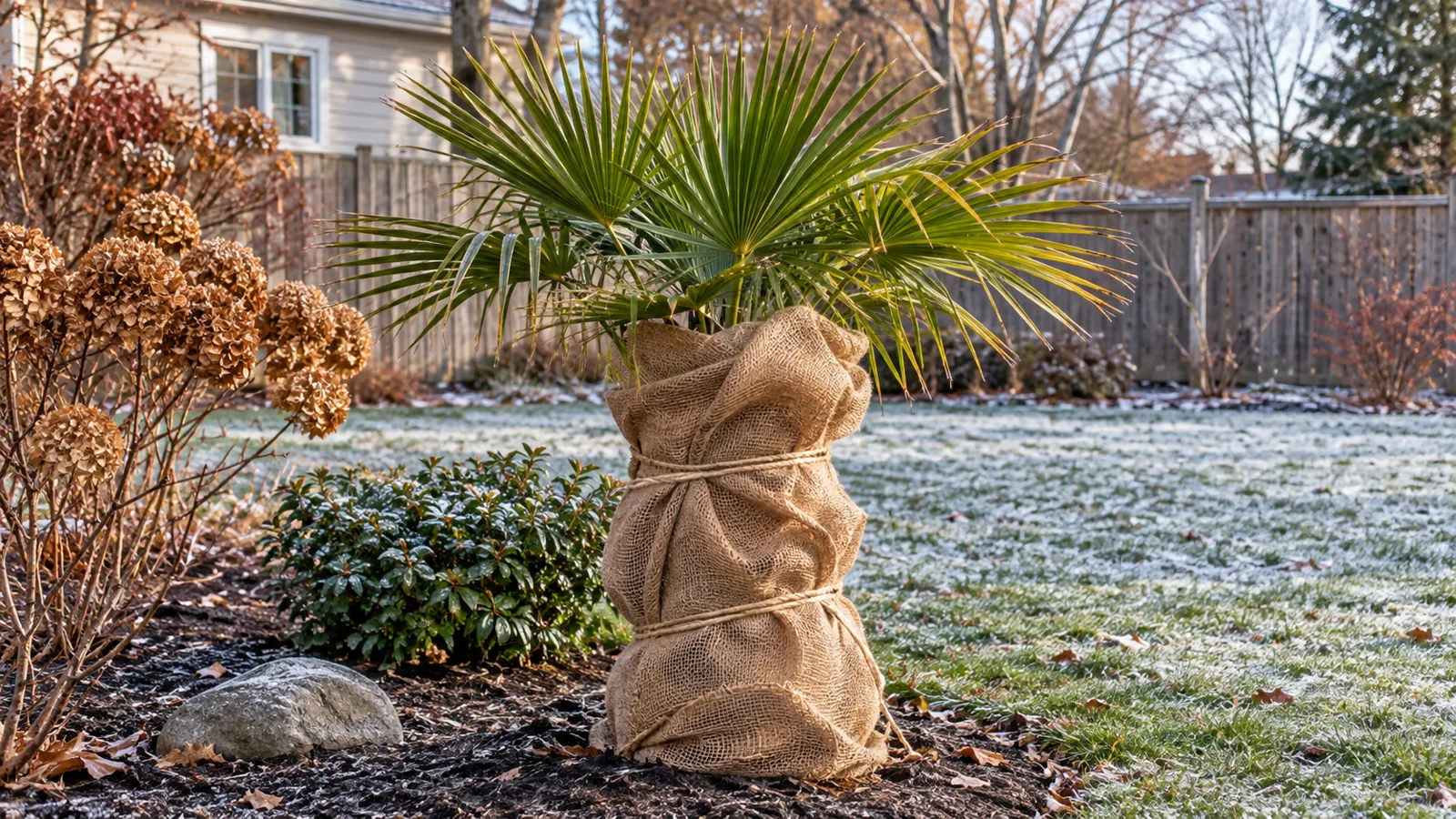
- Build a cage of stakes and burlap around windmill palms and fill it with dry leaves.
- For nights below 0°F, add incandescent lights or a heat cable inside the cage.
- Keep the crown dry. Most Ohio palms die from rot after a freeze, not the freeze itself.
- Unwrap in April. Do not cut off damaged fronds until new growth starts.
Best Palm Trees for Ohio
These palms match the winter lows in Ohio. They are listed hardiest first.
| Palm | Cold limit and notes |
|---|---|
| Needle palm Rhapidophyllum hystrix | About -5°F. 4 to 8 ft tall. The hardiest palm in the world. Slow, shrubby and spiny. |
| Dwarf palmetto Sabal minor | About 0°F. 3 to 6 ft tall. Low, trunkless fan palm that regrows from the ground after hard freezes. |
| Windmill palm Trachycarpus fortunei | About 5°F. 10 to 25 ft tall. The classic cold-hardy trunked palm. Likes cool, wet climates. |
Tip: Needle palm with thick mulch and a winter wrap is the only realistic in-ground palm in Ohio.
What Temperature Kills Palm Trees in Ohio?
Most palms start to show leaf damage when temperatures fall below their cold limit, and the growing point (the bud at the top of the trunk) dies a few degrees lower. Duration matters as much as the number. A single night at 15°F is far less harmful than three days below freezing. In Ohio, winter lows commonly reach -15°F to 5°F. Even the needle palm, rated to about -5°F, is pushed to its limit, which is why winter protection is essential.
How to Care for Palms Through a Ohio Winter
- Plant only the needle palm or dwarf palmetto in the ground.
- Build a winter cage of chicken wire around the palm and fill it with dry leaves or straw.
- Cover the top with a breathable cover, not plastic, to keep the crown dry.
- Add a heat cable or incandescent lights for nights below 0°F.
- Remove the cover in spring once nights stay above freezing.
Best Palm Tree Alternatives for Ohio
If palms are too risky where you live, these plants give a similar tropical look and handle Ohio winters.
- Hardy banana (Musa basjoo): Dies to the ground in winter and regrows huge tropical leaves each summer.
- Yucca (Yucca filamentosa, Y. rostrata): Spiky, palm-like rosettes that shrug off snow.
- Hardy hibiscus (Hibiscus moscheutos): Dinner plate flowers that look straight out of the tropics.
- Elephant ears (Colocasia): Giant leaves in summer. Lift or mulch the bulbs in winter.
- Ornamental grasses and bamboo: Fast screening with a lush, tropical feel. Choose clumping bamboo to avoid spreading.
Can You Grow Palm Trees Indoors in Ohio?
Yes. Indoor palms grow anywhere, including Ohio. Give them bright, indirect light, water when the top inch of soil is dry, and keep them away from heating vents and cold drafts. Good indoor palms include the parlor palm (chamaedorea elegans), kentia palm (howea forsteriana), lady palm (rhapis excelsa) and areca palm. Many people also move potted palms outside for summer and bring them back inside once nights drop below about 45°F.
Frequently Asked Questions
Can palm trees grow in Ohio?
Only barely. Ohio winters are cold enough that palms rarely survive outdoors. The hardiest palm, the needle palm, can live in the mildest spots with heavy winter protection, but most palms here are grown in pots and brought indoors.
What is the best palm tree for Ohio?
Good choices for Ohio include the needle palm, dwarf palmetto and windmill palm. Needle palm with thick mulch and a winter wrap is the only realistic in-ground palm in Ohio.
What hardiness zone is Ohio?
Ohio spans roughly USDA zones 5b to 7a on the 2023 USDA map, which means average extreme winter lows from about -15°F in the coldest areas to 0°F in the mildest.
Will palm trees grow in Ohio?
Only the hardiest, such as needle palm, and only with protection. Most Ohio palms are potted.
Can a palm survive in Cincinnati?
A needle palm can in a sheltered spot with winter protection.
Can a sabal palm survive in Ohio?
Only the dwarf palmetto (Sabal minor), and only with mulch and protection. Larger sabals like the cabbage palm will not survive Ohio winters in the ground.
What are seasonal palm trees in Ohio?
Tropical palms that companies plant in spring and remove in fall. They give a summer resort look but will not survive an Ohio winter outdoors.
Palm Trees in Nearby States
- Do palm trees grow in Kentucky? Hardy palms only
- Do palm trees grow in Indiana? Marginal
- Do palm trees grow in Pennsylvania? Hardy palms only
More States in This Guide
- Do palm trees grow in Tennessee? Hardy palms only
- Do palm trees grow in Texas? Yes, warm areas
- Do palm trees grow in North Carolina? Hardy palms only
- Do palm trees grow in Florida? Yes
- Do palm trees grow in California? Yes, warm areas
- Do palm trees grow in New York? Hardy palms only
- Do palm trees grow in Georgia? Yes, warm areas
- Do palm trees grow in Virginia? Hardy palms only
- Do palm trees grow in New Jersey? Hardy palms only
- Do palm trees grow in Oklahoma? Hardy palms only
- Do palm trees grow in Michigan? Marginal
- Do palm trees grow in South Carolina? Yes, warm areas
- Do palm trees grow in Arizona? Yes, warm areas
- Do palm trees grow in Colorado? Marginal
- Do palm trees grow in Maryland? Hardy palms only
- Do palm trees grow in Arkansas? Hardy palms only
- Do palm trees grow in Illinois? Marginal
- Do palm trees grow in Missouri? Hardy palms only
- Do palm trees grow in Washington? Hardy palms only
- Do palm trees grow in Louisiana? Yes, warm areas
- Do palm trees grow in Alabama? Yes, warm areas
- Do palm trees grow in Mississippi? Yes, warm areas
- Do palm trees grow in Nevada? Yes, warm areas
- Do palm trees grow in Oregon? Hardy palms only
- Do palm trees grow in Utah? Hardy palms only
- Do palm trees grow in New Mexico? Hardy palms only
- Do palm trees grow in Hawaii? Yes
- Do palm trees grow in Massachusetts? Hardy palms only
- Do palm trees grow in Connecticut? Hardy palms only
- Do palm trees grow in Delaware? Hardy palms only
- Do palm trees grow in Washington, DC? Hardy palms only
- Do palm trees grow in West Virginia? Hardy palms only
- Do palm trees grow in Kansas? Marginal
- Do palm trees grow in Iowa? Marginal
- Do palm trees grow in Nebraska? Marginal
- Do palm trees grow in Minnesota? Indoors only
- Do palm trees grow in Wisconsin? Indoors only
- Do palm trees grow in Idaho? Marginal
- Do palm trees grow in Rhode Island? Hardy palms only
- Do palm trees grow in Maine? Indoors only
- Do palm trees grow in New Hampshire? Indoors only
- Do palm trees grow in Vermont? Indoors only
- Do palm trees grow in Montana? Indoors only
- Do palm trees grow in Wyoming? Indoors only
- Do palm trees grow in North Dakota? Indoors only
- Do palm trees grow in South Dakota? Indoors only
- Do palm trees grow in Alaska? Indoors only
- Do palm trees grow in Puerto Rico? Yes
See palm trees by state for all 50 states, DC and Puerto Rico.